
Collector cars
Donate a vintage or specialty vehicle
Something old, unusual, or built for one job, and no obvious way to sell it. Tell us what it is and we will tell you honestly whether donating it makes sense.
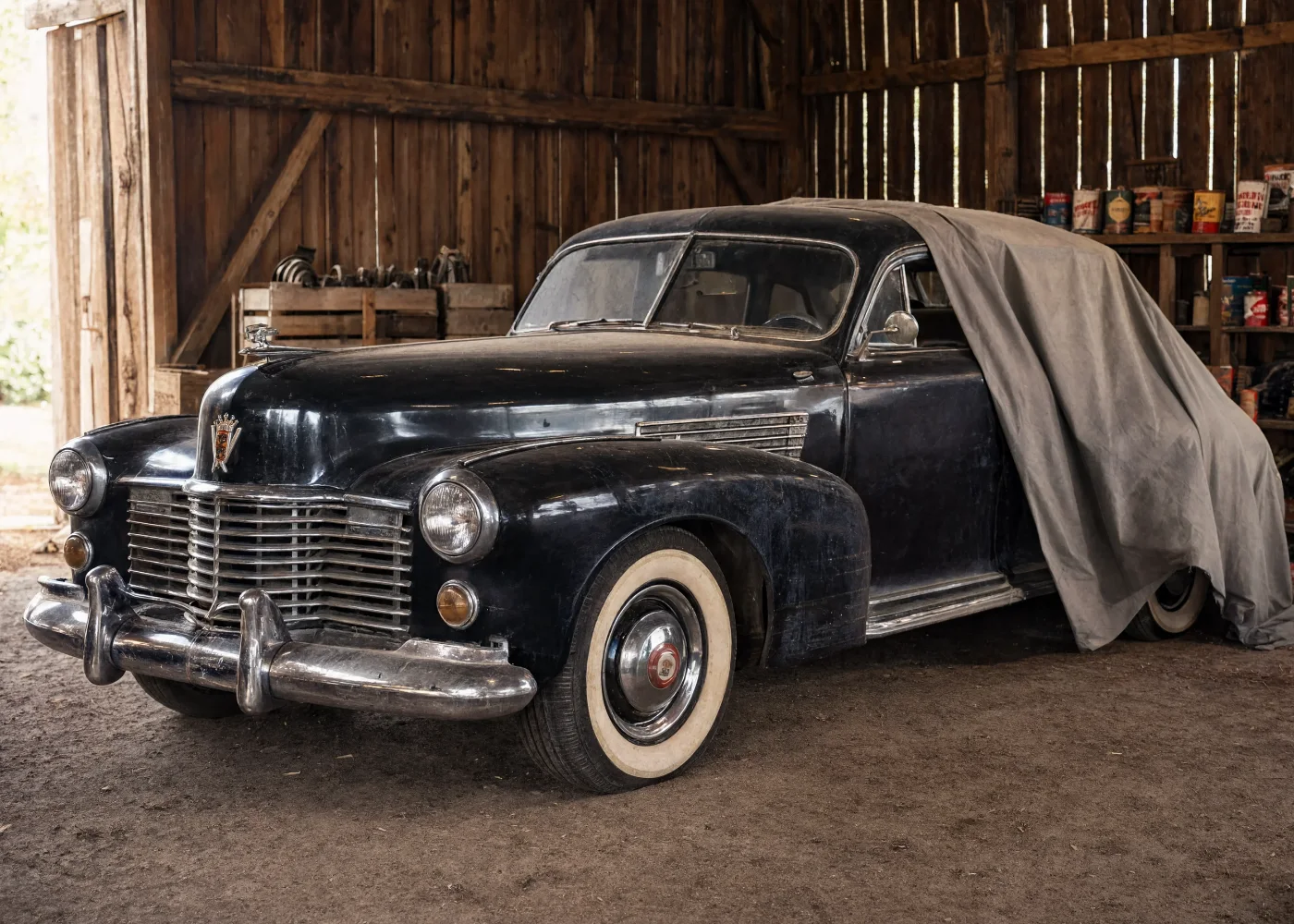
What we mean by vintage or specialty
Anything that will not sell through an ordinary channel because of its age, its rarity, or the single purpose it was built for. In practice that covers a wide range, and most of it has a page of its own:
If none of those fits — a hearse, a fire truck, a bookmobile, a one-off show car, an unfinished project somebody started in 1974 — use the form and describe it plainly. We deal with the specific, and vague descriptions are the only ones we struggle with.
The usual reason a vintage donation cannot proceed
It is not condition. It is paperwork. An old vehicle that has sat for decades frequently has no title, no registration history and no record at the state, and without a way to transfer ownership there is nothing a buyer can legally do with it.
Sometimes that is fixable. Bonded titles, court-ordered titles, abandoned vehicle processes and bill-of-sale registrations all exist, and the path differs by state. Sometimes it is not fixable, or not worth the cost relative to the vehicle. Either way we would rather find out with you first. Read state title rules and, if you know you have no title, start on donating a car without a title.
Do not clean it up, and do not repaint it
The instinct is to make it presentable. Resist it. Honest patina now outsells a mediocre repaint by a clear margin, and a fresh coat of paint over an original finish removes value you cannot put back. The same is true of detailing: a professional buyer reads an untouched car more easily than a polished one.
Keep every original part, including the broken ones. Rusted sheet metal, a cracked dash, a seized correct-for-the-car engine, the original wheels in the corner of the barn, the bumper in the rafters. All of it should go with the vehicle. The parts a donor throws out as junk are frequently the parts a restorer cannot buy.
Identifying it exactly is most of the value
A 1966 coupe is worth an ordinary amount of money. A specific 1966 coupe, with the engine code, transmission, axle ratio, trim level and factory options documented, can be worth a multiple of that. The difference is frequently a photograph of a tag.
Find the numbers before you send the form. Depending on the vehicle they live on a door jamb sticker, a firewall plate, a cowl tag, a frame stamping, an engine pad, the block casting or a serial plate riveted to the dash. Photograph all of them, including any you cannot read. Send them with the form and let us do the decoding.
Where these are sold, and what you deduct
Not through general wholesale. An unusual vehicle put through a volume auction brings a fraction of what a marque specialist, a registry or a collector dealer will pay for the same thing, so we take the slower route. That matters to you directly: your deduction is the gross proceeds of the sale, reported to you on Form 1098-C, so the channel we choose sets the number.
If you intend to claim more than $5,000 you will need a qualified appraisal. That is your expense and your choice, not something we arrange or pay for. One warning specific to this category: generalist appraisers routinely undervalue unusual vehicles because they have no comparable sales to work from. If you are claiming over $5,000, use an appraiser who knows the marque.
Several vehicles, or a shed full
This is the work we are best at. A barn with four cars, an engine on a stand and shelves of parts is one truck, one form and one conversation, and the truck costs the same whether it leaves with one car or six. Put everything on a single form, or send us a list.
If this is an estate or a downsizing, say so. There is no pressure and no timetable from our end. Nothing needs starting, cleaning or sorting before we come, and we can work through it at whatever pace suits you.
Getting a vehicle out that has not moved in years
Tell us what the truck is facing: a dirt floor, a low doorway, a building that has settled around the car, flat tires, seized brakes, no steering, other vehicles parked in front of it. None of that stops us, but it all changes the equipment.
Do not try to free it up yourself, and do not tow it out with a tractor. More vintage cars are damaged in the fifty feet out of a barn than anywhere else, and a bent frame rail costs more than the recovery.
Vintage and specialty questions
It has not run in thirty years. Do you still want it?
Yes. Most of what comes through this category does not run. Non-running is normal here and not a mark against the vehicle.
There is no title. Is that the end of it?
Not necessarily. Several states have a route for an old vehicle with no paperwork, and we will look at yours before anything is scheduled. See donating a car without a title.
Should I get it running first?
No. Spend nothing on it. A running engine adds less than the work costs, and an unsympathetic repair can subtract value.
I have six cars and a barn of parts.
Put all of it on one form. Whole-property clearances are the thing we do best, and a single truck for six cars returns far more to the cause than six separate trips.
Is it worth more as parts?
Sometimes, and if so we will say so. A complete car with a title is almost always worth more whole. A car with no title, no paperwork route and heavy structural rust may genuinely be worth more as parts, and that is a fair outcome to plan for rather than discover.
Giving Center does not provide tax, legal or financial advice. Donations are deductible to the extent allowed by law. See IRS Publication 526, Publication 561 and Publication 4303, and consult a tax professional.