
Classic car donation
Donate a classic car, whatever era and whatever condition
This is the front door for any older car that does not fit a narrower page. A 1950s sedan, a 1940s coupe, a prewar tourer, a 1980s survivor. The questions are the same in every case: what is the paperwork, how original is it, and does it run.
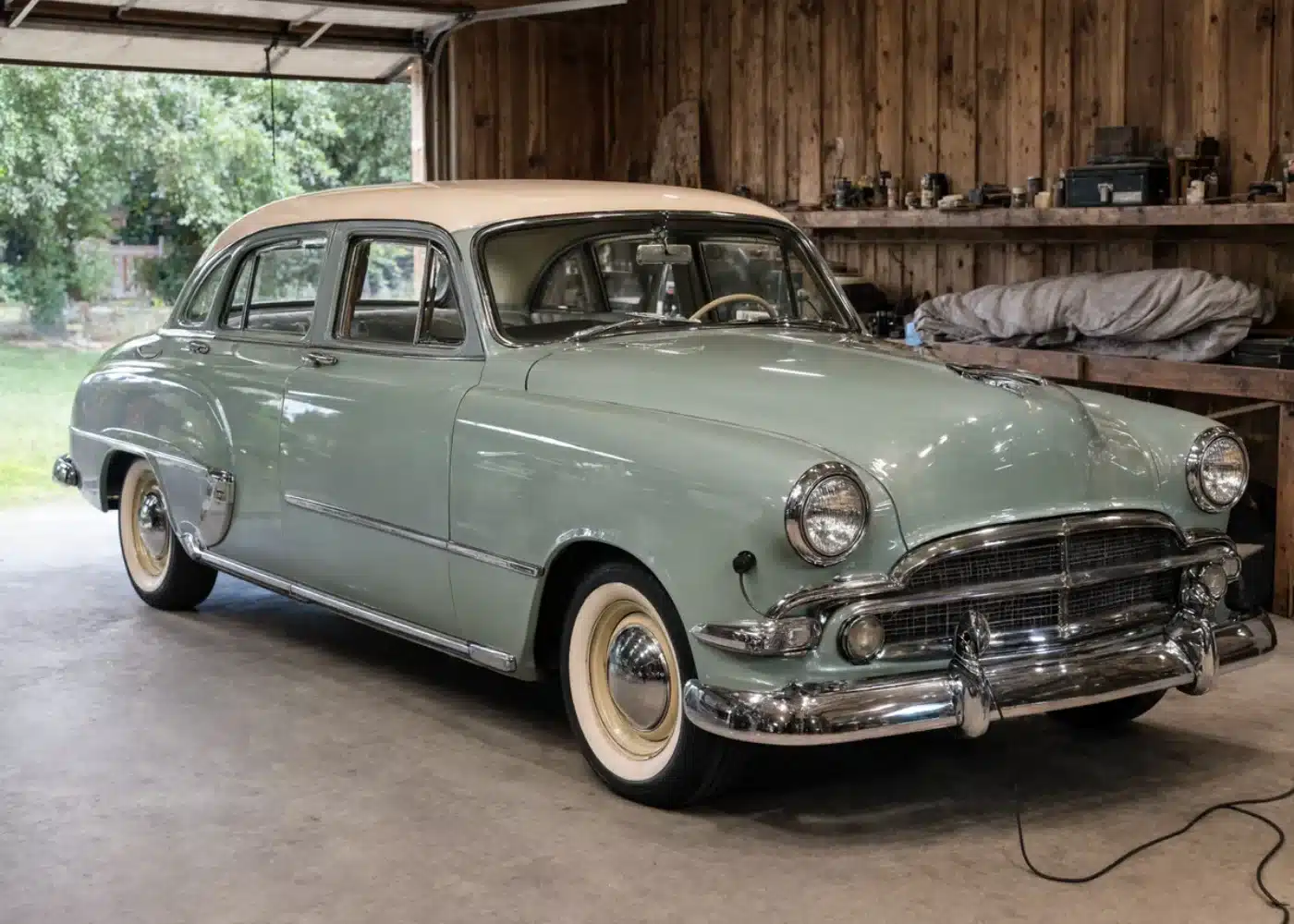
Where donated classics come from
Estates, more than anything else. A classic in an estate is frequently the item the family least knows what to do with, because the value is entirely opaque from the outside and the market is full of people happy to take advantage of that.
Owners who can no longer drive or maintain it. A car that needs to be started every few weeks and driven monthly becomes a burden when the owner cannot do either, and storage and insurance keep costing money.
People who tried to sell privately and stopped. Classics attract endless calls, lowball offers and buyers who want to spend a Saturday in your garage. A lot of people are simply done with that.
Enclosed or open, and it does not need to run
A classic goes on a flatbed or in an enclosed transporter depending on what it is. We do not drive collector cars to the sale; they are hauled, and Giving Center covers it.
It does not need to run, be registered or be insured. Tell us whether it rolls, whether it steers and whether the brakes hold enough to stop it rolling off a ramp, because a car that does none of those needs a winch and skates.
Do not detail it, do not repaint anything and do not replace parts to make it presentable. Originality is the value in this category and fresh paint over honest patina can genuinely lower what a car brings. Leave it exactly as it sits and send us honest photographs.
What decides what a classic brings
- Paperwork. Ahead of everything. A clean matching title is worth more than any single mechanical detail.
- Originality and matching numbers. Original engine, original drivetrain, original interior and original paint where it survives. Documentation of any of it adds.
- Rust, specifically structural rust. Floors, frame rails, cowl and rear quarters. Surface rust is cosmetic; a rotted frame is the thing that ends a car.
- Completeness. Trim, glass, bumpers, grille, dash and hard-to-find brightwork. Missing trim is often harder to solve than a missing engine.
- Whether it runs. A running driving classic sells to a much wider pool than a project, though a genuine project with good paperwork still has real buyers.
Marques and models we accept
Classics are bought by marque, era and body style. Our own reference here is deliberately by era rather than by single model.
- Prewar and full classics: Ford Model T and Model A, Chevrolet, Packard, Studebaker, Hudson, Nash, DeSoto, LaSalle, Buick, Auburn, Cord, Willys.
- 1950s and 1960s American: Chevrolet Bel Air, Impala and Corvette, Ford Fairlane, Galaxie and Thunderbird, Plymouth, Dodge, Oldsmobile, Pontiac, Cadillac, Lincoln, Mercury, Rambler.
- 1970s and 1980s survivors: full-size American sedans and coupes, early Broncos and Blazers, pickups, and low-mileage originals of almost anything.
Manufacturer and model names appear here so you can find your own car. No manufacturer sponsors, endorses or is affiliated with this program.
The paperwork, and what you can deduct
A collector car is a titled vehicle and the title has to transfer. On older cars the paperwork is the most common obstacle: a title from three owners ago, a bill of sale and no title, or a title that does not match the VIN on the car. Tell us exactly what you have before anything is scheduled. Some states have a bonded title or a court-ordered process and some make it very hard, and the state title rules page covers the general shape of it.
Giving Center sells the car and your deduction is the gross sale proceeds on Form 1098-C. That is the number, not a guide value, not an insurance value and not what a similar car is listed for. Asking prices on collector cars run well above realized prices and the gap is wide.
Collector cars are the category where the qualified appraisal matters most. If the sale clears $5,000 the IRS requires one plus Form 8283 Section B, and on a car whose value depends on originality, numbers matching and documentation, it is worth having done by an appraiser who knows the marque rather than a generalist. It is your expense and your decision, and the appraiser has to be independent of us.
Classic car donation questions
I have a bill of sale but no title.
Tell us before anything is scheduled. How solvable that is depends entirely on your state; some have a bonded title process and some do not. This is the most common reason a classic donation cannot go forward, so we check first.
It has been in a garage since 1991 and will not start.
Perfectly normal and perfectly saleable. Do not try to start it and do not clean it up. Tell us whether it rolls and steers.
Should I get it detailed first?
No. Please do not. Original condition is the value here and a fresh detail or a repaint can lower what it brings.
How do I know what it is worth?
Honestly, you do not until it sells, and neither do we with certainty. We will give you a realistic range based on what it is, and your deduction is the actual sale.
Do you take cars in pieces?
Often. Tell us what is assembled, what is in boxes and what is missing. A disassembled car with complete parts and good paperwork still has buyers.
Giving Center does not provide tax, legal or financial advice. Donations are deductible to the extent allowed by law. See IRS Publication 526, Publication 561 and Publication 4303, and consult a tax professional.