
Convertible donation
Donate a convertible, top up or top long gone
Convertibles are worth more than their hardtop equivalents and they are also the body style most likely to have water damage. Those two facts pull against each other, and which one dominates on your car depends almost entirely on whether the top and the drains have been sound.
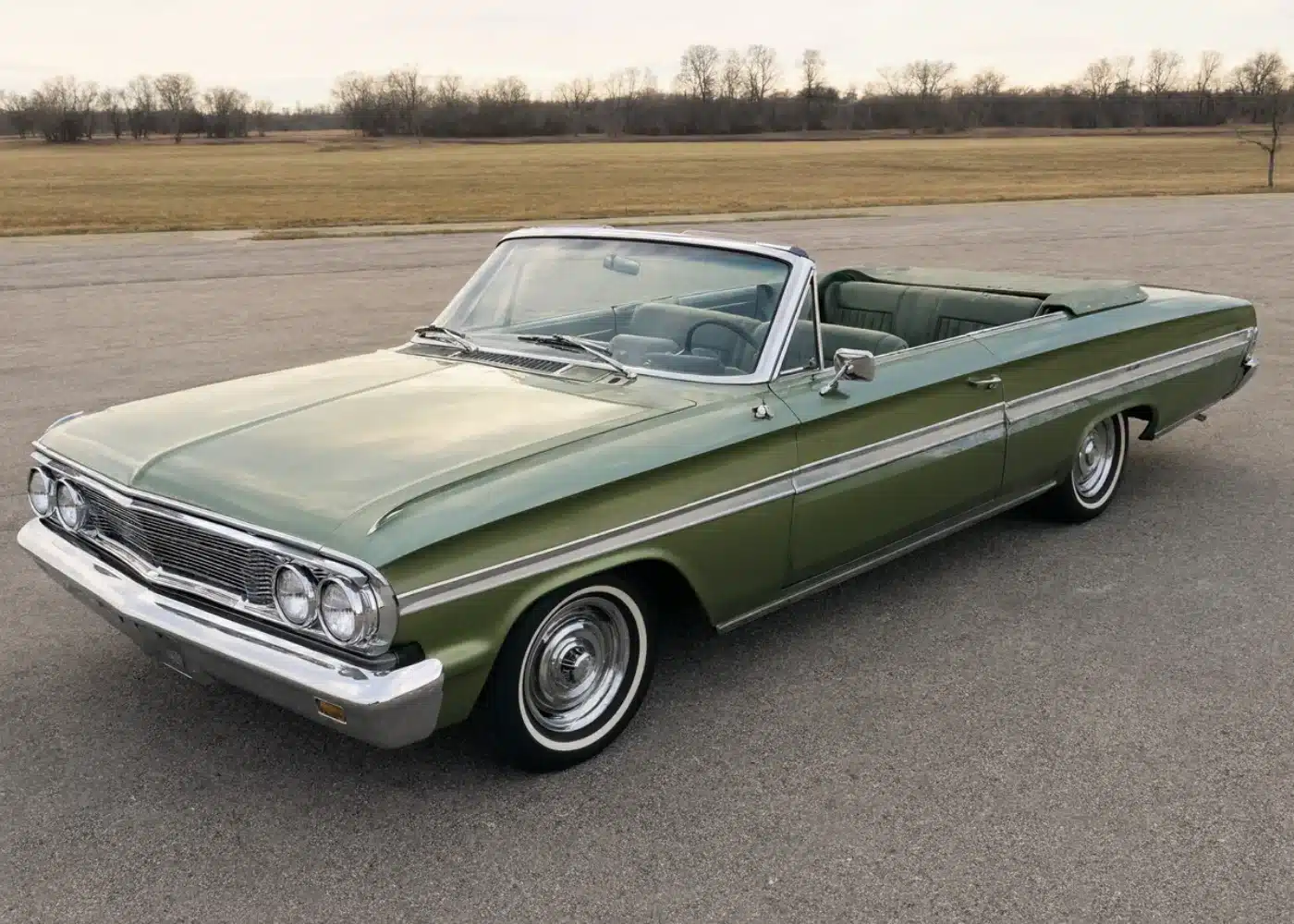
Where donated convertibles come from
Owners who stopped using a second car. A convertible is very often a weekend car, and a weekend car is the first thing to go when circumstances change.
Estates. A convertible is usually the most desirable car in an estate and therefore the one worth handling carefully rather than selling to the first caller.
Owners with a top that failed. A convertible with a torn top and a wet interior is hard to sell privately and entirely straightforward for us, as long as the damage is disclosed.
Hauled, with the top secured
It goes on a flatbed or in an enclosed transporter, arranged and covered by Giving Center. If the top is torn or will not latch, or if the mechanism is stuck partway, tell us: a car that cannot be closed needs enclosed transport or it arrives worse than it left.
It does not need to run. Tell us whether it rolls, steers and stops.
Do not detail it, do not repaint anything and do not replace parts to make it presentable. Originality is the value here and fresh cosmetic work over honest patina can lower what it brings. Leave it as it sits and send honest photographs. One exception specific to this body style: if the interior is wet, open the doors and let it dry before pickup rather than sealing it up. A closed wet car grows mold quickly and that genuinely lowers what it brings.
What decides what a convertible brings
- Floor and trunk pan condition. The single most important thing. Every convertible leaks eventually and the water ends up in the floors, the trunk and the rear seat pan. Photograph all of them.
- Top condition and mechanism. Whether the fabric is sound, whether the frame is straight and whether the power mechanism works. A working power top on a classic is a real premium.
- Structural reinforcement. Convertibles have extra frame and rocker bracing and that is where rust hides. Buyers check it.
- Interior and upholstery. Sun and water damage to seats, carpets, door panels and dash top. More exposed than any other body style.
- Model desirability. A convertible commands a premium over the same model as a coupe or sedan, and on some models that premium is very large.
Marques and models we accept
All eras and all makes.
- American classic: Chevrolet Impala, Bel Air and Corvette, Ford Galaxie, Fairlane, Thunderbird and Mustang, Pontiac Bonneville, Catalina and GTO, Oldsmobile 88 and 442, Buick, Cadillac Eldorado and DeVille, Chrysler, Dodge, Plymouth, Lincoln Continental.
- European: Mercedes-Benz SL and CLK, BMW 3-series and Z-cars, Porsche 911 Cabriolet and Boxster, Jaguar XK and XJS, Saab 900 and 9-3, Volkswagen Cabriolet and Beetle, MG, Triumph, Alfa Spider.
- Modern: Ford Mustang, Chevrolet Camaro and Corvette, Chrysler Sebring and 200, Mazda Miata, Audi A4 and A5, Mini, Volvo C70, Nissan 370Z.
Manufacturer and model names appear here so you can find your own vehicle. No manufacturer sponsors, endorses or is affiliated with this program.
The paperwork, and what you can deduct
A collector vehicle is titled and the title has to transfer. On older vehicles the paperwork is the most common obstacle: a title from three owners ago, a bill of sale and no title, or a title that does not match the VIN. Tell us exactly what you have before anything is scheduled. Some states have a bonded title or court-ordered process and some make it very hard; the state title rules page covers the general shape of it.
Giving Center sells the car and your deduction is the gross sale proceeds on Form 1098-C. A desirable classic convertible in sound condition clears $5,000 readily. A modern used convertible usually lands between $500 and $5,000, where Form 8283 Section A applies.
A convertible with rotted floors, a failed top and a mold problem can sell under $500 despite the body style premium, where the deduction is the lesser of fair market value or $500 with a written acknowledgment. Water damage is the thing that takes a convertible from premium to parts, and we will tell you which side of that line yours is on. If the sale clears $5,000 the IRS requires a qualified appraisal plus Form 8283 Section B. On a vehicle whose value depends on originality and documentation, have it done by an appraiser who knows the category rather than a generalist. It is your expense and your decision, and the appraiser has to be independent of us.
Convertible donation questions
The top is torn and the interior got wet.
Common and worth full disclosure. Open the doors and let it dry out before pickup rather than sealing it up, because mold lowers the sale considerably. Photograph the floors and trunk pan.
The power top mechanism is stuck halfway.
Tell us. It needs enclosed transport so it does not arrive worse than it left, and that is arranged.
Is a convertible worth more than the coupe?
Almost always, and on some models substantially more. Water damage is what erases that premium, which is why the floors matter so much.
Should I replace the top before donating?
No. A new top on a car with rotted floors does not help the sale and the cost comes out of your pocket rather than the deduction.
Do you take modern convertibles too?
Yes. Late-model soft tops are handled here and sell as ordinary used cars with a body-style premium.
Giving Center does not provide tax, legal or financial advice. Donations are deductible to the extent allowed by law. See IRS Publication 526, Publication 561 and Publication 4303, and consult a tax professional.