
Project car donation
Donate the project that has been ninety percent done for eleven years
Nobody plans to donate a project. It happens when the shop space is needed, when health changes, or when the honest conversation finally arrives. Unfinished projects sell to people with the skills and the space to complete them, and completeness matters far more than condition.
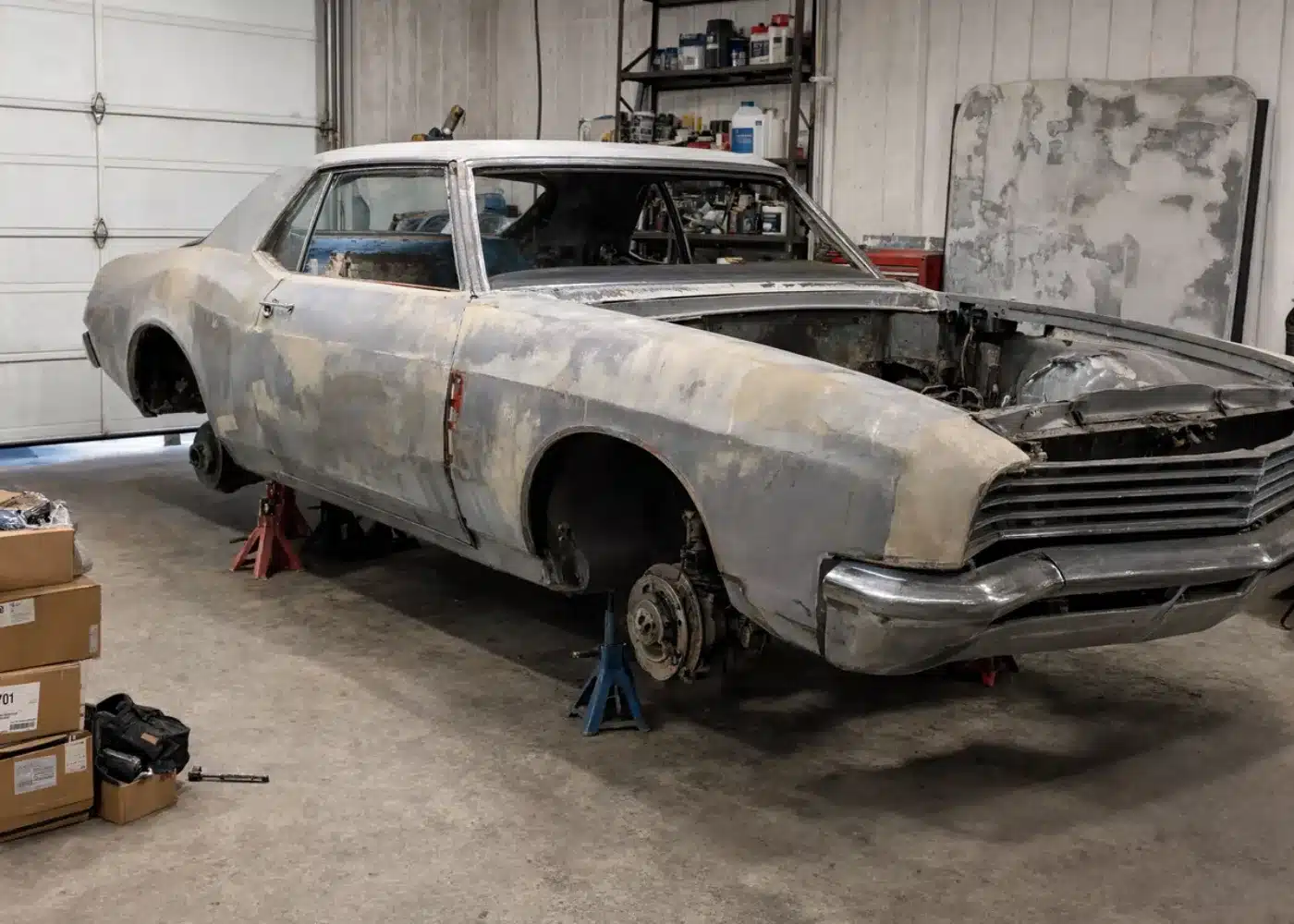
Why projects get donated
Because the alternative is worse. Selling a half-finished project privately means explaining, to one buyer after another, what is done, what is not, what is in which box, and why the price should reflect the work already invested. It rarely does, and the conversation is discouraging.
The situation we hear most often is a father and son project where the plan outlived the health of one of them. Donating gets the car to someone who will finish it, which is usually what the owner wanted more than the money.
Collected on an open carrier, with every box
A project car usually travels on an open carrier, which is appropriate and keeps more of the sale proceeds for the cause. A car on jack stands or with no wheels is winched onto a flatbed. Every box, crate and shelf of parts that belongs to the car goes with it. Giving Center arranges and pays for it.
Gather the parts before we come, even loosely, and label anything you can. Tell us whether the car rolls, whether the wheels turn, and how it is positioned in the garage. A car that has to be dragged sideways out of a tight bay needs a plan made in advance.
What a project car is actually worth
- Completeness. Trim, glass, emblems, interior parts and wiring are what stall a restoration, and their presence sets the price.
- Rust in structure, particularly floors, frame rails and cowl, which decide whether the car is viable at all.
- Desirability of the model, since a common body shell may be worth little regardless of the work done.
- Quality of work already done, and whether a buyer will trust it or redo it.
- Whether the drivetrain is present and turns.
- Title status, which on a project is frequently the deciding factor between a sale and a parts car.
The paperwork, and what you can deduct
You sign the title over at pickup. A long-stored car with a broken ownership chain may need a duplicate, a bonded title, or in a few states a court-ordered title, and this page covers each route. Some states exempt vehicles above a certain age from titling entirely. Any recorded lien must be released before sale, including one paid off decades ago.
Your deduction is the gross sale proceeds once Giving Center sells it, on Form 1098-C. Above $500 you file Form 8283 Section A; above $5,000 the IRS requires a qualified appraisal you obtain and pay for. We tell you before pickup which case yours is likely to be, so an appraisal is never a surprise expense. Full detail on the tax benefits page.
Project car donation questions
Is a half-finished project worth anything?
Frequently yes, to someone with the skills and the space. Completeness is what sets the figure; a complete unfinished car is worth considerably more than a stripped one.
I have parts in three different places.
Gather what you can before pickup and tell us what is where. Parts that arrive later do not make it into the sale.
No title, and the seller is long gone.
That is the common project problem. Depending on your state it means a bonded title, a court-ordered title or an affidavit. This page covers the routes.
Will it be parted out?
Only if it is genuinely beyond restoration, and only with your agreement. We would rather sell it whole to someone who will finish it.
Giving Center does not provide tax, legal or financial advice. Donations are deductible to the extent allowed by law. See IRS Publication 526, Publication 561 and Publication 4303, and consult a tax professional.