
Collector cars
Donate a resto mod
An original body over modern running gear. Two things decide how this goes: what the title says the car is, and whether the build was done by someone a buyer has heard of.
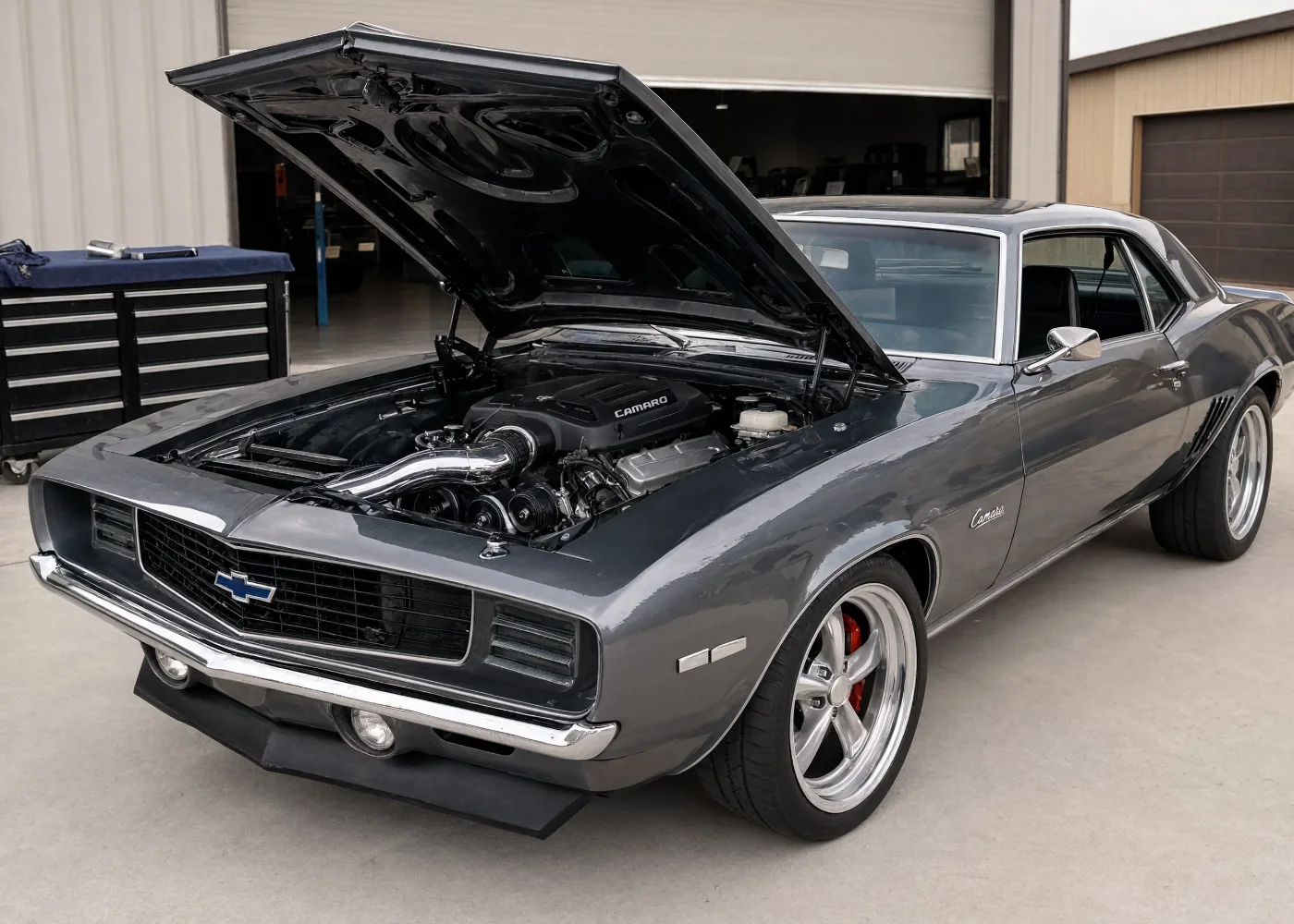
What a buyer is actually paying for
A resto mod sells on the quality of the work and on who did it. A documented build from a shop with a name behind it, with panel gaps that line up and a wiring harness that looks factory, brings real money. The same combination of parts assembled in a home garage with no records brings much less, even when the car drives beautifully.
That is worth saying plainly before you start, because build spend is rarely recovered on resale, and the gap is wide on this kind of car. A hundred thousand dollars of receipts does not make a hundred thousand dollar car. What the car sells for is what it sells for, and that is the figure your deduction follows.
The mechanical spec matters less than most donors expect. Buyers in this market assume modern brakes, modern suspension, air conditioning and an overdrive. What separates one car from another is fit, finish, tune and paperwork.
The title and the VIN come first
Resto mods are usually the easiest modified car to transfer, because the original body and its VIN normally stay with the car. That is the whole point of the category. But not always, and the exceptions are the ones that stop a donation after a truck has already been booked.
Before anything is scheduled we ask three questions. What does the title say? What does the car physically consist of now? And does the VIN on the car match the VIN on the title? If the body was replaced, if a reproduction subframe or full chassis went under an original-body title, or if a tag was moved during the build, the paperwork and the car no longer describe each other, and your state may treat it as a different vehicle.
We check the state process before we send a truck, because taking a car we cannot legally transfer to a buyer is bad for you and worse for the cause. If it turns out the paperwork needs work, we will tell you what your state requires rather than leaving you with a car on a trailer and no way to finish.
The build file is part of the car
Gather everything you have and send it with the car: invoices, the build sheet, engine and transmission part numbers, a dyno sheet, the alignment specs, the tune file, and photographs of the build in progress. Photographs of the chassis before the body went back on are worth more to a buyer than any single receipt, because they show the work nobody can see now.
None of this sets your deduction. The sale does. It matters because a documented car sells for more than an undocumented one, and the sale price is the deduction, so the file works in your favor twice.
Do not return it to stock
Donors sometimes ask whether they should put the original engine back in, or find correct wheels, to make the car "more original" before donating. Do not. A well-executed resto mod is its own market with its own buyers, and a half-reversed one belongs to neither market.
Nor should you pull the modern drivetrain to sell separately. A complete car that starts, drives and stops sells for considerably more than a rolling shell plus a pallet of good parts, and the difference is larger than what the parts bring on their own.
How the deduction works
When we sell the car, your deduction is the gross proceeds of that sale, reported to you on Form 1098-C. It is not what you paid, not what you spent on it, and not a number anyone here is going to quote you in advance.
If you intend to claim more than $5,000 you will need a qualified appraisal. That is your expense and your choice, not something we arrange or pay for.
Appraisals on cars like this should come from someone who knows the market for modified cars specifically. A generalist working from a price guide has no way to value a one-off build, and will usually come in low.
Getting it on a truck
Tell us the ride height, the tire width, whether it has front tow points, and whether it runs under its own power. Lowered cars with air dams need a low-angle ramp or a lift gate, and it is easier to send the right truck the first time than to find out in your driveway.
Leave the fluids in it and leave the battery connected if it holds a charge. A car that starts and idles demonstrates itself to a buyer; a car that has to be winched sells like a project. If it does not run, that is fine, just say so on the form.
Makes and platforms we accept
Chevrolet, Ford, Dodge, Plymouth, Pontiac, Oldsmobile, Buick, AMC, Mercury, Jeep, GMC, Chevrolet C10 and Ford F-100 trucks, plus European and Japanese platforms built the same way — Porsche, BMW, Datsun, Toyota, Land Rover and Ford Bronco among them. Common drivetrain swaps we see and can describe accurately to buyers include LS and LT, Coyote, Hemi, Windsor and Cleveland small blocks, and modern six-speed and ten-speed automatics.
Not seeing yours? The list above is a search aid, not a restriction. We accept any make or model in this category, named here or not, including orphan brands and builders long out of business. What decides a donation is the condition and the paperwork, never the badge, so put yours on the form even if it is not listed.
No manufacturer listed here sponsors, endorses or is affiliated with this program. Names are used only to describe what we accept.
Resto mod questions
Does it have to run?
No. A running, driving car sells for more, so it is worth telling us the truth either way, but we accept unfinished and non-running cars. If it does not run, tell us on the form so we send a truck with a winch.
I have $90,000 in receipts. Does that set my deduction?
No. When we sell the car your deduction is the gross proceeds of the sale, reported on Form 1098-C. Receipts help the car sell for more, which helps the number, but they do not set it.
Should I put the original engine back in first?
No. A finished resto mod has its own buyers. A partly reversed car has fewer.
The engine is not the original. Does that hurt the title?
Usually not. In most states the title follows the body or frame VIN, not the engine. What matters is whether the VIN on the car matches the title. Send us a photo of both and we will check your state before scheduling anything.
It was built by a shop people have heard of. Does that matter?
Yes, quite a lot, and it changes where we sell it. Send the shop name and any build documentation, magazine coverage or show results with your form.
Giving Center does not provide tax, legal or financial advice. Donations are deductible to the extent allowed by law. See IRS Publication 526, Publication 561 and Publication 4303, and consult a tax professional.