
Custom car donation
Donate a custom car built to somebody else's taste
Customs are personal by definition, which is exactly why they are hard to sell privately. The buyer pool for one specific set of choices is narrow. What works instead is a sale to people who understand the craft and price it for what it is, which is what we do.
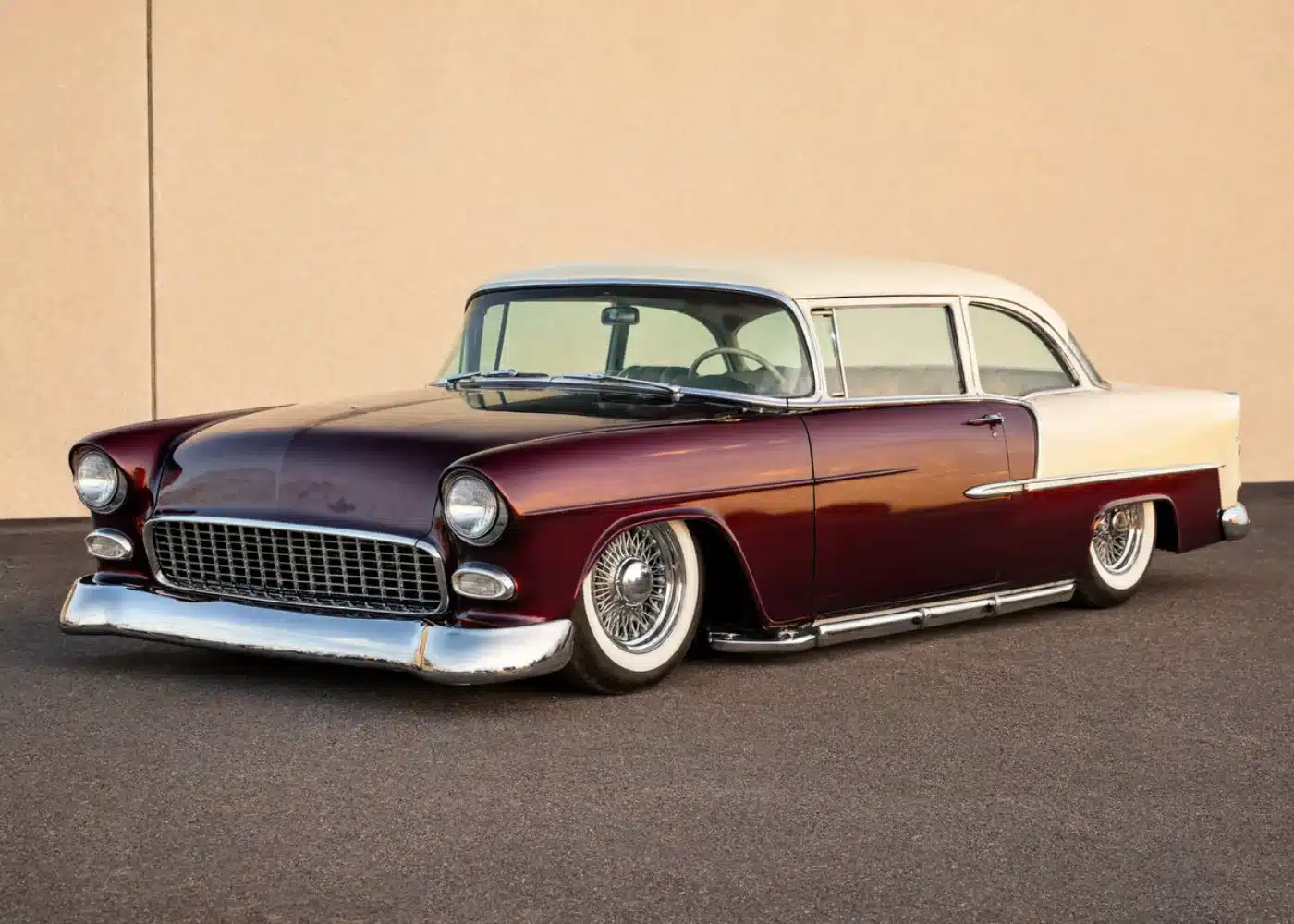
Where donated customs come from
Builders who finished a long project and are ready for it to go to somebody who will drive it. Frequently these have been shown for years and are in genuinely good condition.
Estates. A custom in an estate is opaque to value from the outside, and families are the most likely to be taken advantage of on exactly this kind of car.
Owners of lowriders with hydraulic or air setups, which are their own market with their own knowledgeable buyers.
Enclosed, and mind the ride height
Customs generally go in an enclosed transporter. Giving Center arranges and covers it.
Ride height is the specific issue here. A channeled, bagged or hydraulic car may not clear a standard ramp angle. Tell us the ground clearance at its lowest, whether the suspension can be raised, and whether the system holds pressure. If it sits on the frame, we bring a low-angle trailer.
Do not detail it, do not repaint anything and do not replace parts to make it presentable. Originality is the value here and fresh cosmetic work over honest patina can lower what it brings. Leave it as it sits and send honest photographs.
What decides what a custom brings
- Paperwork. Same as any modified car. A clean matching title first.
- Quality and coherence of the work. Body modifications that were done properly and finish consistently. Half-finished bodywork under paint reads to any buyer and is a major deduction.
- Paint. Candy, flake and pearl work is expensive labor and it does carry value, particularly if a known painter did it.
- Suspension system. Hydraulics or air. What it is, whether it works, whether it holds and whether the pumps and batteries are sound.
- Interior. Custom upholstery is real labor. Tuck-and-roll, diamond stitch, custom dash and audio installs all add when executed well.
Marques and models we accept
Customs are known by base car and by builder.
- Common base cars: Mercury 1949 through 1951, Chevrolet 1949 through 1954 and 1958 through 1964 Impala, Ford 1949 through 1951 Shoebox, Buick, Oldsmobile, Cadillac, Lincoln, Pontiac, plus 1960s and 1970s G-bodies for lowriders.
- Suspension and components: Air Lift, RideTech, Accuair, Pro Hopper, Black Magic and CCE hydraulics, Fatman and Heidts front ends, Wilwood brakes.
- Known shops and painters: Barris-influenced kustom work, Gene Winfield, Rick Dore, So-Cal, Lifestyle and Individuals lowrider club builds.
Not seeing yours? The list above is a search aid, not a restriction. We accept any make or model in this category, named here or not, including orphan brands and builders long out of business. What decides a donation is the condition and the paperwork, never the badge, so put yours on the form even if it is not listed.
Manufacturer and model names appear here so you can find your own vehicle. No manufacturer sponsors, endorses or is affiliated with this program.
What you can deduct
A collector vehicle is titled and the title has to transfer. On older vehicles the paperwork is the most common obstacle: a title from three owners ago, a bill of sale and no title, or a title that does not match the VIN. Tell us exactly what you have before anything is scheduled. Some states have a bonded title or court-ordered process and some make it very hard; the state title rules page covers the general shape of it. If the body was swapped, the frame replaced or the VIN restamped, tell us before anything is scheduled and we will check your state.
Giving Center sells the car and your deduction is the gross sale proceeds on Form 1098-C. A finished quality custom can clear $5,000. Most land between $500 and $5,000, where Form 8283 Section A applies.
The same honest caution as any build: custom money is rarely recovered on resale. Your deduction follows the sale. If the sale clears $5,000 the IRS requires a qualified appraisal plus Form 8283 Section B. On a vehicle whose value depends on originality and documentation, have it done by an appraiser who knows the category rather than a generalist. It is your expense and your decision, and the appraiser has to be independent of us.
Custom car donation questions
It sits on the frame with the bags down.
Tell us the lowest ground clearance and whether the suspension can be raised. If it cannot, we bring a low-angle trailer. It is a normal situation.
The hydraulics no longer hold.
Disclose it. Pumps, solenoids and batteries are known repairs and it lowers the sale rather than stopping the donation.
Who painted it matters?
Yes, genuinely, if it was somebody known. Tell us if you know, and send any documentation or magazine feature you have.
I have magazine features and show awards for the car.
Send them. Provenance and published history add real value in this market.
Nobody else likes what I built.
That is the usual reason these are hard to sell privately, and it is the reason a donation works better. We sell to people who price the craft rather than the taste.
Giving Center does not provide tax, legal or financial advice. Donations are deductible to the extent allowed by law. See IRS Publication 526, Publication 561 and Publication 4303, and consult a tax professional.