
Collector cars
Donate a street rod
A pre-war body built to be driven, with brakes and air conditioning that belong to this century. The paperwork on these cars is its own subject, and it is the first thing we look at.
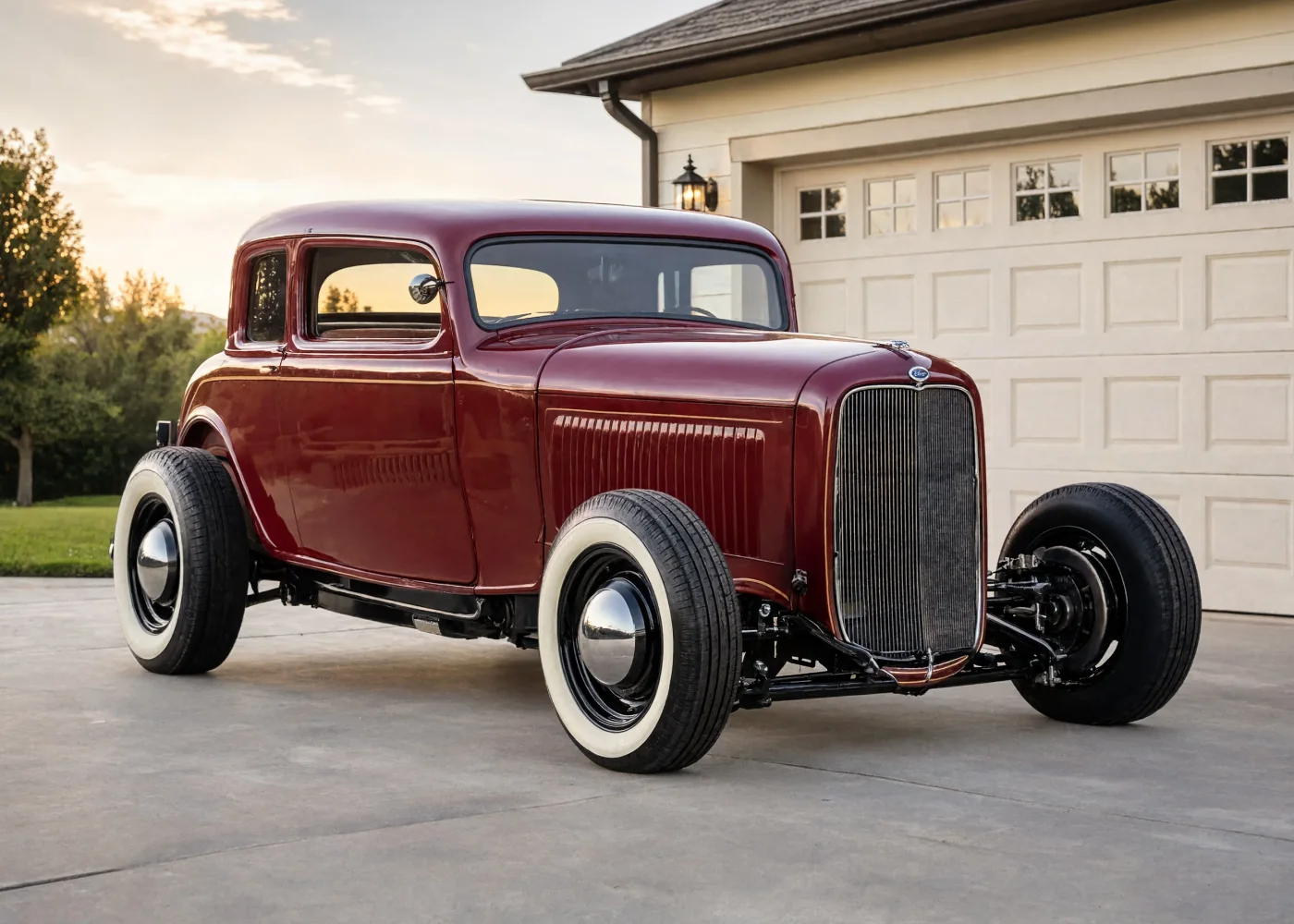
Street rod, hot rod, or custom
The words overlap and different parts of the country use them differently, so it does not greatly matter which one you pick on the form. Broadly: a street rod is an early body, usually pre-1949, modernized to be comfortable on the road, with paint and trim finished to a high standard. A hot rod in the older sense is stripped and period, built for the look and the noise. A custom is about the bodywork — chopped, sectioned, shaved.
If your car is a 1932 Ford with a small block, disc brakes and a heater, this is the right page. If you are not sure, use the form and describe it in your own words. We will sort out which market it belongs in.
Street rod is a registration class in many states
Well over half the states have a street rod or custom vehicle category with its own plate, and the rules inside it vary more than donors expect. Some register the car by the model year of the body regardless of what is underneath. Some require a safety inspection or a VIN inspection before the plate is issued. Some attach conditions to the class, limiting the car to occasional or exhibition use rather than daily driving.
Those conditions travel with the car, so they affect who can buy it and what it is worth. They also affect how the transfer is done. We look at your state first rather than assuming a standard title transfer, and if the class carries a restriction we will say so rather than discovering it at the sale.
The title follows the body or the frame, and you need to know which
This is the same question that sits on the hot rod page, and it is the single most common reason an early modified car cannot be donated. In most states the title follows the body VIN. In several it follows the frame. If a reproduction chassis went under an original-body title, or the body is a reproduction on an original frame, then in some states the car on your driveway is not the car described on your title.
So before we book a truck we ask what the title says, what the car actually consists of, and whether the VINs match. If the car needs a state-assigned VIN or a specially-constructed vehicle title to transfer cleanly, better to find that out now. We will tell you what your state requires and whether it is worth doing.
What a buyer pays for
Finished sells. Paint without runs, doors that shut, glass that seals, a clean engine bay, working gauges, a floor you can put your feet on without the exhaust cooking them. Air conditioning, disc brakes and an overdrive are expected on a street rod and their absence is noticed.
An unfinished street rod is a project and prices like one, whatever the receipts say. Build money is very rarely recovered in this corner of the hobby, and we would rather you heard that from us before the pickup than from the 1098-C afterwards.
Leave it as it is
Do not part it out to raise the total. A complete driving car brings more than the sum of a body, a chassis and a drivetrain sold separately, and it brings it faster. Do not repaint anything to freshen it either — a partial respray on one panel reads as accident repair to a buyer who does not know the car.
If it has period parts on it — old speed equipment, a vintage steering wheel, original gauges — leave them. Those are the details that make a car specific rather than generic.
How the deduction works
When we sell the car, your deduction is the gross proceeds of that sale, reported to you on Form 1098-C. It is not what you paid, not what you spent on it, and not a number anyone here is going to quote you in advance.
If you intend to claim more than $5,000 you will need a qualified appraisal. That is your expense and your choice, not something we arrange or pay for.
Use an appraiser who works in early modified cars. Street rods are a specific market and a general automotive appraiser does not have comparable sales to work from.
Loading an early car
These load differently from anything else we move. Ride height is low, front bumpers are often absent or decorative, and there may be no structural tow point at the front at all. Tell us what the car has and we will send a driver who uses soft straps on the suspension rather than hooks through the frame.
Open transport is usual. If the car has fresh paint and real value, say so and we will look at enclosed instead.
Street rod questions
Is a fiberglass body a problem?
Not for us, and not for buyers. It is a question for your state titling office, because a reproduction body may need a state-assigned VIN. Tell us what the body is and we will check before scheduling.
Does the street rod plate transfer to the new owner?
It depends on the state, and sometimes on the buyer. Some street rod plates are personal to the registrant and the new owner reapplies. We handle the transfer paperwork; you just need to send us the plate and registration with the title.
It is not finished. Is it still worth donating?
Often yes, and we accept it. Understand that it will sell as a project, which means the deduction will reflect a project price rather than what you have put into it.
The title says 1932 but the body is a reproduction. What now?
Send us a photo of the title and of any VIN or serial on the body and frame. Some states are straightforward about this and some require a specially-constructed title. We check yours before a truck is booked.
Can I keep the engine and donate the rest?
You can, but it will cost you more than the engine is worth. A rolling chassis and body with no drivetrain sells as parts.
Giving Center does not provide tax, legal or financial advice. Donations are deductible to the extent allowed by law. See IRS Publication 526, Publication 561 and Publication 4303, and consult a tax professional.