
Japanese collectible donation
Donate a Japanese classic while the market is genuinely paying for them
Japanese classics were undervalued for thirty years and then stopped being. That matters for a donation, because a car a family assumes is an old commuter may be the most valuable thing in the garage. Tell us what you have before you assume anything.
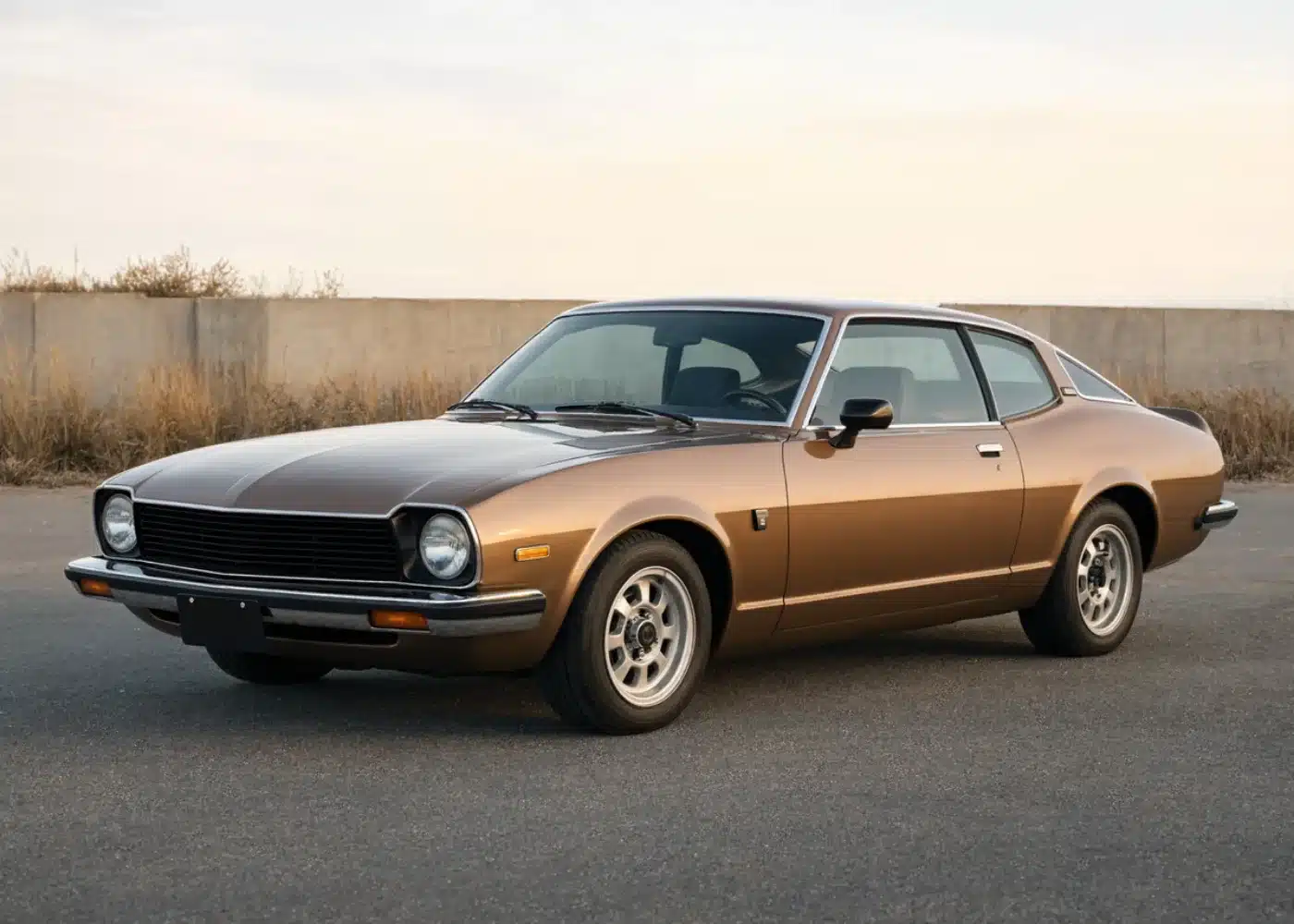
Where these come from
Original owners and their families. A Japanese car bought new in 1978 and kept for forty years is exactly the profile this market wants, and those cars are getting scarce.
Estates where nobody realized. This is the single most common way we see a genuinely valuable Japanese classic: a family assumes a rusty coupe in a carport is worth scrap money. Sometimes it is. Often it is not.
Enthusiasts with a project that stalled, and owners of clean survivors moving on.
Hauled, and gently
It goes on a flatbed or in an enclosed transporter, arranged and covered by Giving Center. It does not need to run.
Tell us whether it rolls, steers and stops, and whether it has been sitting. Cars parked since the 1990s frequently have seized brakes and a stuck clutch, and that is normal.
Do not detail it, do not repaint anything and do not replace parts to make it presentable. Originality is the value in this category and fresh paint over honest patina can genuinely lower what a car brings. Leave it exactly as it sits and send us honest photographs. On Japanese cars specifically, do not replace the original wheels with modern ones and do not remove a period aftermarket part that came with the car — some of those are collectible in their own right.
What decides what one brings
- Rust, and there is nowhere it hides. These cars rusted badly and buyers know precisely where: rear arches, floor pans, strut towers, battery tray, hatch surround and frame rails. Photograph all of them.
- Originality. Original engine, original interior, original wheels and original paint. Unmolested survivors command a substantial premium over modified cars in this market specifically.
- Model and variant. Small differences matter enormously. Get the exact model and trim designation, and the engine code if you can find it.
- Documentation. Original window sticker, owner manual, tool kit and service book. Japanese collectors care about these more than most.
- Whether the drivetrain turns. Particularly on rotary-engined cars, where a seized or low-compression engine is a substantial and expensive problem.
Marques and models we accept
Exact model, trim and engine code all matter here.
- Nissan and Datsun: 240Z, 260Z, 280Z and 280ZX, 510, 610, 710, Roadster 1600 and 2000, 300ZX, Skyline, Pulsar, Sentra SE-R, Silvia and 240SX.
- Toyota: Land Cruiser FJ40, FJ60 and FJ80, Celica, Supra, Corolla AE86, Cressida, MR2, Starlet, Hilux, 2000GT.
- Others: Mazda RX-2, RX-3, RX-7 and Miata, Honda S600, S2000, CRX, Civic Si and Prelude, Subaru BRAT, WRX and SVX, Mitsubishi Starion and 3000GT, Isuzu Impulse, Suzuki Samurai.
Manufacturer and model names appear here so you can find your own car. No manufacturer sponsors, endorses or is affiliated with this program.
The paperwork, and what you can deduct
A collector car is a titled vehicle and the title has to transfer. On older cars the paperwork is the most common obstacle: a title from three owners ago, a bill of sale and no title, or a title that does not match the VIN on the car. Tell us exactly what you have before anything is scheduled. Some states have a bonded title or a court-ordered process and some make it very hard, and the state title rules page covers the general shape of it. Right-hand-drive imports brought in under the twenty-five-year rule are a specific case: the import paperwork has to be in order, and a car without it is hard to title and therefore hard to sell. If yours is an import, tell us.
Giving Center sells the car and your deduction is the gross sale proceeds on Form 1098-C. Values in this category have moved a great deal in both directions over the past decade, so neither an old guide book nor a headline auction result tells you much. We will give you a realistic range and the sale sets the deduction.
Collector cars are the category where the qualified appraisal matters most. If the sale clears $5,000 the IRS requires one plus Form 8283 Section B, and on a car whose value depends on originality, numbers matching and documentation, it is worth having done by an appraiser who knows the marque rather than a generalist. It is your expense and your decision, and the appraiser has to be independent of us.
Japanese classic donation questions
It is rusty. Is it worthless?
Not necessarily, and this is the category where people most often assume wrong in both directions. Rust matters a great deal and desirability can outweigh it. Send photos of the arches, floors and strut towers and we will tell you honestly.
It has a period aftermarket exhaust and wheels.
Tell us and keep them with the car. Some period parts are collectible themselves. Do not swap back to stock unless you have the original parts, in which case send both.
The rotary engine does not turn.
Worth disclosing clearly, because a seized rotary is an expensive rebuild and buyers price it sharply. It does not stop the donation.
Mine is a right-hand-drive import.
Tell us. Import and title paperwork has to be in order for a buyer to register it, and that is worth confirming before anything is scheduled.
Do you take modified ones?
Yes, at lower numbers than an original car in this market. Disclose what was done and send any stock parts you still have.
Giving Center does not provide tax, legal or financial advice. Donations are deductible to the extent allowed by law. See IRS Publication 526, Publication 561 and Publication 4303, and consult a tax professional.