
Military vehicle donation
Donate a military vehicle, with the paperwork checked before the truck arrives
Former military vehicles have a devoted collector market and a paperwork history unlike anything else on the road. Some were sold with a clean bill of sale and no title, some carry a demilitarization condition, and a few classes were never released for road use at all. We sort that out first.
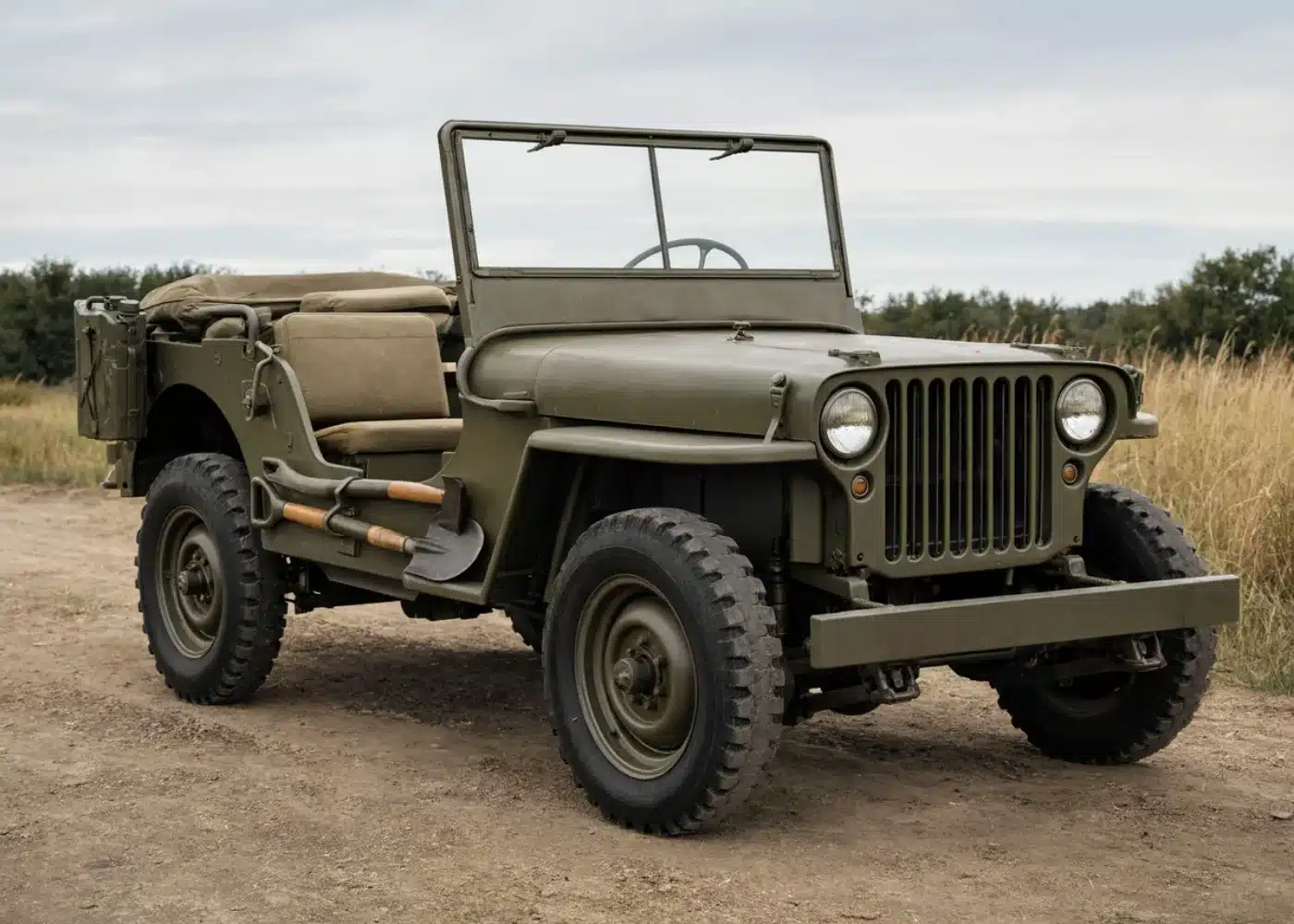
Where these come from
Collectors and reenactors thinning a group, and families settling an estate where somebody spent thirty years on a restoration.
Veterans and their families. A vehicle bought because it was the one somebody drove in service carries real meaning, and when it can no longer be maintained a donation is often preferred to a sale.
Farms and ranches that bought surplus trucks as work vehicles decades ago. Those tend to be complete, hard-used and mechanically simple.
What we check before scheduling
Surplus military vehicles were released through several different channels over eighty years and the paperwork reflects that. Some come with a standard state title. Many have only a government bill of sale, a DD Form 1348 or an SF-97, and titling from those documents varies enormously by state.
Two things matter specifically. First, whether the vehicle carries a demilitarization or non-road-use condition from its release, which some classes do and which limits what a buyer can legally do with it. Second, whether your state will title a vehicle from the documents you actually hold.
Tell us what paperwork you have, word for word if it is an unfamiliar form, and we will check your state before anything is scheduled. We also need you to confirm the vehicle carries no ordnance, no ammunition, no pyrotechnics and no classified equipment. That is not a formality and it is the one thing that will stop a pickup on the spot.
What decides what one brings
- Paperwork. First, and more consequential here than in any other collector category.
- Model and era. Wartime quarter-tons and half-tracks are a different market from 1980s trucks. Correct wartime vehicles lead.
- Originality and correctness. Correct engine, correct markings blanked or period-appropriate, correct canvas, correct tires. Reenactor buyers care a great deal.
- Completeness. Pioneer tools, jerry cans, brackets, canvas, bows and data plates. Small correct fittings are hard to find and add up.
- Mechanical condition. Whether it runs, and whether the drivetrain and transfer case work. These are simple machines and a running one is worth substantially more.
Marques and models we accept
Collectors use exact model designations.
- Wartime: Willys MB and Ford GPW, Dodge WC series, GMC CCKW, Studebaker and White half-tracks, Ford GPA, Diamond T.
- Postwar and Cold War: Willys M38 and M38A1, Ford and Kaiser M151 MUTT, Dodge M37, M35 and M35A2 two-and-a-half-ton, M54 five-ton, M715 and M725, Gama Goat.
- Modern surplus: CUCV M1008 and M1009, HMMWV M998 and M1038, LMTV and MTV M1078 and M1083, M105 and M101 trailers, generator and shop-van trailers.
Manufacturer and model names appear here so you can find your own vehicle. No manufacturer sponsors, endorses or is affiliated with this program.
What you can deduct
Read the paperwork section above first. Where a normal state title exists, the usual rules apply and the state title rules page covers replacements.
Giving Center sells the vehicle and your deduction is the gross sale proceeds on Form 1098-C. A correct running wartime vehicle with clean paperwork clears $5,000 in most cases, and rare models go well past it. A postwar truck in running condition usually lands between $500 and $5,000.
A vehicle with a demilitarization restriction or untitleable paperwork may only be saleable for parts or for off-road use, which lowers the number substantially. We will tell you plainly if that applies before anything is scheduled. If the sale clears $5,000 the IRS requires a qualified appraisal plus Form 8283 Section B. On a vehicle whose value depends on originality and documentation, have it done by an appraiser who knows the category rather than a generalist. It is your expense and your decision, and the appraiser has to be independent of us.
Military vehicle donation questions
All I have is a government bill of sale.
That is common and it may be enough depending on your state. Tell us exactly what document you hold and we will check before scheduling anything.
What about the markings and insignia?
Period-correct markings are part of the value to a collector and can stay. Current-unit markings and anything implying active service should come off, and we can handle that.
Are there things you cannot take?
Yes. No ordnance, no ammunition, no pyrotechnics, no classified or controlled equipment, and nothing carrying a restriction that prohibits transfer. Confirm the vehicle is clear of all of that before pickup.
Does a demilitarization condition kill the donation?
Not always, but it limits what a buyer can do with the vehicle and therefore the price. Tell us and we will be straight about the number.
Do you take military trailers and generators?
Yes. Water trailers, cargo trailers, generator sets and shop vans are all handled here.
Giving Center does not provide tax, legal or financial advice. Donations are deductible to the extent allowed by law. See IRS Publication 526, Publication 561 and Publication 4303, and consult a tax professional.