
Vintage wagon donation
Donate a vintage station wagon now that people want them again
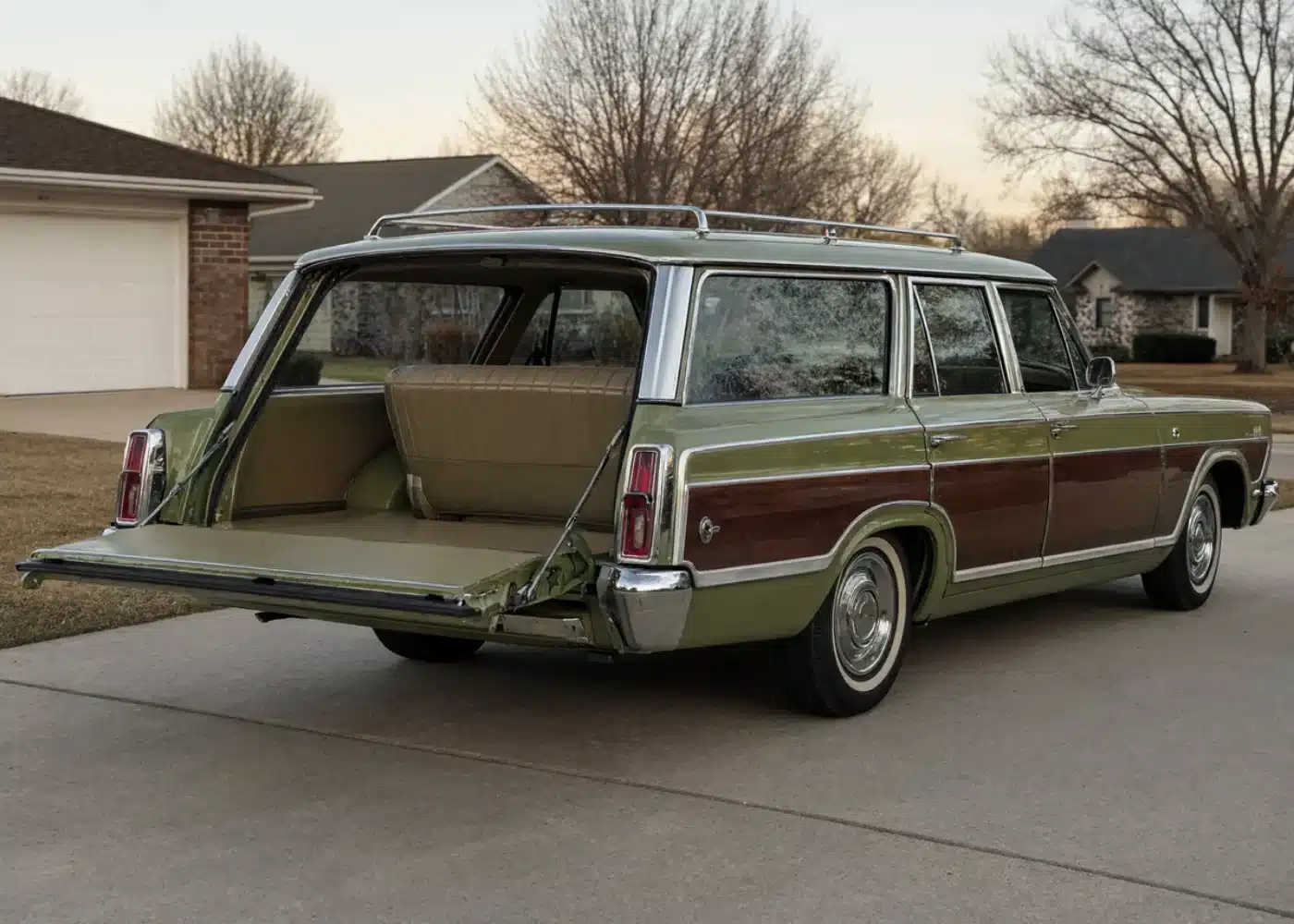
Station wagons were worth nothing for forty years and then the market turned. A woodgrain full-size wagon that was a punchline in 1995 is now a genuinely desirable car, and that shift is worth knowing before a family decides one is scrap.
Where donated wagons come from
Families who owned it from new. A wagon is the archetypal family car and it is often kept far longer than it makes sense to, which means survivors do exist.
Estates, where a wagon is frequently assumed worthless. That assumption used to be right and is not any more.
Owners of the desirable specialty wagons: hardtop wagons, glass-roof models and two-door wagons, which have always had collectors and now have more.
Hauled, and the tailgate matters
It goes on a flatbed or enclosed, arranged and covered by Giving Center. It does not need to run.
Tell us whether the tailgate works, and which kind it is. Clamshell tailgates with a power window and a retracting lower gate are complicated, expensive to fix and a real value factor, and a seized one needs to be secured for transport.
Do not detail it, do not repaint anything and do not replace parts to make it presentable. Originality is the value here and fresh cosmetic work over honest patina can lower what it brings. Leave it as it sits and send honest photographs. On wagons specifically, do not try to fix or remove lifting woodgrain applique. Reproduction woodgrain exists for some models and not others, and a buyer would rather assess the original.
What decides what a wagon brings
- Tailgate function. Especially a clamshell. Whether it operates is one of the first questions a buyer asks.
- Rear floor, wheel well and tailgate area rust. Wagons rust in the back where water sits behind the wheel arches and under the cargo floor. Photograph all of it.
- Woodgrain condition. Original applique intact and not lifting badly is worth real money, because replacing it well is difficult.
- Third-row seat. Present and functional, whether rear-facing or side-facing. A missing third row is hard to source.
- Model and body style. Hardtop wagons, two-door wagons and glass-roof models command substantial premiums over a standard four-door.
Marques and models we accept
Body style and model matter enormously here.
- General Motors: Chevrolet Nomad, Kingswood, Townsman and Caprice Estate, Pontiac Safari and Grand Safari, Oldsmobile Vista Cruiser and Custom Cruiser, Buick Sport Wagon and Estate Wagon, GMC Suburban.
- Ford and Chrysler: Ford Country Squire, Country Sedan, Ranch Wagon and Torino Squire, Mercury Colony Park, Chrysler Town and Country, Dodge Coronet and Monaco wagons, Plymouth Fury and Satellite wagons.
- Compact, import and specialty: Chevrolet Vega and Chevelle wagons, Ford Pinto and Fairmont, AMC Rambler Cross Country and Hornet Sportabout, Volvo 145, 245 and 745, Mercedes-Benz W123 and W124 wagons, Volkswagen Squareback and Vanagon.
Not seeing yours? The list above is a search aid, not a restriction. We accept any make or model in this category, named here or not, including orphan brands and builders long out of business. What decides a donation is the condition and the paperwork, never the badge, so put yours on the form even if it is not listed.
Manufacturer and model names appear here so you can find your own vehicle. No manufacturer sponsors, endorses or is affiliated with this program.
The paperwork, and what you can deduct
A collector vehicle is titled and the title has to transfer. On older vehicles the paperwork is the most common obstacle: a title from three owners ago, a bill of sale and no title, or a title that does not match the VIN. Tell us exactly what you have before anything is scheduled. Some states have a bonded title or court-ordered process and some make it very hard; the state title rules page covers the general shape of it.
Giving Center sells the car and your deduction is the gross sale proceeds on Form 1098-C. A sound woodgrain full-size wagon or a desirable specialty model can clear $5,000, where a qualified appraisal and Form 8283 Section B are required at your expense. A standard four-door wagon in fair condition usually lands between $500 and $5,000.
A rusted-out wagon with a seized tailgate and a missing third row can sell under $500, where the deduction is the lesser of fair market value or $500. But do not assume that is where yours sits, because this is one of the categories where the market moved most and old assumptions are frequently wrong now. If the sale clears $5,000 the IRS requires a qualified appraisal plus Form 8283 Section B. On a vehicle whose value depends on originality and documentation, have it done by an appraiser who knows the category rather than a generalist. It is your expense and your decision, and the appraiser has to be independent of us.
Vintage wagon donation questions
Are wagons worth anything now?
Yes, and considerably more than they were fifteen years ago. This is the collector category where old assumptions are most likely to be wrong.
The woodgrain is peeling badly.
Leave it. Do not try to remove or patch it. Reproduction applique exists for some models and not others, and a buyer would rather assess the original.
The clamshell tailgate is seized.
Tell us. It is a known expensive repair, it is a real value factor, and it needs securing for transport.
The third-row seat was taken out years ago.
Worth disclosing. A missing third row is genuinely hard to source and it lowers the sale.
Do you take Volvo and Mercedes wagons?
Yes. The 240 and W123 wagons in particular have their own following and sell well.
Giving Center does not provide tax, legal or financial advice. Donations are deductible to the extent allowed by law. See IRS Publication 526, Publication 561 and Publication 4303, and consult a tax professional.