
Vintage and project bikes
Donate a vintage motorcycle or the project that never got finished
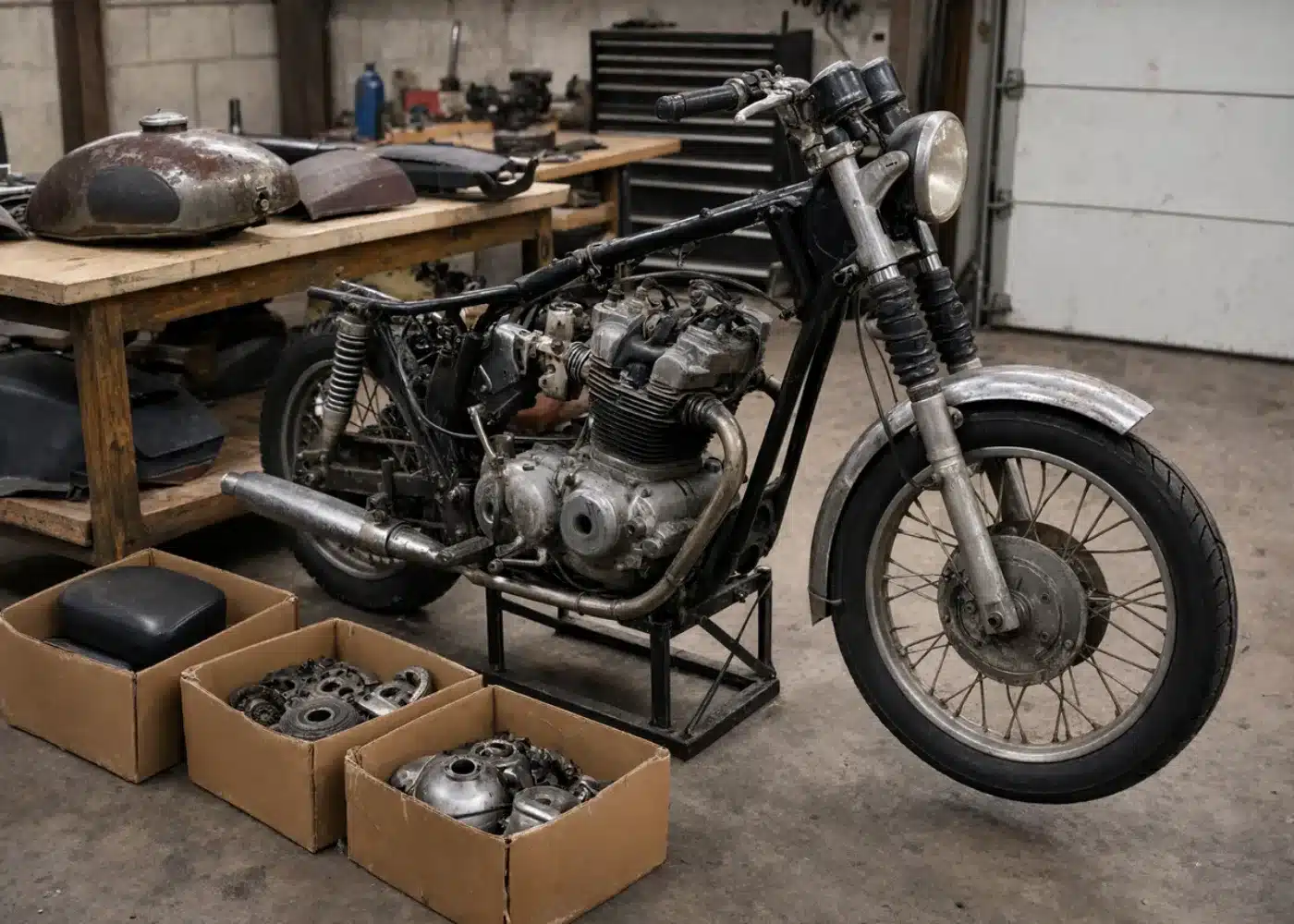
Every garage has one: a bike from 1972 in three boxes and a frame, bought with every intention. Vintage machines and unfinished projects sell to restorers who have the skills and the space, and completeness matters more to them than condition.
Why vintage bikes and projects get donated
Because the restoration is not going to happen, and admitting that is the hardest part. The bike was bought in a moment of enthusiasm, disassembled, and then life intervened. Ten years later the parts are in boxes, some are missing, and selling it means explaining to strangers what is and is not there.
We also receive them from families who inherited a bike they cannot identify. If that is you, send photographs of the frame and engine numbers; we can usually tell you what it is, roughly what it is worth, and what your state needs.
Collected complete, boxes included
A vintage bike travels in a truck or an enclosed trailer. A disassembled one is loaded by hand with every box and crate that belongs to it. Giving Center arranges and pays for the transport.
Gather the parts before we arrive, even loosely, and tell us roughly what is there. A complete project is worth considerably more than a partial one, and a buyer who finds a missing carburetor after the fact pays less next time.
What the vintage market pays for
- Completeness, the single most important factor on a project. Tins, wiring, carburetors and side covers are what stall restorations.
- Model desirability, with certain years and models commanding several times what a similar bike brings.
- Matching numbers, frame and engine, and whether documentation supports them.
- Originality over a partly modernized restoration.
- Whether the engine turns, which tells a buyer whether they are facing a rebuild or a seizure.
- Title status, since a titled vintage bike is worth noticeably more than an identical one without.
The paperwork, and what you can deduct
Older machines sometimes have no title, which is the hardest case in this class because the bike cannot be sold until ownership is established. Depending on your state that means a duplicate, a bonded title, or a notarized affidavit of ownership with the frame number. This page covers each route, and our state title rules page groups the states.
Your deduction is the gross sale proceeds once Giving Center sells it, on Form 1098-C. Items in this class often sell below $500, in which case you may deduct the lesser of fair market value or $500. Above $500 you file Form 8283 Section A; above $5,000 the IRS requires a qualified appraisal you obtain and pay for. We tell you which to expect before pickup. Full detail on the tax benefits page.
Vintage motorcycle donation questions
I have no title for a bike from the 1960s. Can I donate it?
Often, depending on your state. Some states exempt vehicles over a certain age from titling entirely. Call us and we will tell you what yours needs.
It is in boxes. Is that a problem?
No, but completeness is everything. Box up every part and describe what is there.
I do not know what the bike is.
Send photographs of the frame number, the engine case and the whole machine. We can usually identify it and tell you roughly what it is worth.
Will it be scrapped?
No. Vintage machines go to collectors and restorers. Parting out is only ever discussed with you, and never without your agreement.
Giving Center does not provide tax, legal or financial advice. Donations are deductible to the extent allowed by law. See IRS Publication 526, Publication 561 and Publication 4303, and consult a tax professional.