
Cruiser donation
Donate a cruiser when the riding days are behind you
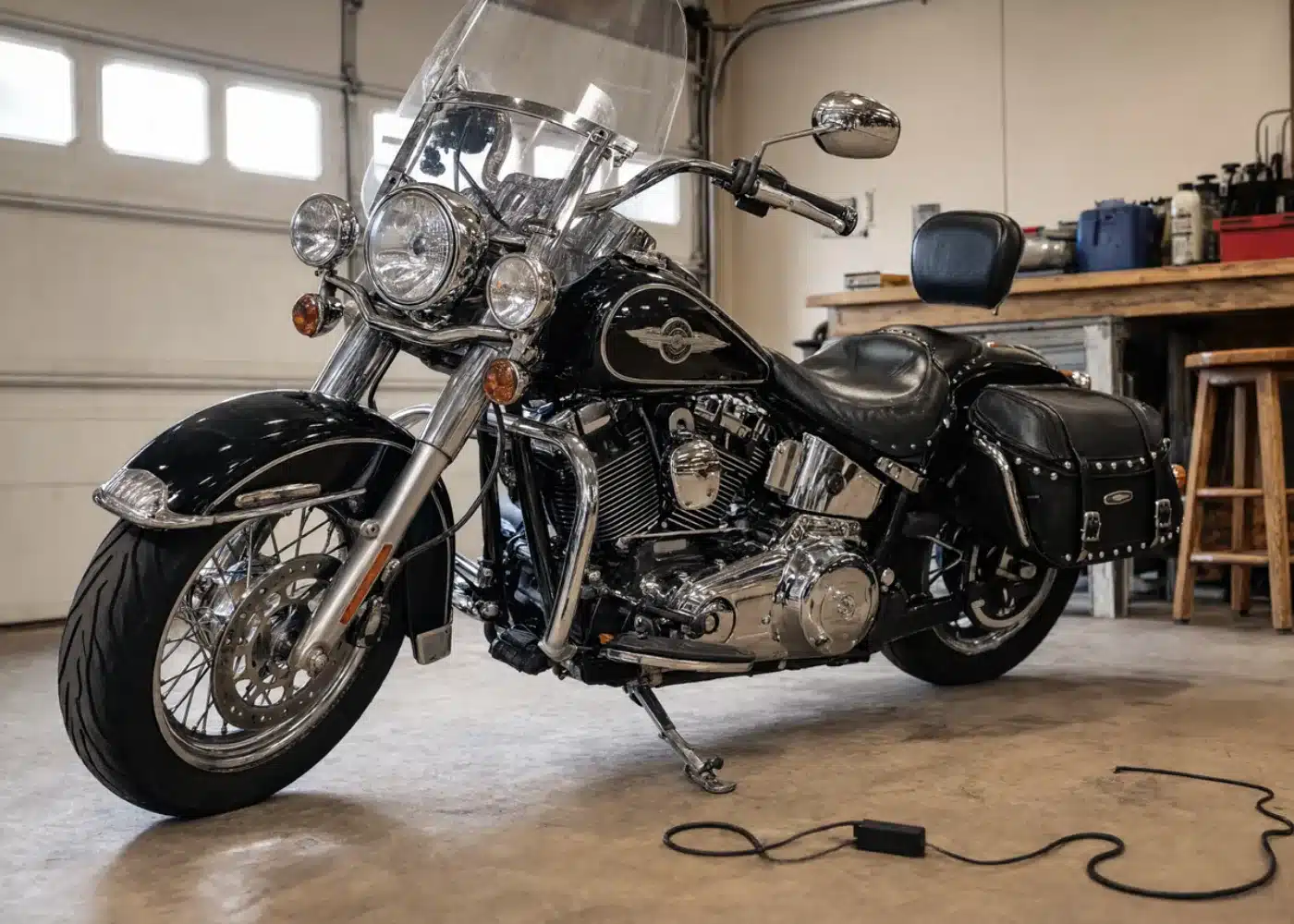
Most cruisers that come to us belong to someone who rode for thirty years and stopped for a reason that had nothing to do with the bike. Shoulders, balance, eyesight, or a family that finally asked. The bike is often immaculate and very low mileage, which makes it a strong donation.
Why cruisers get donated rather than sold
Because selling a motorcycle means letting a stranger take it around the block, and nobody wants to watch someone else drop their bike in the street. It also means a cash transaction in a driveway, which older sellers in particular would rather avoid.
The second reason is that these bikes are often worth more to the owner than the market pays. A heavily customized cruiser with ten thousand dollars of chrome does not return that on resale, and being told so by a series of buyers is a discouraging way to spend a month.
Loaded into a truck, never ridden off your property
The bike goes into a truck bed or an enclosed trailer, strapped down by someone who moves motorcycles for a living. A running bike is still loaded rather than ridden. Non-running bikes are loaded with a ramp and a winch. Giving Center arranges and pays for it.
Tell us whether it starts, whether the tires hold air, and whether it is behind other vehicles in a garage. If there are extra parts, a stock exhaust you swapped out years ago, or a cover and a battery tender, include them.
What decides what a cruiser brings
- Brand and model, which dominates this market more than in any other class of bike.
- Mileage, with genuinely low-mileage examples worth a real premium.
- Whether it runs, and how long since it last did.
- Original versus customized. Tasteful upgrades help; heavy custom work shrinks the buyer pool.
- Tires, battery and fluids, which age out on the calendar even at low mileage.
- Bags, screen and backrest, plus service records and both keys.
The paperwork, and what you can deduct
Motorcycles are titled in every state, though very old machines sometimes have none. If the title is missing, a duplicate goes to the registered owner in one to four weeks, and a few states require a notarized signature; see state title rules. Any recorded lien must be released before sale, and a salvage or rebuilt title is accepted as it is.
Your deduction is the gross sale proceeds once Giving Center sells it, on Form 1098-C. Items in this class often sell below $500, in which case you may deduct the lesser of fair market value or $500. Above $500 you file Form 8283 Section A; above $5,000 the IRS requires a qualified appraisal you obtain and pay for. We tell you which to expect before pickup. Full detail on the tax benefits page.
Cruiser motorcycle donation questions
Will anyone test ride it from my house?
No. The bike is loaded into a truck or trailer and strapped down. Nothing is ridden off your property.
It has been sitting for four years. Is it still worth donating?
Usually yes. A garage-kept bike often needs fuel, a battery and tires, which buyers expect and price in.
Should I include the aftermarket parts?
Yes, and the stock parts too if you still have them. Both add to the sale.
Do you take bikes with salvage titles?
Yes. They sell for less and the process is otherwise identical.
Giving Center does not provide tax, legal or financial advice. Donations are deductible to the extent allowed by law. See IRS Publication 526, Publication 561 and Publication 4303, and consult a tax professional.