
Touring bike donation
Donate a touring bike when the long rides have ended
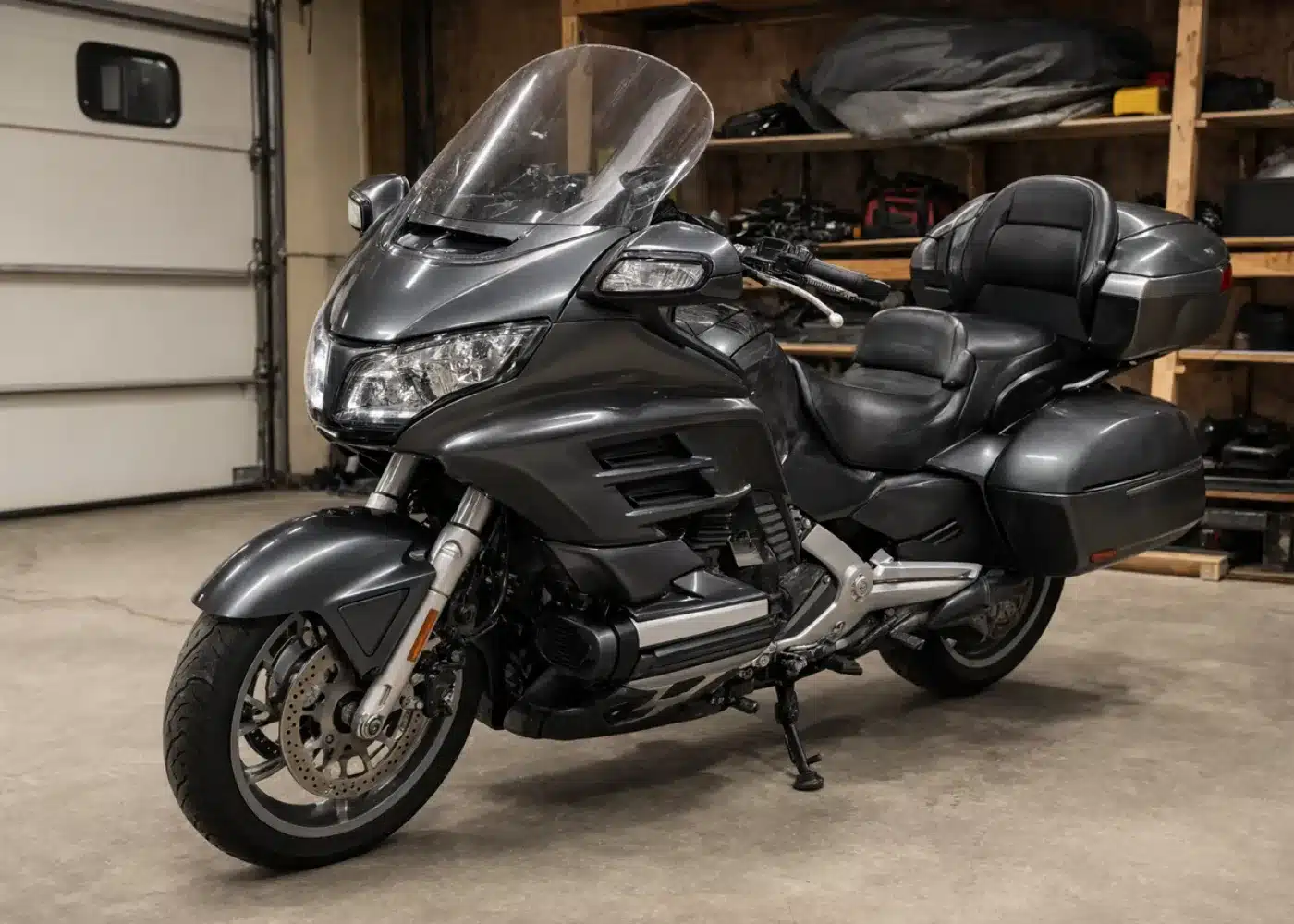
Full dressers and baggers are the most valuable motorcycles we receive and the most likely to clear the $5,000 appraisal threshold. They are also the heaviest, which is exactly why owners stop riding them: a 900-pound bike at low speed is harder on a rider every year.
Who donates a touring bike
Riders in their seventies and eighties, mostly, and their families. The decision is usually about weight and balance rather than desire, which means the bike is often in excellent condition with full service history and every accessory the dealer offered.
Trikes and trike conversions follow the same pattern one step later: the conversion bought a few more years of riding, and now it is time. Converted trikes are a specific market and worth documenting carefully, since the conversion kit is a significant part of the value.
Enclosed transport where the bike warrants it
Touring bikes are heavy and expensive, so they travel in an enclosed trailer with soft straps and a wheel chock wherever practical. Trikes need a wider trailer, which we arrange. Giving Center books and pays for the transport.
Tell us whether it starts, whether the tires are serviceable, and how much room the driver has to maneuver a heavy bike out of a garage. If there is a lift, a cover, spare windshields or a service file, include them.
What decides what a touring bike brings
- Brand and model generation, the primary driver in this market.
- Mileage and service history, with documented maintenance worth real money on a high-mileage bike.
- Accessories. Audio, navigation, heated grips, top case, lowers and a passenger backrest.
- Trike conversion, which changes both the value and the buyer entirely.
- Tires and brakes, expensive on a heavy bike and checked first.
- Fairing and bag condition, since paint-matched plastic is costly to repair.
The paperwork, and what you can deduct
Motorcycles are titled in every state, though very old machines sometimes have none. If the title is missing, a duplicate goes to the registered owner in one to four weeks, and a few states require a notarized signature; see state title rules. Any recorded lien must be released before sale, and a salvage or rebuilt title is accepted as it is.
Your deduction is the gross sale proceeds once Giving Center sells it, on Form 1098-C. Items in this class regularly clear $5,000, and when your claim does the IRS requires a qualified appraisal that you obtain and pay for, plus Form 8283 Section B signed by your appraiser and by Giving Center. We tell you before pickup whether to expect it. Full detail on the tax benefits page.
Touring motorcycle donation questions
Will my touring bike need an appraisal?
Possibly. Late-model dressers and trikes often sell above $5,000, and above that figure the IRS requires a qualified appraisal you obtain and pay for. We tell you before pickup whether we expect it.
Do you take trikes and conversions?
Yes. Tell us which conversion kit was used; it is a significant part of the value.
Can enclosed transport be arranged?
Yes, at our expense, wherever the bike warrants it.
The bike has high mileage. Does that end its value?
No. Touring bikes are built for miles, and a documented service history matters more than the odometer.
Giving Center does not provide tax, legal or financial advice. Donations are deductible to the extent allowed by law. See IRS Publication 526, Publication 561 and Publication 4303, and consult a tax professional.