
Telehandler donation
Donate a telehandler and skip the hardest machine to sell privately
A telehandler sits in an awkward spot. It is too specialized for a general equipment buyer and too heavy for a casual one to haul. Contractors who own one and stop needing it often find the machine sitting for a year while the market for it happens somewhere else.
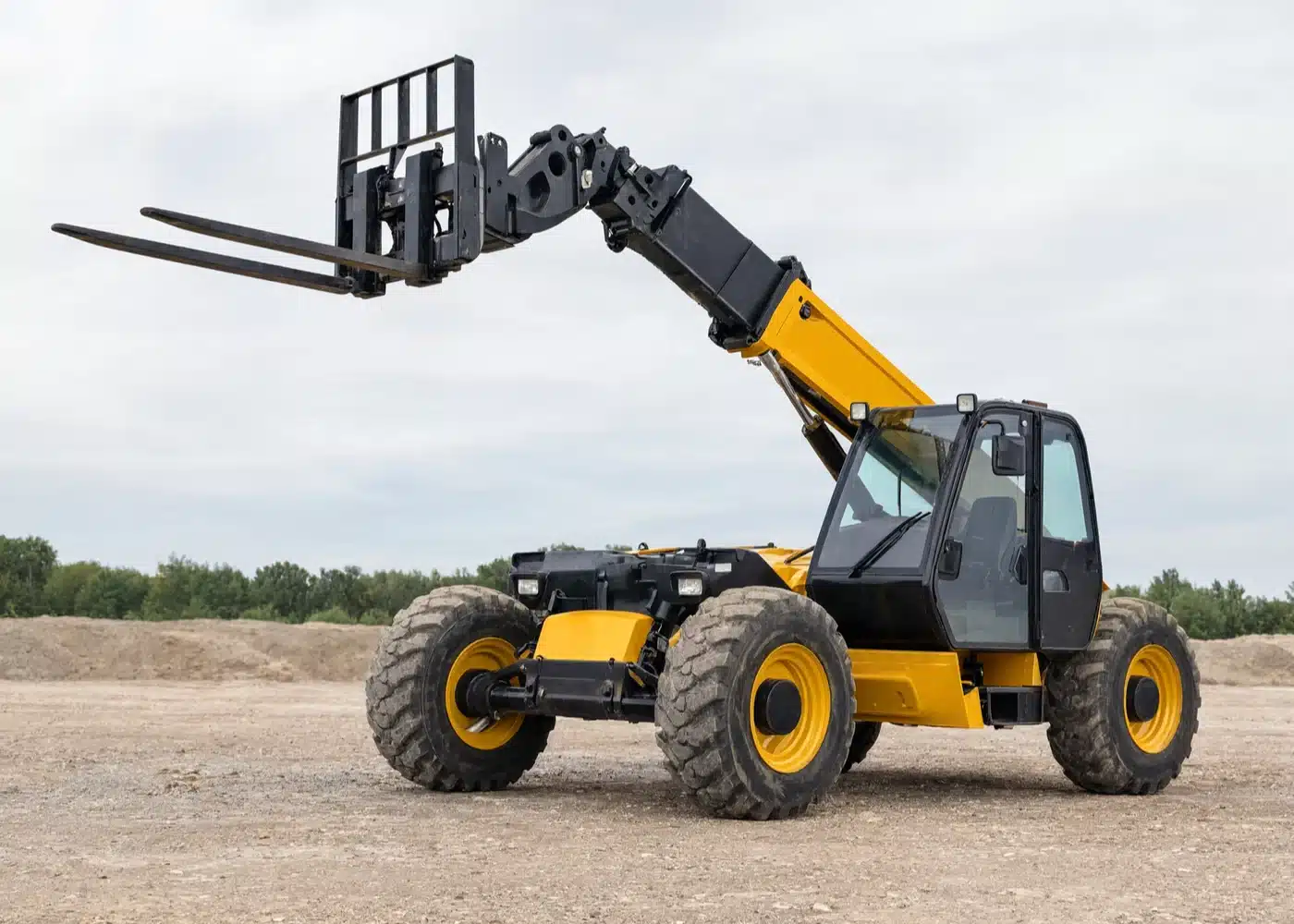
Where donated telehandlers come from
Framing and masonry contractors, mostly. A telehandler is bought for a run of multi-story work and then the work changes. Rather than carry the insurance, the annual inspection and the yard space, the owner decides to be done with it.
We also see them from estates and from businesses closing out. A retiring contractor has a machine with real value and no time to broker it. A company winding down needs the asset off the books before the fiscal year ends, and a donation does that on a known date.
Agricultural telehandlers come to us as well. If yours has been running a bale fork rather than a mast, the same process applies, and you can read the farm and ag equipment page for that side of it.
It is a lowboy machine, and we book it
A telehandler is tall, long and heavy, which puts it on a lowboy or a step-deck rather than a tilt trailer. A compact 5,000-pound-capacity machine may fit a heavy tilt-deck; a 12,000-pound reach machine does not. Giving Center arranges the trailer and covers the haul.
Boom down, forks off or laid flat, and the machine drives on. If it will not start, say so on the form. A winch load onto a lowboy is routine but the driver has to bring the gear for it, and a wasted trip costs the cause money.
Access is the part people forget. Telehandlers are often parked in the back of a yard, behind other equipment, or on soft ground at a site that has stopped work. We ask where it sits and what is between it and pavement, because that determines whether one truck or two shows up.
What decides what a telehandler brings
- Capacity and reach. The 6,000 to 10,000-pound class with 40-plus feet of reach is the deepest market. Very small and very large machines take longer to place.
- Hours. The first number any buyer asks for. Read it off the meter, and if the meter is broken say that instead of estimating.
- Attachments. Forks, a bucket, a truss boom, a work platform. Send them with the machine. Buyers pay for a complete package and attachments sold separately usually bring less.
- Tires and boom wear. Foam-filled tires in good shape are worth real money. Boom pad wear, chain condition and cylinder leaks are what an inspector looks at first.
- Records. Service history and current annual inspection move the machine out of the "as-is unknown" category, which is where the deepest discounts happen.
Makes and models we accept
Telehandlers are searched by make and model number more than almost any other machine class.
- Construction telehandlers: JLG 642, 943 and 1055, SkyTrak 6042, 8042 and 10054, Genie GTH series, CAT TL and TH series, Gehl RS series, Xtreme XR series.
- Compact and European: Manitou MT and MLT, JCB 505 and 540 Loadall, Merlo P series, Bobcat V series, Wacker Neuson TH.
- Agricultural: New Holland LM, Case TX and Farmlift, Kubota KTH, John Deere 3800 series.
Manufacturer names appear here so you can find your own machine. No manufacturer sponsors, endorses or is affiliated with this program.
The paperwork, and what you can deduct
No title, no DMV. What settles ownership is the purchase invoice, a bill of sale, the asset listing if it is company property, or a lien release if it was financed and is now paid off. The serial number goes on the paperwork, so find the data plate before the pickup.
Giving Center sells the machine and your deduction is the gross sale proceeds, documented on Form 1098-C. Telehandlers in working condition regularly clear $5,000, which means the IRS also wants a qualified appraisal and Form 8283 Section B. That appraisal is your cost and your choice. Between $500 and $5,000 you file Form 8283 Section A and no appraisal is required.
We will tell you where the machine is going to be sold before it moves. A short haul to a regional auction with equipment buyers in the room leaves more for the cause than a long move to a bigger sale, and we would rather say that plainly than surprise you with it.
Telehandler donation questions
Will you take one with a blown engine or hydraulic failure?
Often, yes. A common model with a known fault still sells to a rebuilder. The deciding factor is the haul: if the trailer for a dead 12,000-pound machine costs more than the sale will bring, we will tell you and suggest a local buyer instead.
Should I send the attachments?
Yes. Forks, buckets, truss booms and platforms all add to the sale and the trailer can carry them. List what you have on the form.
Is a rough-terrain forklift the same thing?
For our purposes, close enough. A straight-mast rough-terrain forklift moves and sells the same way. Use this page and this form.
Can you pick up from a jobsite that has shut down?
Yes, with access arranged. We need a name, a phone number and a key or a gate code. Soft ground after rain is the usual complication and it may move the date by a few days.
How long does it take?
Intake is a phone call after your form. Scheduling a lowboy usually takes longer than scheduling a tow truck, so plan on days rather than hours for the pickup itself.
Giving Center does not provide tax, legal or financial advice. Donations are deductible to the extent allowed by law. See IRS Publication 526, Publication 561 and Publication 4303, and consult a tax professional.