
Scissor lift donation
Donate a scissor lift that has aged out of your rental fleet
Scissor lifts get retired on a schedule rather than when they break. An electric slab lift comes off rental after its service life, a contractor stops bidding the work that needed it, a facilities department buys one machine to replace three. The lift still raises and lowers, and it still has buyers.
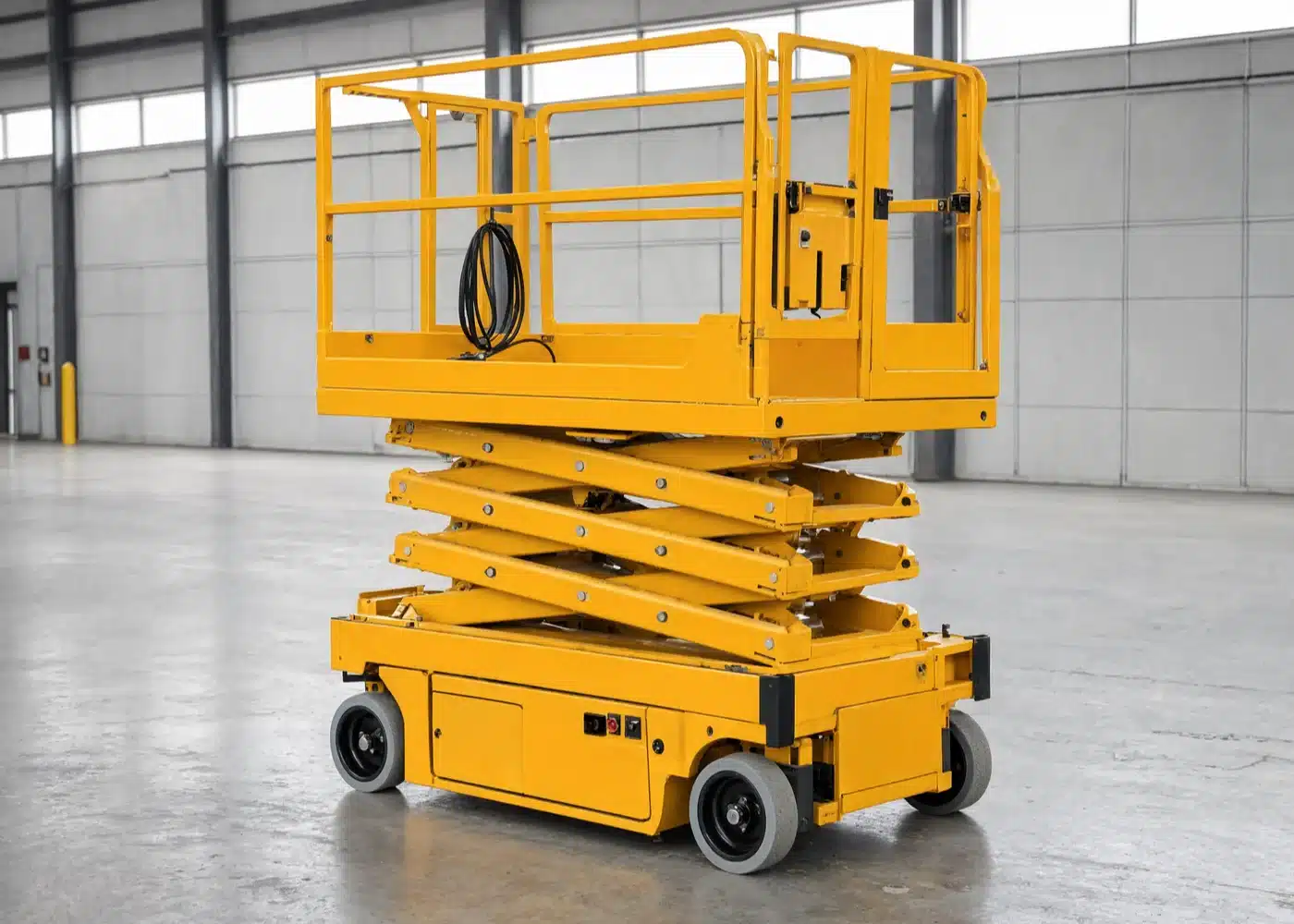
Where donated scissor lifts come from
Small rental yards send us the most. A slab scissor lift earns its keep for years, then the annual inspection and the battery pack together cost more than the machine returns on rent, and it sits in the back row. Selling it means listing it, fielding calls, and arranging a trailer for a buyer who may not show.
The rest come from contractors and building owners. A drywall or electrical company finishes the last job that needed a 26-foot platform and starts renting instead of owning. A church, a school district or a warehouse buys a lift for a ceiling project and has no use for it afterward.
We accept rough-terrain lifts too. A four-wheel-drive scissor with foam-filled tires has a different buyer than an electric slab machine, but both sell.
Getting the lift on a trailer
Most scissor lifts fit on a tilt-deck or a drop-deck trailer. A 19-foot electric slab machine is narrow and light enough for a single-axle tilt; a rough-terrain 40-footer needs a step-deck and sometimes a wide-load permit. Giving Center books the trailer, so you do not need to guess which one it takes.
Two things about the machine decide the plan. First, does it drive and raise under its own power? A lift that drives on deck loads in ten minutes. A dead one needs a winch, and we need to know before the driver arrives. Second, where is it? An indoor lift on a warehouse floor is easy. One behind a locked gate on a closed jobsite needs someone with a key and a window of time.
Tell us the platform height, the weight from the data plate, and whether the batteries hold a charge. Those three facts cover almost every question a hauler has.
What decides what a scissor lift brings
- Platform height. The 19 to 26-foot electric class is the volume market and sells fastest. Taller rough-terrain machines bring more per unit but take longer to place.
- Batteries. On an electric lift this is the single biggest swing. A machine with a healthy pack sells as working equipment; one that needs six new batteries sells as a project.
- Hours and annual inspection. Current annual inspection paperwork, if you have it, moves a lift out of the "unknown" pile. Hours matter less than on an excavator but buyers still ask.
- Hydraulic condition. Leaking cylinders and a drifting platform are the common faults and they are visible in photos, so photograph them rather than hide them.
- Location. A lift near a metro area with active rental demand brings more than the same lift three hundred miles from anywhere. A short haul also leaves more of the sale for the cause.
Makes and models we accept
Buyers search by make, so it helps to have it in front of you.
- Electric slab lifts: Genie GS series, JLG ES and R series, Skyjack SJIII and SJ3000 series, Snorkel S series, MEC Micro and Speed Level.
- Rough-terrain scissor lifts: Genie GS-2669, GS-3390 and GS-4390, JLG RT and 430LRT, Skyjack SJ series RT, Snorkel SR.
- Also seen: Hy-Brid, Custom Equipment, Haulotte, Iteco, Mayville Engineering rebuilds.
Manufacturer names appear here so you can find your own machine. No manufacturer sponsors, endorses or is affiliated with this program.
The paperwork, and what you can deduct
A scissor lift is not a titled vehicle. There is no DMV step. What we need is proof it is yours to give: the original invoice, a bill of sale, or the asset record if it came off a company balance sheet. If the machine was financed and the loan is paid, a lien release settles it.
Giving Center sells the lift, and your deduction is the gross proceeds of that sale, reported to you on Form 1098-C. It is not the replacement cost, the book value, or what your accountant carried it at. If the sale clears $5,000, the IRS also requires a qualified appraisal and Form 8283 Section B, and the appraisal is your expense and your decision. Under $500, you use the lesser of fair market value or $500 and we send a written acknowledgment instead.
If your business owns the lift and has depreciated it, talk to your accountant before the pickup. The deduction rules for business property differ from a personal donation, and it is a five-minute conversation that saves a surprise.
Scissor lift donation questions
Will you take one that does not raise?
Usually. A common machine with bad batteries or a leaking cylinder still has a buyer, because parts and rebuilt lifts both move. Tell us what it does and does not do, and if a long haul plus the repair would leave nothing for the cause we will say so rather than schedule a truck.
Do I need current annual inspection paperwork?
No, it is not required to donate. If you have it, send it. It tells a buyer the machine was maintained and it tends to show up in the sale price.
Can you pick up from inside a building?
Yes, if the lift can get to a door or dock. Electric slab machines usually drive themselves out. Tell us about door widths, ramps and floor loading when you fill out the form.
What about the batteries and charger?
Send them with the machine. A lift with its charger sells better than one without, and the charger is worth little on its own.
Do you take more than one?
Yes. Rental yards often retire several at once and one trailer can take two smaller lifts. Note the count on the form and we will plan the haul around it.
Giving Center does not provide tax, legal or financial advice. Donations are deductible to the extent allowed by law. See IRS Publication 526, Publication 561 and Publication 4303, and consult a tax professional.