
Boom lift donation
Donate a boom lift that has been idle since the last contract
A boom lift is the piece of equipment most likely to sit. It was bought for one building or one phase, the work ended, and since then it has taken up yard space and accrued an annual inspection nobody has paid for. Lifts hold value well and sell readily to contractors and small rental yards.
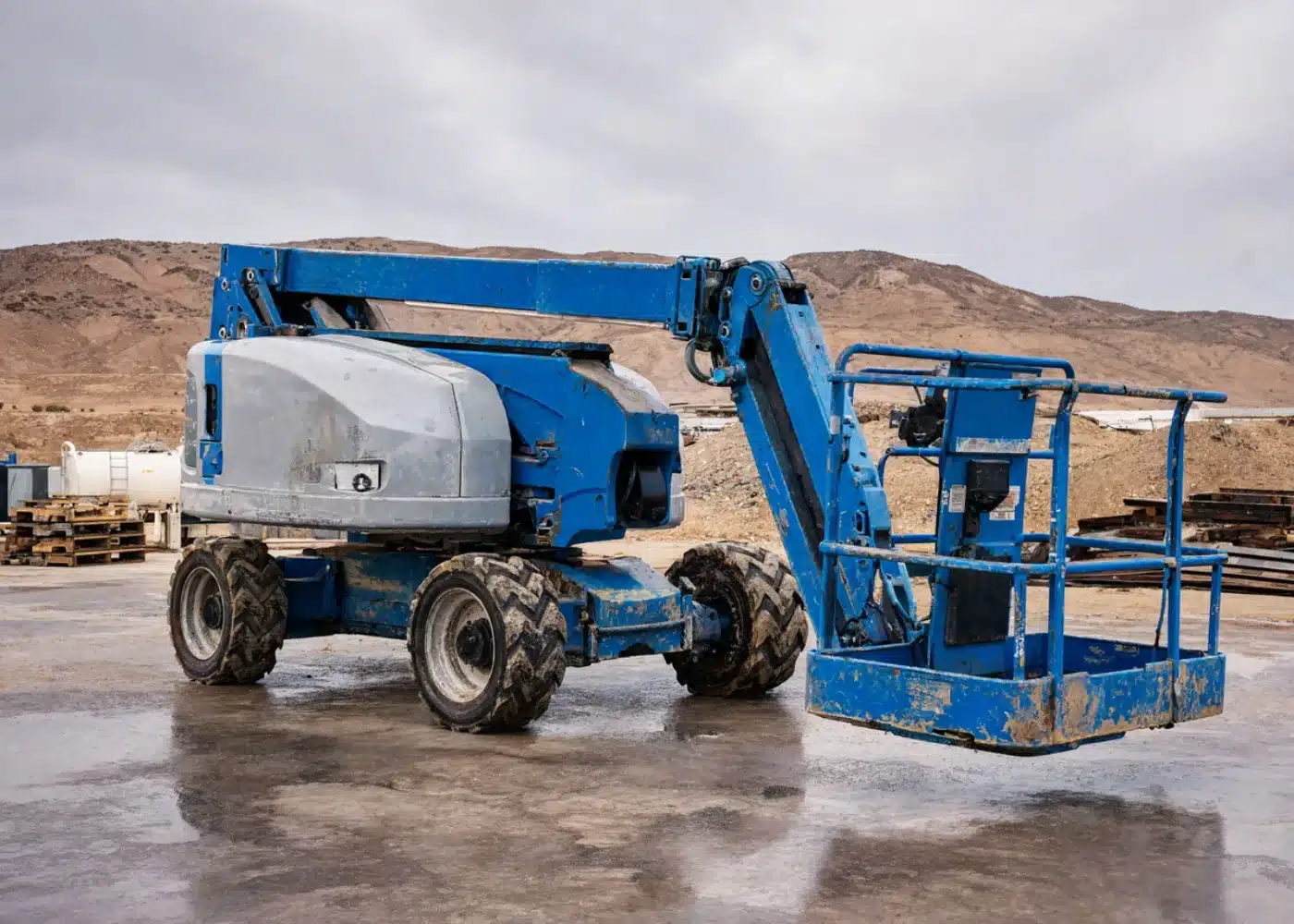
Why lifts end up idle
Contractors buy a lift for a specific job when renting for six months costs more than owning. When the job ends, the lift is worth real money and has no immediate use, so it sits behind the shop. Sign companies, electricians, tree services and churches with high ceilings all follow the same pattern.
What makes a lift awkward to sell privately is the inspection and liability question. Buyers want to know when it was last inspected and whether it has been dropped. Sellers do not want to spend on an inspection to sell something they are not using. A donation sidesteps the standoff: we accept it as it is, and the sale sets your deduction.
Hauled on the right trailer, arranged by us
Most self-propelled lifts travel on a tilt-deck or step-deck; larger telescopic units go on a lowboy, and over-height or over-width loads get permits. Towable lifts can often be hitched and pulled. Giving Center books the hauler and covers the cost.
Before scheduling we ask whether it drives and steers, whether the boom stows fully, whether the batteries hold a charge on an electric unit, and how the trailer reaches it. Rough-terrain lifts on soft ground after rain sometimes mean waiting a week, which we plan around.
What decides what a boom lift brings
- Platform height, the first number every buyer asks for.
- Hours, with low-hour units from a single owner commanding a premium.
- Articulating vs telescopic, which serve different trades.
- Engine or electric. Diesel rough-terrain units for outdoor work, electric for interior; battery age matters as much as hours on an electric.
- Annual inspection status and any documented service history.
- Boom, hydraulics and turntable. Cylinders that hold, no significant leaks, no damage from being driven into something.
The paperwork, and what you can deduct
Machines in this class are not titled in any state, which is normal rather than a problem. A manufacturer's statement of origin, a bill of sale matched to the serial plate, or a fleet or farm asset record establishes ownership. Where nothing survives, a notarized affidavit of ownership with the serial number is accepted by most buyers and auction houses. Financed units need a lien release, which we help you request.
Your deduction is the gross sale proceeds once Giving Center sells it, on Form 1098-C. Items in this class regularly clear $5,000, and when your claim does the IRS requires a qualified appraisal that you obtain and pay for, plus Form 8283 Section B signed by your appraiser and by Giving Center. We tell you before pickup whether to expect it. Full detail on the tax benefits page.
Makes and models we accept
Aerial lifts sell on make, model and platform height.
- Telescopic and articulating booms: Genie S, Z and ZX series, JLG 400 through 1250 series and the E and M electrics, Snorkel TB and A series, Skyjack SJ booms.
- European and compact: Haulotte HA and HT, Niftylift HR and TM, Manitou ATJ, Palazzani, Teupen spider lifts.
- Truck-mounted and insulated: Altec, Versalift, Terex Hi-Ranger, Elliott, Aichi, Bronto Skylift.
Not seeing yours? The list above is a search aid, not a restriction. We accept any make or model in this category, named here or not, including orphan brands and builders long out of business. What decides a donation is the condition and the paperwork, never the badge, so put yours on the form even if it is not listed.
Manufacturer names appear here so you can find your own machine. No manufacturer sponsors, endorses or is affiliated with this program.
Boom lift donation questions
Does the lift need a current annual inspection?
No. An expired inspection is common and does not stop the donation. It lowers what the lift brings slightly because the buyer factors it in.
Will you take a lift that does not start?
Usually. A dead battery or a fuel system problem on a common model is a known repair. A damaged boom or a bent turntable is a harder sell, and we will tell you honestly.
Do you take towable and scissor lifts too?
Yes. Towable boom lifts, scissor lifts and telehandlers are all accepted; use the form on the equipment page.
Can a church or a school donate one?
Yes. The receipt is issued to the organization. A tax-exempt body takes no deduction but gets the documentation for its disposal records.
Giving Center does not provide tax, legal or financial advice. Donations are deductible to the extent allowed by law. See IRS Publication 526, Publication 561 and Publication 4303, and consult a tax professional.