
Row-crop tractor donation
Donate a row-crop tractor when the acres went to a neighbor
Row-crop tractors are serious machines with a serious buyer market, and they are the class where a farm donation most often clears five figures. They are also heavy, tall and expensive to move, so the plan matters as much as the machine.
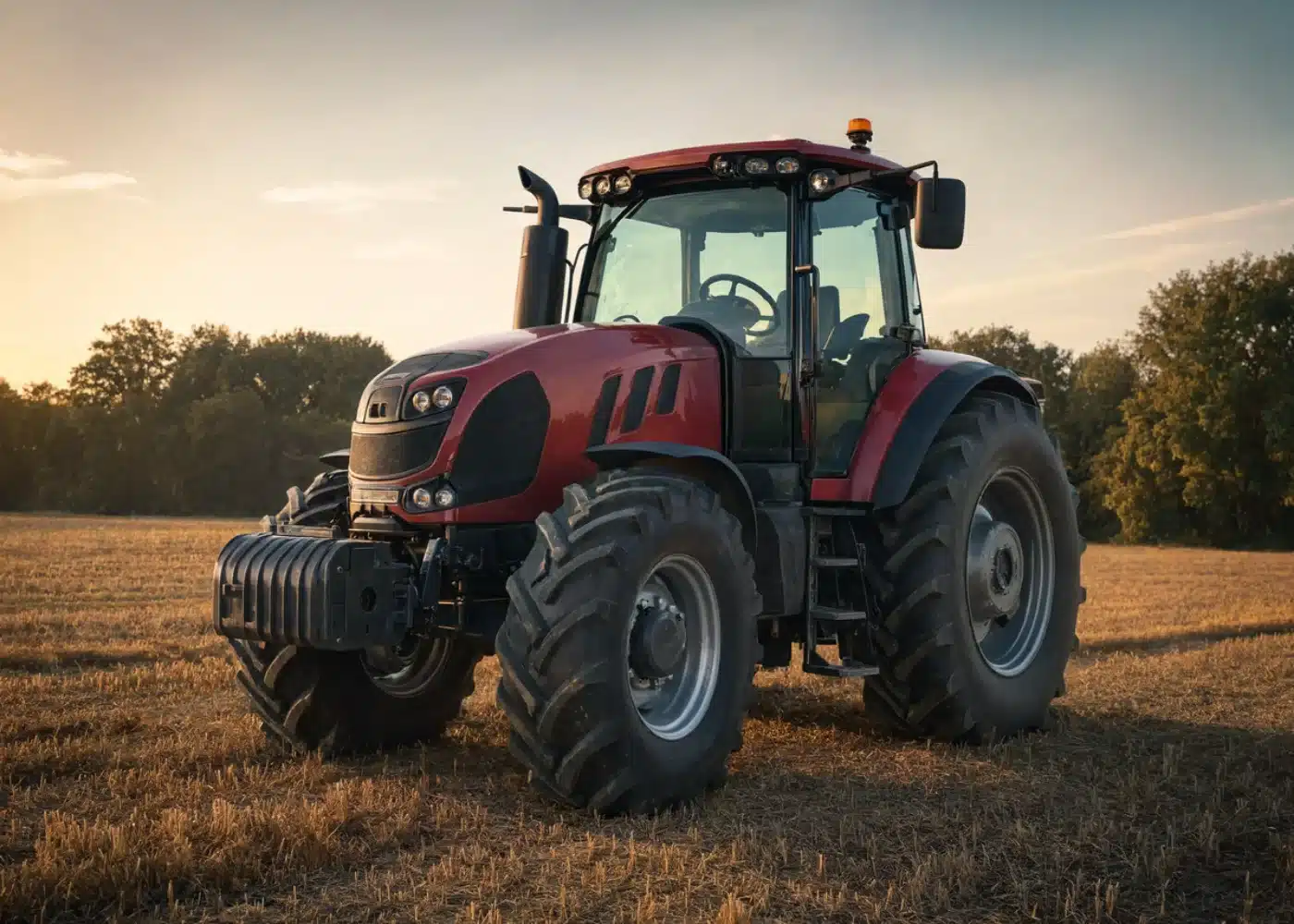
Where donated row-crop tractors come from
Retiring farmers who rented or sold the ground. When the acres go to a neighbor, the equipment often does not go with them, and a tractor that has been maintained for thirty years sits in a machine shed.
Estates. This is the most common single source, and a row-crop tractor is frequently the largest asset in a farm estate after the land itself.
Operations downsizing or changing crops. A tractor sized for a rotation that no longer happens is the wrong tool even though it runs perfectly.
Lowboy, and sometimes a permit
A row-crop tractor goes on a lowboy or a step-deck. Depending on weight, height and whether duals are on it, the load may need an over-dimension permit and a planned route. Giving Center arranges all of it and covers it.
We need the operating weight and the overall height off the data plate rather than a guess, and we need to know whether the duals come off. Removing duals frequently keeps a load legal that otherwise would not be.
Access is the question we ask first on any farm pickup. Tell us where the machine sits, what the ground is like and what is between it and a road a trailer can use. A machine in a back field after a wet week is a different job than one on a gravel pad, and if it needs to be driven or dragged out to a staging area that generally happens on your end.
What decides what a row-crop tractor brings
- Horsepower class and drive. Mechanical front-wheel drive versus two-wheel drive is a major value split, and the 130 to 250 horsepower range is the deepest market.
- Hours, and on which components. Engine hours and separately transmission hours if the machine tracks them. Powershift and CVT condition matter a great deal.
- Tires and duals. Eight large ag tires is a serious expense. Good rubber is visible money, and a set of duals is worth naming.
- Hydraulics, PTO and three-point. How many remotes, whether the PTO engages and whether the hitch lifts under load.
- Cab, air and electronics. Working air conditioning widens the buyer pool. Guidance and autosteer hardware, and whether the displays and unlocks come with it, is worth real money and worth listing.
Makes we accept
Row-crop tractors are bought on make, model and hours.
- John Deere: 4020 and the older 30, 40 and 50 series, 4440 and 4640, 7000, 7R, 8000, 8R and 8030 series.
- Case IH and predecessors: Magnum 7100 through 8900 and current Magnum, Maxxum, Puma, MX, International 1066, 1466 and 1086, Farmall.
- Others: New Holland Genesis, T7 and T8, Massey Ferguson 8600 and 7700, Fendt 700 and 800, Agco Allis, Deutz-Fahr, Challenger MT600, White and Oliver.
Manufacturer names appear here so you can find your own machine. No manufacturer sponsors, endorses or is affiliated with this program.
The paperwork, and what you can deduct
Farm equipment is not titled. Ownership is established with the purchase invoice, a bill of sale, a farm asset record, or a lien release if it was financed. Find the serial plate and photograph it; that number goes on the paperwork. If the machine is part of an estate or a farm partnership, whoever signs needs authority to sign for it.
Giving Center sells the tractor and your deduction is the gross sale proceeds on Form 1098-C. A running row-crop tractor clears $5,000 in essentially every case, which means the IRS requires a qualified appraisal and Form 8283 Section B. On a machine at this value it is worth having done by an appraiser who knows farm equipment rather than a generalist. It is your expense and your decision, and the appraiser must be independent of us.
One thing specific to this class: where the machine is sold matters a great deal to the outcome. A regional farm auction with real producer attendance does considerably better than a general equipment sale, and a shorter haul leaves more of the proceeds for the cause. We will tell you the plan before a trailer is booked. Most farm equipment is a depreciated business asset. That makes a conversation with your accountant genuinely worth having before the pickup, because farm business property follows different rules than a personal donation.
Row-crop tractor donation questions
Do the duals come off for transport?
Often yes, and it frequently keeps the load legal without a permit. Tell us whether they can be removed and whether you want them sold with the tractor.
It has guidance and an autosteer system on it.
Worth real money and worth listing. Tell us the brand, and whether the display and any subscription or unlock transfers with it.
The air conditioning does not work.
Lowers the sale and does not stop the donation. It is a common and expected fault on an older cab tractor.
It is parked in a machine shed with a low door.
Tell us the door height and the approach. Overall height is one of the two numbers that decides the trailer, so it matters here.
Will you tell me where it is being sold?
Yes, before anything moves. Sale channel makes a real difference on a machine this size and you should know the plan.
Giving Center does not provide tax, legal or financial advice. Donations are deductible to the extent allowed by law. See IRS Publication 526, Publication 561 and Publication 4303, and consult a tax professional.