
Combine donation
Donate a combine that will not be going out next harvest
A combine is the largest asset on most farms and the hardest to sell at the right moment. When an operation is sold, rented out or wound down, the machine sits in a shed with a head beside it, holding real value and doing nothing. Buyers exist, and they are specific.
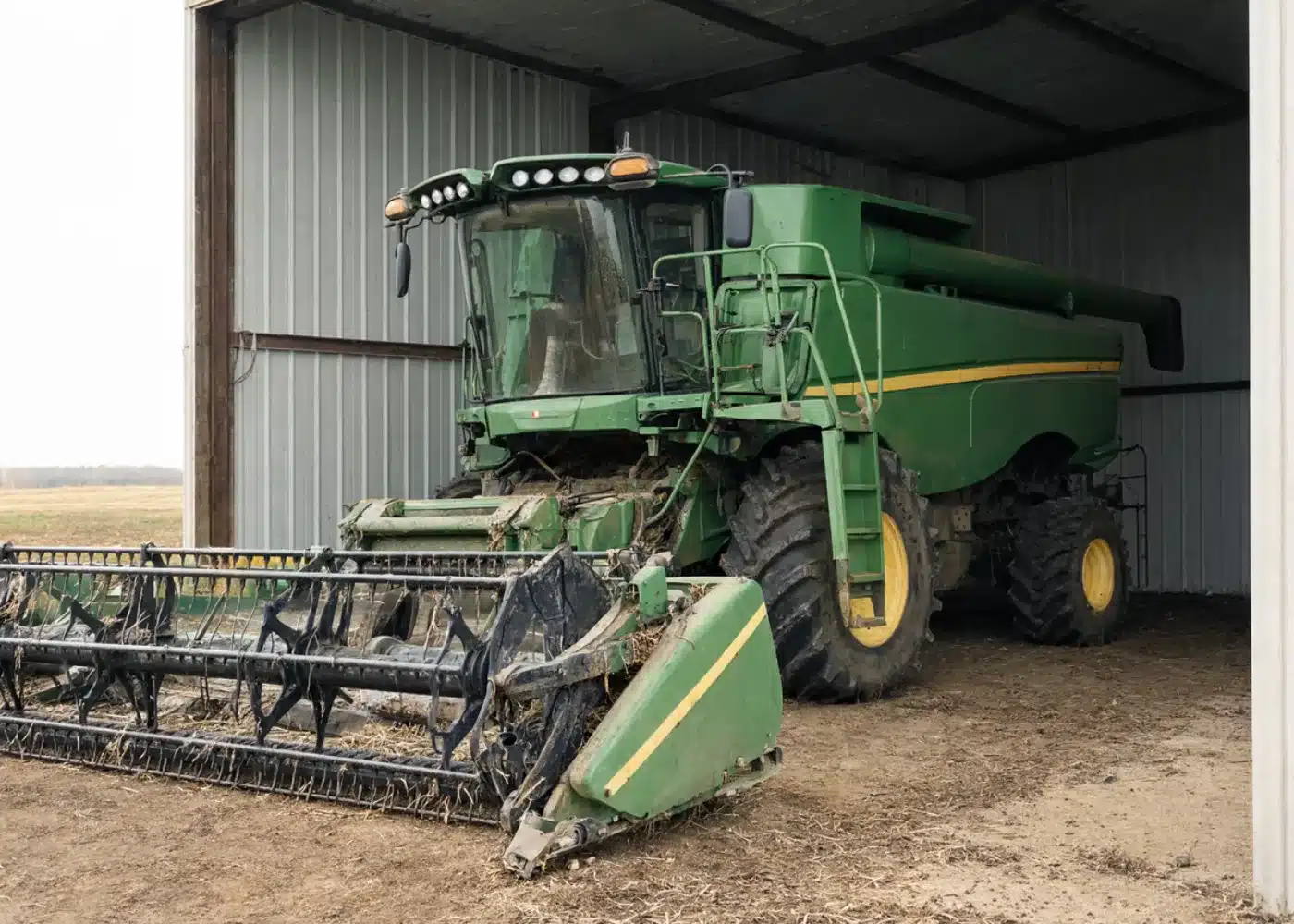
Why combines get donated
Retirement and consolidation. A farmer rents the ground out and has no use for a harvester, or a neighbor takes over the acres and brings his own. Estates produce them when a farm passes to heirs who do not farm. And older machines get donated when a trade-in allowance against a newer combine is negligible relative to the hassle of a private sale.
What makes them awkward to sell is timing and specificity. The market wants combines in the months before harvest, not after, and a buyer needs the right head for his crop. Sitting on it for the right season costs shed space and depreciation. A donation clears it now, and we sell it into the right window.
Head off, permits arranged, hauled by a specialist
A combine is hauled with the head removed, and even then is commonly over legal width or height, so oversize permits and occasionally escorts are part of the job. The head travels on its own trailer or on the header trailer if you have one. Giving Center books the hauler and covers all of it.
Tell us whether the machine drives onto a trailer under its own power, whether the shed door and lane can accommodate the haul, and what heads are included. A combine that cannot move needs a winch and a firm surface, planned beforehand.
What the combine market pays for
- Separator hours, the headline figure, ahead of engine hours.
- The heads included. A corn head or a grain platform in the right size can be a large share of the total.
- Brand and model generation, which determine parts support and buyer familiarity.
- Grain handling condition: augers, elevators, sieves and the clean grain system.
- Rubber and final drives, expensive items that buyers check immediately.
- Monitors and yield equipment, plus a documented service history.
The paperwork, and what you can deduct
Machines in this class are not titled in any state, which is normal rather than a problem. A manufacturer's statement of origin, a bill of sale matched to the serial plate, or a farm or fleet asset record establishes ownership, and for an estate, letters testamentary. Where nothing survives, a notarized affidavit of ownership with the serial number is accepted by most buyers and auction houses.
Your deduction is the gross sale proceeds once Giving Center sells it, on Form 1098-C. Items in this class regularly clear $5,000, and when your claim does the IRS requires a qualified appraisal that you obtain and pay for, plus Form 8283 Section B signed by your appraiser and by Giving Center. We tell you before pickup whether to expect it. Full detail on the tax benefits page.
Combine harvester donation questions
Will you take a combine that does not run?
Often, depending on the model and what is wrong. Common machines have strong parts demand. Tell us the hours and the symptoms and we will give you an honest read.
Do the heads have to go with it?
No, but they usually should. A combine with the right head sells considerably better than a bare machine, and both are covered by the same paperwork.
Can you pick up a combine and a line of other equipment at once?
Yes. Clearing a whole machine shed as one coordinated pickup is the most efficient way to do it. Send a list or photos.
Does the season matter?
It affects what it brings. If waiting a few weeks would clearly help the sale, we will say so rather than move it at the wrong time.
Giving Center does not provide tax, legal or financial advice. Donations are deductible to the extent allowed by law. See IRS Publication 526, Publication 561 and Publication 4303, and consult a tax professional.