
Utility tractor donation
Donate a utility tractor and the implements that came with it
The 40 to 80 horsepower tractor is the most useful machine a property can own and the most common one to be left behind when the property changes hands. With a loader on the front it sells to small farms, landscapers and acreage owners almost immediately.
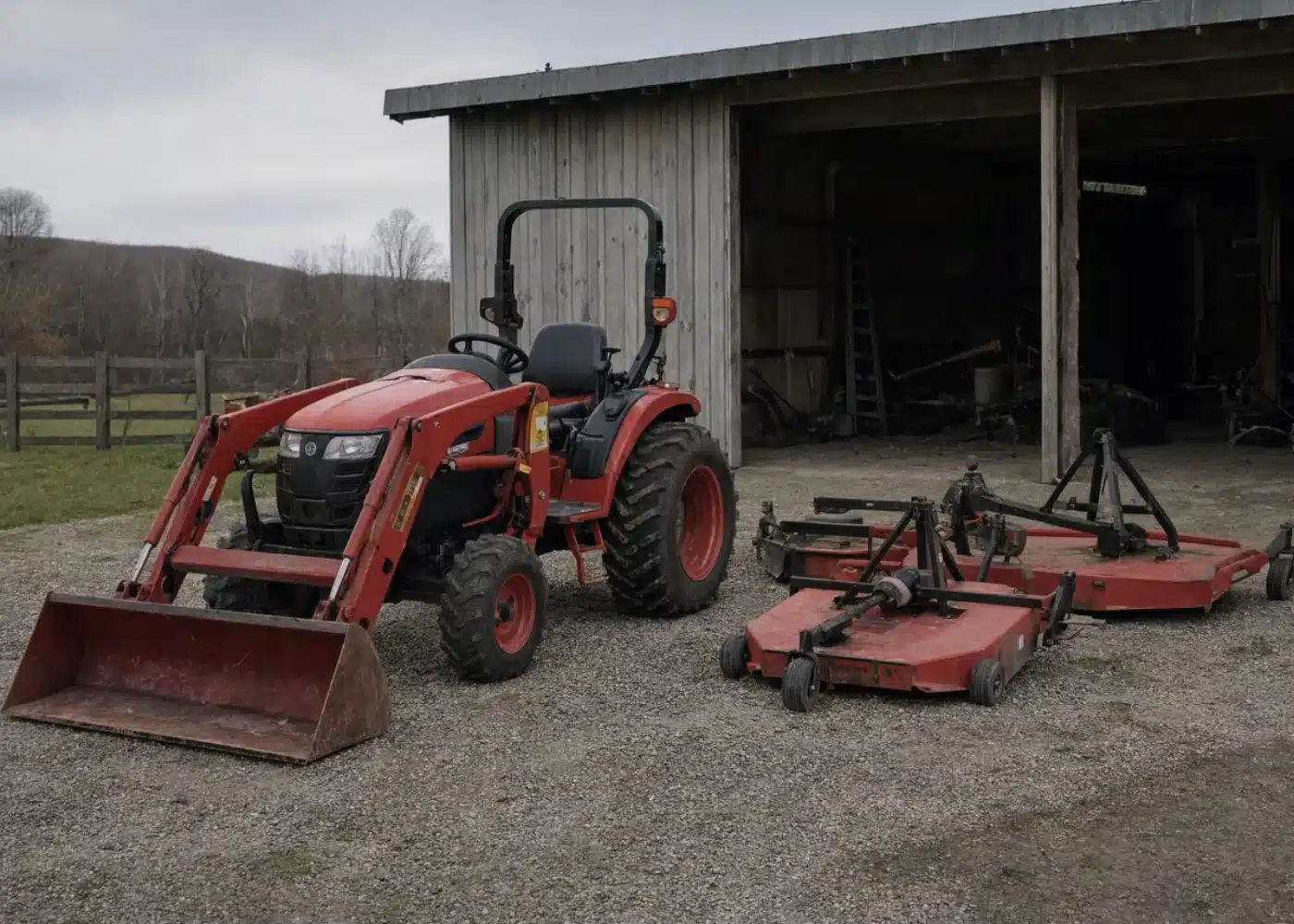
Why utility tractors get donated
Property sales, mostly. Acreage changes hands and the buyer wants the land, not the machinery. Someone moves from five acres to a house in town. A hobby farm is given up. A retiree who kept the tractor for the driveway and the brush hog can no longer climb onto it.
Selling one privately means strangers coming to a rural property over several weeks, often after an estate has already dragged on. The machine sits outside while that happens, which costs it value. A donation clears it on one scheduled day and puts an independent number on it.
Trailered from the barn, the field or the fence row
A utility tractor goes on a gooseneck or heavy equipment trailer, driven on under its own power where possible and winched where not. Loaders stay attached; implements ride along when there is room. Giving Center books the trailer and covers the cost.
We ask about the lane width, low branches and wires, gate openings, and whether the ground will hold a loaded trailer after rain. Those four questions decide the equipment we send and prevent a wasted trip.
What decides what a utility tractor brings
- A front-end loader, which can add a substantial share of the total value on its own.
- Four-wheel drive, strongly preferred by nearly every buyer in this class.
- Brand and parts availability, with well-known makes selling fastest.
- Hydraulics and PTO. Whether it lifts under load and the PTO engages cleanly.
- Ag tire condition, expensive to replace and checked first.
- Storage history. A shed-kept tractor brings noticeably more than one left in a fence row.
The paperwork, and what you can deduct
Machines in this class are not titled in any state, which is normal rather than a problem. A manufacturer's statement of origin, a bill of sale matched to the serial plate, or a farm or fleet asset record establishes ownership, and for an estate, letters testamentary. Where nothing survives, a notarized affidavit of ownership with the serial number is accepted by most buyers and auction houses.
Your deduction is the gross sale proceeds once Giving Center sells it, on Form 1098-C. Items in this class regularly clear $5,000, and when your claim does the IRS requires a qualified appraisal that you obtain and pay for, plus Form 8283 Section B signed by your appraiser and by Giving Center. We tell you before pickup whether to expect it. Full detail on the tax benefits page.
Utility tractor donation questions
Can I include the loader and the implements?
Yes, please. A loader, box blade, brush hog, tiller or finish mower all add to the sale and are covered by the same paperwork.
It has not started in a few years. Is it still worth donating?
Frequently. A shed-stored tractor often needs only fuel, a battery and fresh fluids. One left outdoors with a seized engine is harder to place, and we will tell you honestly.
Do you need a title?
No. No state titles tractors. A bill of sale, dealer paperwork or estate documents are what we work from.
I am settling an estate. Whose name is on the receipt?
The estate's, with a copy of the letters testamentary or equivalent naming you as executor.
Giving Center does not provide tax, legal or financial advice. Donations are deductible to the extent allowed by law. See IRS Publication 526, Publication 561 and Publication 4303, and consult a tax professional.