
Farm tractor donation
Donate a farm tractor and let it work for someone again
A tractor that came with the land, a utility tractor from a parent's place that nobody in the family will use, or the machine a small farm replaced with something larger. Tractors hold value for decades, sell to people who will run them for decades more, and are among the simplest equipment donations to arrange.
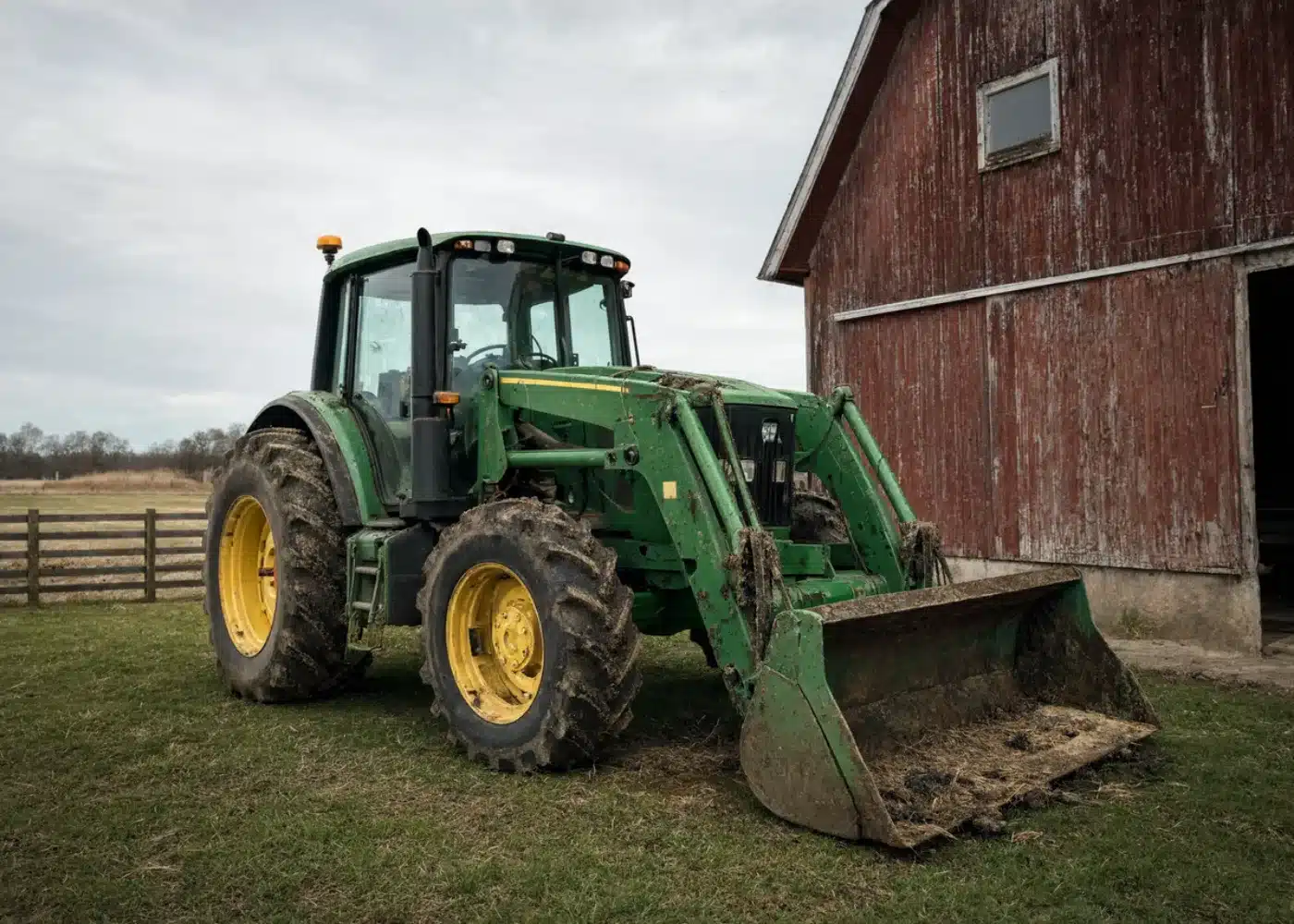
The situations that bring a tractor to us
Estates and inherited property produce more tractor donations than anything else. A parent's farm or acreage is sold and the tractor, the loader and a barn full of implements do not go with the house. Retirees who kept a few acres move to town. Hobby farms are given up. Small operators upgrade and the old tractor is more trouble to sell than it is worth to them. Schools and county programs occasionally clear out ag-program equipment.
Selling a tractor privately from a rural property means strangers coming to look at it over weeks, while the estate stays open. Donation clears it in one scheduled pickup, with a receipt for the estate or the family and Form 1098-C after the sale.
Picked up from the field, the barn or the estate, trailer and driver provided
Compact and utility tractors up to about 60 horsepower go on a gooseneck or heavy equipment trailer. Larger row-crop and four-wheel-drive tractors need a step-deck or lowboy, and wide tires or duals sometimes require a permit. Giving Center books the right trailer and covers the transport.
A tractor that starts and moves is driven onto the trailer. One that does not is winched. We will ask about access: the width of the lane, low tree branches, whether the ground is firm enough for a loaded trailer, and whether someone can meet the driver. Implements, from a bush hog to a disc, ride on the same trailer when there is room, or on a second trip when there is a lot to move.
What your tractor is worth to the buyer who wants it
- Brand and model. Well-known green, red, blue and orange tractors from the last forty years sell reliably. Certain older models are sought after by collectors and small farms alike.
- Hours and condition. Tractors run for tens of thousands of hours. What matters is whether it starts, the hydraulics lift, the PTO engages and the transmission shifts.
- Loader and implements. A front-end loader can add substantially. A backhoe attachment, finish mower, box blade, tiller or brush hog each add value and should be listed.
- Four-wheel drive and cab. Both widen the buyer pool.
- Tires. Ag tires are expensive; the percentage of tread left is one of the first things a buyer checks.
- Rust and storage. A tractor kept in a barn brings noticeably more than one left in a fence row.
Photos of the hour meter, the tires, the loader and any implements let us give you a realistic range before pickup.
Tractors are not titled, so estate and bill-of-sale paperwork is what counts
Farm tractors are not titled in any state. Ownership is shown by a bill of sale, a manufacturer's statement of origin for a newer machine, or dealer purchase paperwork. For an estate, letters testamentary or a small-estate affidavit naming the executor is what authorizes the donation, and the receipt is issued to the estate.
If no paperwork survives, which is common with a tractor that has been on a property for thirty years, a notarized affidavit of ownership with the serial number is accepted by most buyers and auction houses. If the tractor was financed through a dealer or the Farm Credit system, the lien has to be released first, and we will help you request it.
Whether to expect the $5,000 appraisal step
It depends on the tractor. A compact utility tractor with a loader, a well-kept row-crop tractor, or a collectible older model can each sell above $5,000, in which case the IRS requires a qualified appraisal you obtain and pay for, with Form 8283 Section B signed by the appraiser and by Giving Center. Many older utility tractors and most non-running units sell for less, and Form 1098-C is all you need.
Your deduction is the gross sale proceeds either way. We will tell you before pickup which is likely so you are not paying for an appraisal a $3,000 tractor does not need.
What the first call covers
Make, model and horsepower; hours if known; whether it starts, moves, lifts and engages the PTO; what implements come with it; where it is and how a trailer reaches it; and what paperwork exists, including estate documents if that applies. If you are handling an estate, we will also cover whose name goes on the receipt and how to coordinate with the executor or attorney. You leave the call with a pickup plan and a realistic sense of value.
Farm tractor donation questions
Do you take antique or vintage tractors?
Yes. Well-known older models have an active collector market and can be worth more than a newer utility tractor. Original condition, matching serial numbers and rare options matter; tell us what you know about its history.
The tractor has not started in years. Is it still worth donating?
Often. A tractor that sat in a barn frequently needs only fuel, a battery and fresh fluids. One left outdoors with a seized engine is harder to place. Describe how it was stored and we will give you an honest answer.
Can I donate the implements without the tractor, or vice versa?
Yes to both. Loaders, backhoes, mowers, plows and discs are accepted on their own and sell readily to nearby farms.
I am the executor of an estate. Whose name goes on the receipt?
The estate's. We will need a copy of the letters testamentary or equivalent document naming you as executor. The 1098-C is issued to the estate for its return.
How far will you travel for a tractor?
Nationwide, but distance affects what is left for the cause. A small tractor that has to be hauled a long way may return little after transport, and if a local buyer would do more good we will say so.
Giving Center does not provide tax, legal or financial advice. Donations are deductible to the extent allowed by law. See IRS Publication 526, Publication 561 and Publication 4303, and consult a tax professional.