
Planter donation
Donate a planter, and the row units decide the number
A planter is the highest-value implement on most farms after the combine, and the row units are where the value lives. Meters, openers and closing systems are what a buyer inspects, and a planter with recently updated row units is worth far more than its age suggests.
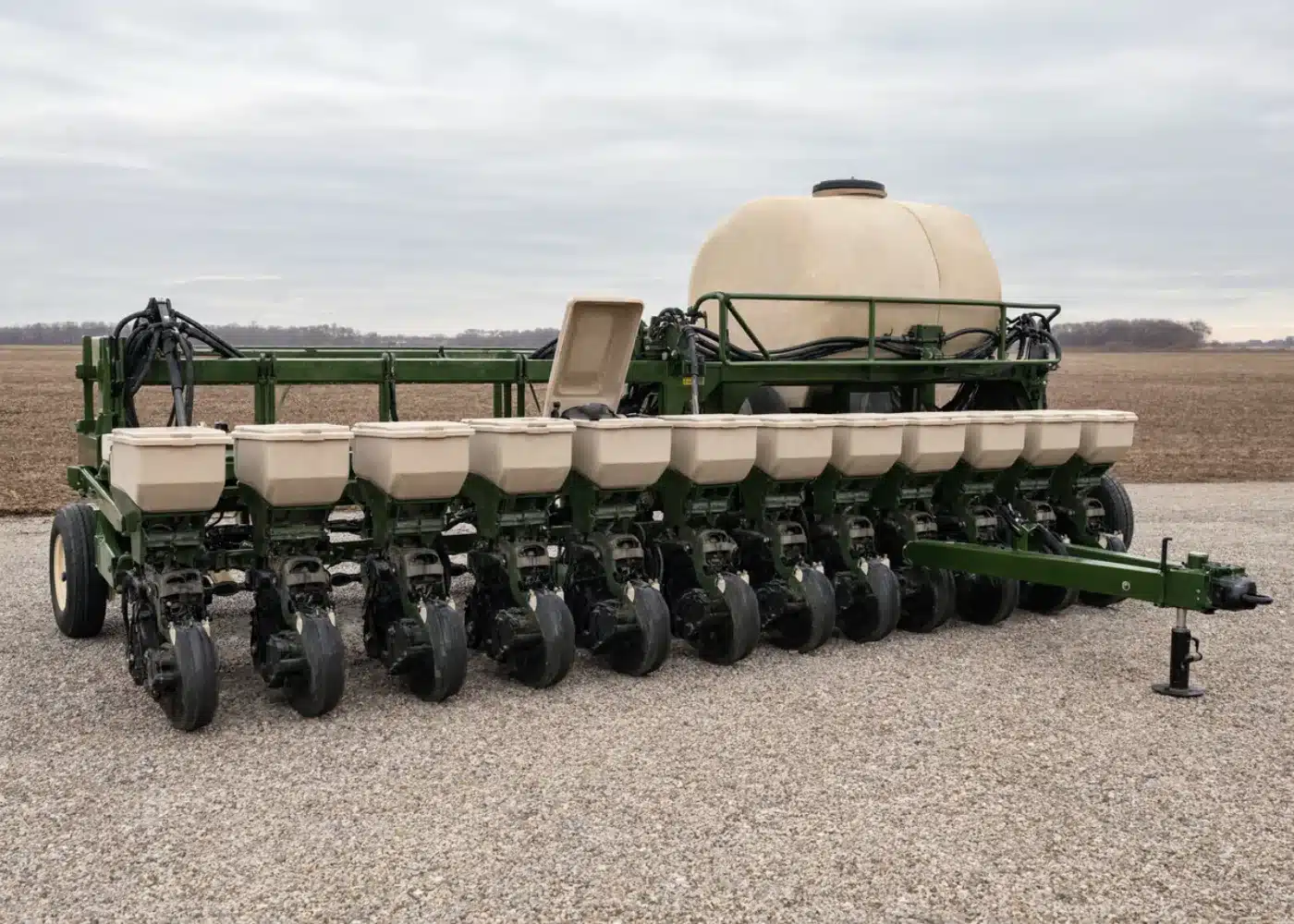
Where donated planters come from
Retiring farmers and farm estates. A planter is a major capital item and it is usually in the dispersal lot when a farm sells out.
Operations that changed row spacing or moved to a larger planter. A twelve-row on thirty-inch spacing is the wrong tool on twenty-inch rows.
Farms that went to a custom planting arrangement and no longer own the equipment.
Folded, and the width is the question
A planter folds for transport and goes on a step-deck or a lowboy depending on size and weight. A large front-fold or bulk-fill planter is an over-dimension load and needs a permit and a route. Giving Center arranges and covers all of it.
Tell us the row count, the spacing, whether it folds properly and whether the markers fold. A planter with a dead fold cylinder is a much more expensive move.
Empty the hoppers and the bulk tanks completely, and tell us whether any treated seed remains. Leftover treated seed is a disposal issue and the cost comes out of the proceeds.
What decides what a planter brings
- Row count and spacing. The first filter for every buyer. Common configurations sell far faster than unusual ones.
- Row unit condition. Meters, double-disc openers, gauge wheels, closing wheels and seed tubes. Recently rebuilt or updated row units are a substantial premium.
- Meter type. Finger, vacuum or electric drive. Vacuum and electric are worth considerably more than finger meters.
- Monitor and technology. Seed monitor, variable rate drive, downforce control and whether the display and unlocks transfer. This is genuinely worth money and worth listing.
- Fertilizer and bulk fill. Liquid or dry fertilizer capability and a central bulk fill tank both add.
Makes we accept
Planters are named by brand, row count and spacing.
- John Deere: 7000, 7200, 1750, 1760, 1770 and 1775NT, DB series, and the current Exact Emerge.
- Kinze: 2000, 2600, 3000, 3600, 3660 and 4900 series.
- Others: Case IH 800, 900, 1200, 1250 and 2150 Early Riser, White 6100, 6180 and 8000 series, Great Plains YP and 2SNT, Monosem, Harvest International, AGCO and Massey planters.
Manufacturer names appear here so you can find your own machine. No manufacturer sponsors, endorses or is affiliated with this program.
The paperwork, and what you can deduct
Farm equipment is not titled. Ownership is established with the purchase invoice, a bill of sale, a farm asset record, or a lien release if it was financed. Find the serial plate and photograph it. If the machine is part of an estate or a farm partnership, whoever signs needs authority to sign for it.
Giving Center sells the planter and your deduction is the gross sale proceeds on Form 1098-C. A working planter in a common configuration clears $5,000 in nearly every case, which means the IRS requires a qualified appraisal and Form 8283 Section B. Have it done by an appraiser who knows planters specifically, because row unit condition and technology are where the value sits and a generalist will miss both. It is your expense and your decision.
Where it sells matters here as much as on a tractor. A regional farm auction ahead of planting season does considerably better than a general sale in autumn. If your timing is flexible, tell us. Most farm equipment is a depreciated business asset, which makes a conversation with your accountant worth having before the pickup. Farm business property follows different rules than a personal donation.
Planter donation questions
I had the row units rebuilt two years ago.
Tell us, with receipts if you have them. Recently updated row units are a substantial premium and it is the single most useful thing you can tell us about a planter.
It has a monitor and variable rate drive.
Worth real money. Tell us the brand, and whether the display, harness and any unlocks transfer with it.
There is treated seed still in the hoppers.
Please empty them. Leftover treated seed is a disposal issue and the cost comes out of what the cause receives.
The markers will not fold.
Tell us. It affects the transport width and therefore the permit and cost.
Does timing matter?
Yes, notably in this category. A planter offered ahead of planting season does better than one offered in the fall. If your date is flexible, say so.
Giving Center does not provide tax, legal or financial advice. Donations are deductible to the extent allowed by law. See IRS Publication 526, Publication 561 and Publication 4303, and consult a tax professional.