
Funeral coach donation
Donate a hearse, handled plainly and without ceremony
We will keep this straightforward. A funeral coach is a specialized vehicle with a small and knowledgeable buyer market: smaller funeral homes, livery operators overseas, and collectors. It is a normal donation and we treat it as one.
Where donated coaches come from
Funeral homes replacing on a fleet cycle. A coach is typically low mileage, meticulously maintained and gently driven, which makes it a genuinely good vehicle underneath the specialized body.
Homes that closed, merged or were acquired. When a family business is sold the fleet often goes separately, and a documented donation resolves it on a known date.
Collectors and film and event operators. Older coaches have a real collector market, particularly the 1960s and 1970s ones, and we route those accordingly.
Driven when it runs
A running registered coach gets driven, which is the cheapest way to move it. We arrange the driver and the insurance.
If it will not start it goes on a flatbed. Tell us the overall length, whether it starts, rolls and steers, and whether the rear door and the deck mechanism operate.
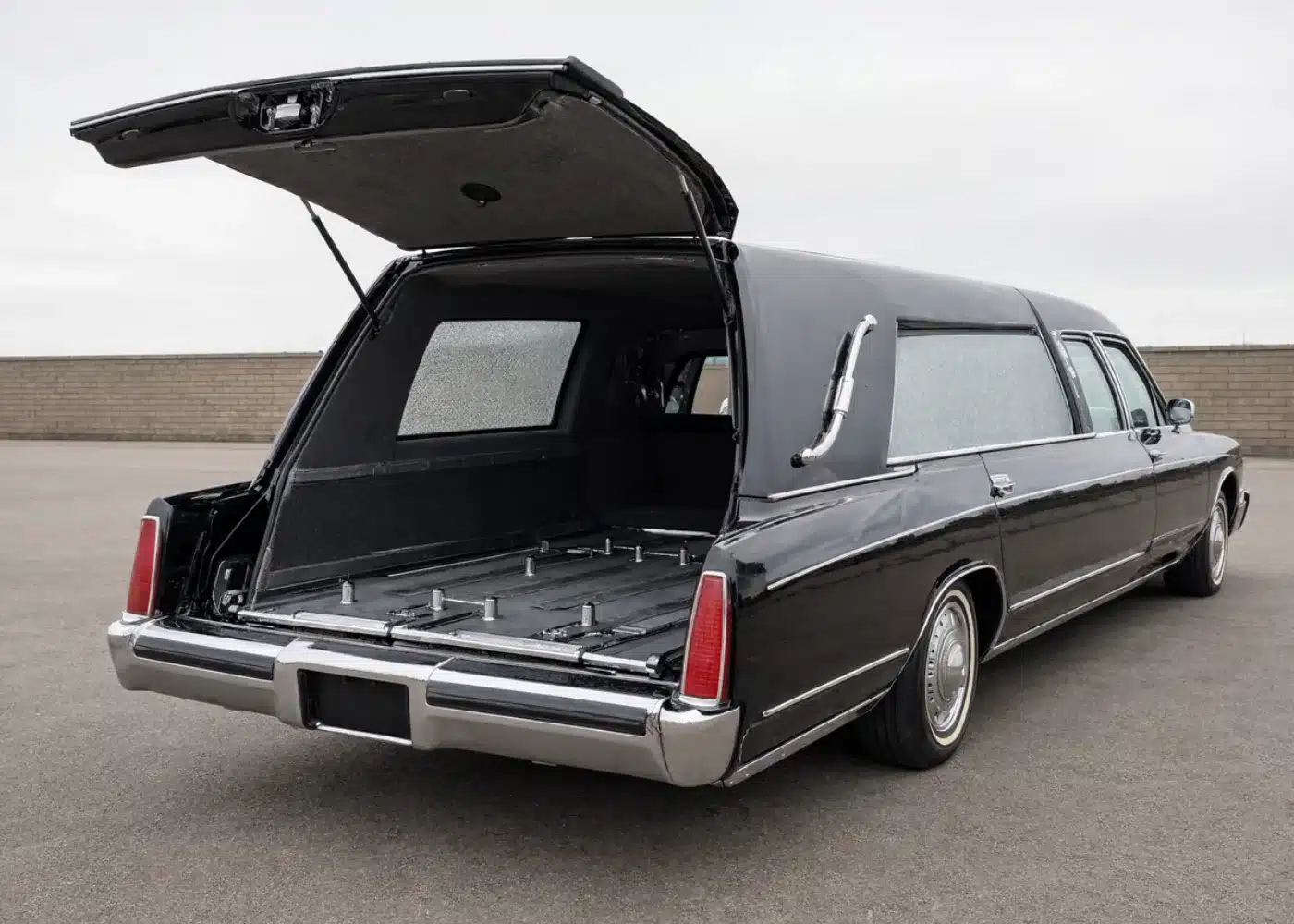
Empty the rear deck and the compartments. Remove any church trucks, cots, drapes or personal items. Leave the coach body fittings: the bier pins, the roller rails, the deck flooring and the landau bars.
What decides what a coach brings
- Age and era. A modern coach sells to a working funeral home. A 1960s or 1970s coach sells to a collector, sometimes for considerably more.
- Mileage and maintenance. These are low-mileage, well-serviced vehicles as a rule, and records back that up.
- Body and deck condition. The rear door seal, the roller rails and the deck floor. Also the vinyl roof and the landau bar trim, which are hard to source.
- Coachbuilder. A recognized builder on a recognized chassis is worth more, because parts and trim are findable.
- Rust around the extended body. Coaches are stretched, and the seams and rear quarters are where corrosion starts.
Makes and bodies we accept
Coachbuilder and chassis both.
- Coachbuilders: Federal Coach, Eagle Coach, Superior, S&S Coach, Miller-Meteor, Sayers & Scovill, Armbruster Stageway, Eureka, Platinum.
- Chassis: Cadillac Commercial Chassis, DeVille, DTS and XTS, Lincoln Town Car and MKT, Buick, Oldsmobile and Pontiac on older coaches, Chevrolet and GMC for first-call and flower cars.
- Related: first-call vehicles, flower cars and removal vans, all handled on this page.
Manufacturer names appear here so you can find your own vehicle. No manufacturer sponsors, endorses or is affiliated with this program.
The paperwork, and what you can deduct
It is a titled vehicle, so the title has to transfer. If it is lost, most states have a duplicate process and the state title rules page walks through yours. If it was financed we need the lien release. Fleet vehicles are usually owned by a company, a municipality or a nonprofit rather than a person. Whoever signs needs authority to sign for the entity, and if you are a public body your own surplus-property rules may require a resolution on file.
Giving Center sells the coach and your deduction is the gross sale proceeds on Form 1098-C. A late-model coach in good condition can clear $5,000, where the IRS requires a qualified appraisal and Form 8283 Section B at your expense. A sound older working coach usually lands between $500 and $5,000, where Section A applies.
Vintage coaches are the exception worth flagging: a 1960s or 1970s coach in original condition can bring considerably more than its age suggests, because the collector market for them is real. If that is what you have, tell us, and do not strip or repaint anything first.
Funeral coach donation questions
Is this an unusual donation?
Not for us. It is a specialized vehicle with a specific buyer market and we handle it the same way as any other fleet vehicle.
We are closing the funeral home and have two coaches and a first-call car.
Put all three on the form. One mobilization is far cheaper than three and the saving stays with the cause.
Do you take vintage coaches?
Yes, and they often bring more than people expect. Do not strip or repaint anything. Original condition is the value.
What happens to it after?
It is sold to whoever bids highest, which is generally a smaller funeral home, an overseas operator or a collector. We do not control who buys it and we do not place conditions on resale.
Do we need to remove the interior fittings?
No. Leave the bier pins, rails and deck. Remove cots, drapes and anything personal.
Giving Center does not provide tax, legal or financial advice. Donations are deductible to the extent allowed by law. See IRS Publication 526, Publication 561 and Publication 4303, and consult a tax professional.