
Conversion van donation
Donate a conversion van after the shelving came out
Commercial vans get donated at the point where the business changed and the van did not. The shelving is unbolted, the lettering is off, and what is left is a high-mileage work vehicle that somebody else will put straight back to work.
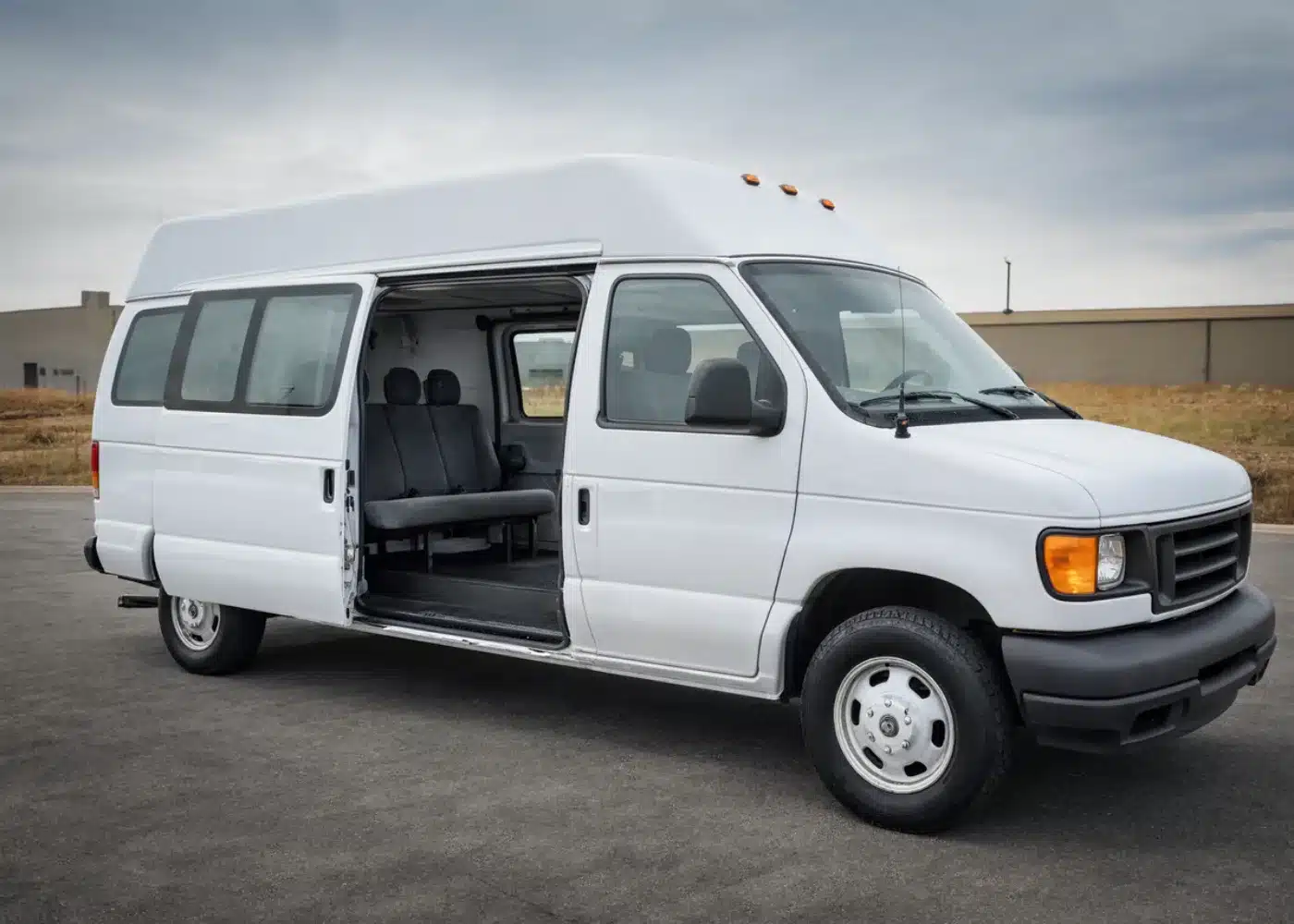
Where donated conversion vans come from
Trades and service businesses replacing on a mileage cycle. A plumbing, HVAC or locksmith van runs three hundred thousand miles of short trips and comes off the fleet with the drivetrain tired and the body straight.
Businesses that closed or consolidated. When a route disappears the vans go all at once, and if you have several that is much better for the cause than one at a time.
Churches, schools and nonprofits with older passenger conversion vans bought for programs that no longer run.
Driven or towed, both covered
A running registered van gets driven. A van that will not start gets towed, and towing a van is inexpensive enough that the math still works on a non-runner across most of the country.
Tell us whether it starts, rolls, steers and stops. Fleet vans that have sat on a lot for a year typically need a battery and tires, which is normal.
Take out anything you want to keep and tell us what is staying. Shelving, a partition, a ladder rack and an inverter all go with the van unless you pull them, and a van with its shelving intact often sells better than an empty shell to the next trade buyer.
What decides what a van brings
- Mileage against engine reputation. Fleet vans carry very high miles and buyers know which engines are worth buying at 250,000 and which are not.
- Rust. On a salt-belt van, rocker, wheel-arch and floor rust is the deciding factor above everything else.
- Upfit. Shelving, a partition, a ladder rack, a bulkhead, an inverter or a generator. Fitted, these usually add.
- Roof height and wheelbase. High-roof extended vans have a broader buyer pool than low-roof short wheelbase.
- Service records. Fleet maintenance history genuinely moves the number on a high-mileage van, because it answers the only question a buyer has.
Makes and bodies we accept
Chassis and upfit are two separate names and both belong on the form.
- Full size: Ford Transit and E-150 through E-350, Mercedes-Benz Sprinter, Ram ProMaster, Chevrolet Express 1500 through 3500, GMC Savana, Nissan NV1500 through NV3500.
- Compact: Ford Transit Connect, Ram ProMaster City, Chevrolet City Express, Nissan NV200, Mercedes Metris.
- Upfit and shelving: Adrian Steel, Weather Guard, Ranger Design, Masterack, Sortimo, Knapheide, Legend, and ladder racks from Prime Design and Kargo Master.
Manufacturer names appear here so you can find your own vehicle. No manufacturer sponsors, endorses or is affiliated with this program.
The paperwork, and what you can deduct
It is a titled vehicle, so the title has to transfer. If it is lost, most states have a duplicate process and the state title rules page walks through yours. If it was financed we need the lien release. Fleet vehicles are usually owned by a company, a municipality or a nonprofit rather than a person. Whoever signs needs authority to sign for the entity, and if you are a public body your own surplus-property rules may require a resolution on file. That is between you and your records, but it is worth checking before the pickup rather than after.
Giving Center sells the van and your deduction is the gross sale proceeds on Form 1098-C. A running fleet van usually lands between $500 and $5,000, where Form 8283 Section A applies and no appraisal is required. A low-mileage or late-model van can clear $5,000, where the IRS requires a qualified appraisal at your expense.
A high-mileage rusty van that does not run can sell under $500, where the deduction is the lesser of fair market value or $500 with a written acknowledgment instead of a 1098-C. If you are donating several units, put the count on the form. One mobilization for four vehicles costs far less than four separate pickups, and the difference stays with the cause.
Conversion van donation questions
It has 320,000 miles. Is it worth anything?
Often yes, depending on the engine and the rust. High mileage is normal in this category and buyers price for it. Service records help a great deal.
Should I pull the shelving out?
Only if you want to keep it. A van with its shelving often sells better to the next trade buyer than a stripped one.
We have six vans from a closed route.
Put the count on the form. One mobilization for six is far cheaper than six pickups and the saving stays with the cause.
The van is titled to our company, which is dissolving.
Start now rather than later. Transferring a title out of a dissolved entity is much harder than out of an active one, and whoever signs needs authority to sign for it.
Do you take it with the lettering still on?
Yes, and we remove it as part of preparing it for sale. You do not need to do that yourself.
Giving Center does not provide tax, legal or financial advice. Donations are deductible to the extent allowed by law. See IRS Publication 526, Publication 561 and Publication 4303, and consult a tax professional.