
Limousine donation
Donate a limousine when the operator days are over
Limousines depreciate faster than almost any vehicle on the road and the resale market for an older stretch is genuinely thin. That combination is why so many end up parked behind a building for years, and it is exactly the situation a donation solves.
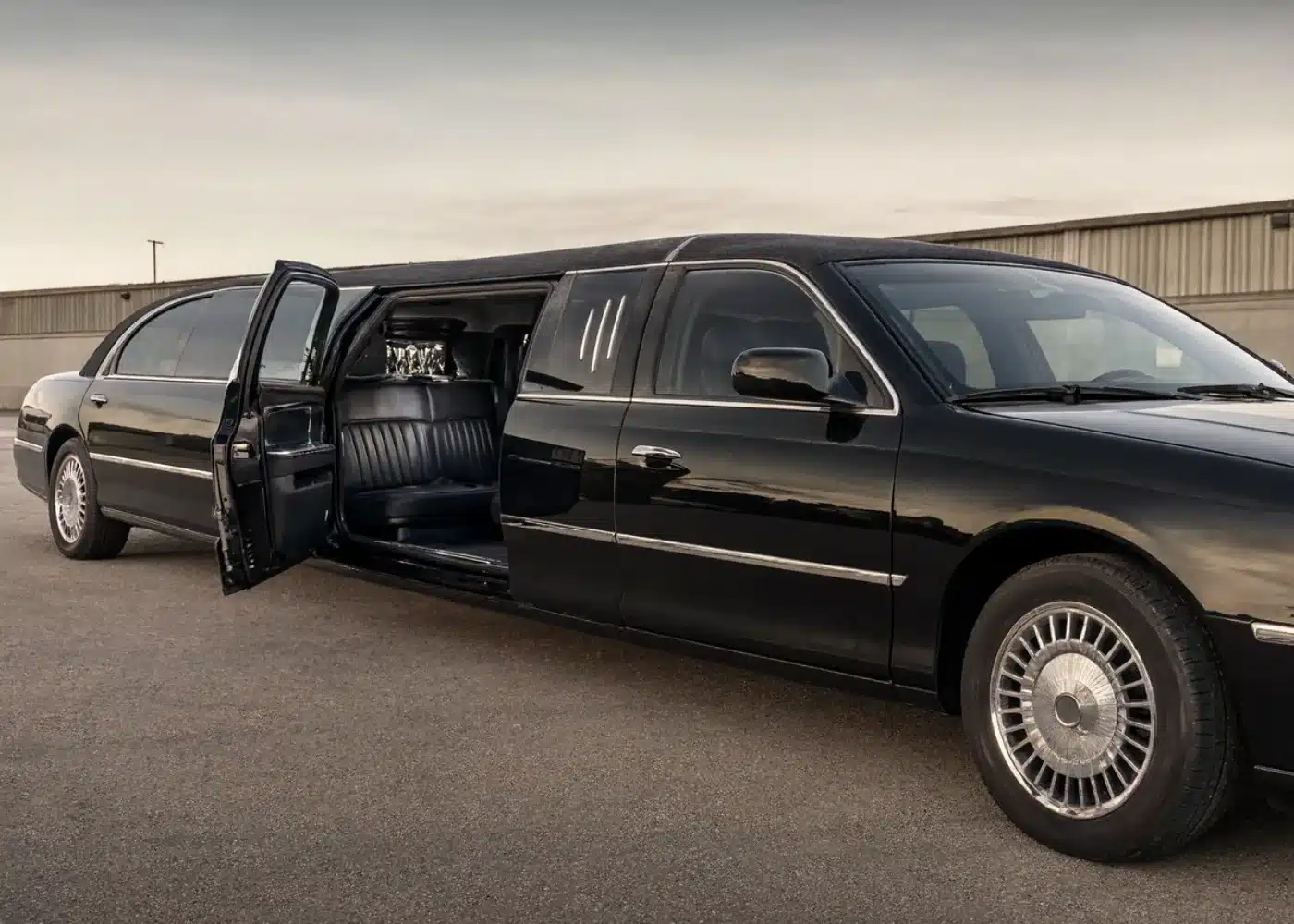
Where donated limousines come from
Operators who closed or downsized. The livery business turned over hard, and a lot of small operators came out of it with one or two stretches they cannot sell.
Funeral homes and car services replacing a fleet vehicle. Those are often the best maintained in the category because they were serviced on a schedule and driven gently.
Owners of party buses and larger conversions, which are handled here as well. Those are bigger, heavier and harder to place, and we will be straight about the number.
Driven when it runs, and the length matters
A running registered limousine gets driven. A long stretch is awkward but it is a licensed vehicle and a driver can move it, which is much cheaper than hauling.
If it will not start, a stretch needs a flatbed rated for the length rather than a standard rollback, and a party bus needs a heavy rollback or a lowboy. Tell us the overall length, whether it starts and whether it rolls and steers.
Empty the cabin completely: glassware, bottles, coolers, personal items. Leave the bar console, the seating, the lighting and the sound system. Tell us if the air suspension is down, because a stretch sitting on its bump stops is harder to load than one at ride height.
What decides what a limousine brings
- Length and passenger count. A modest six-passenger stretch has a broader buyer pool than a very long specialty conversion.
- Chassis condition and mileage. Stretches run high mileage at low speed with a lot of idling, so engine hours matter more than the odometer suggests.
- Air suspension and brakes. The two things a buyer checks first on any stretch, because they are expensive and they fail.
- Interior condition. Leather cracking, headliner sag, fiber-optic lighting that no longer works, and whether the partition operates. Interior condition is most of what a buyer sees.
- Coachbuilder. A recognized converter is worth more than an obscure one, mostly because parts and trim are findable.
Makes and bodies we accept
Chassis and coachbuilder are two separate names.
- Coachbuilders: Federal Coach, Eagle Coach, Krystal, Superior, S&S, Armbruster Stageway, Tiffany, Royale, Executive Coach Builders, LCW, Picasso.
- Chassis: Lincoln Town Car and MKT, Cadillac DeVille, DTS and XTS, Chrysler 300, Hummer H2, Ford Excursion and Expedition, Chevrolet Suburban and Tahoe, Mercedes Sprinter and Ford Transit for party buses.
- Party bus platforms: Ford F-550 and F-650, Freightliner M2, International, Chevrolet 4500 and 5500 cutaway.
Manufacturer names appear here so you can find your own vehicle. No manufacturer sponsors, endorses or is affiliated with this program.
The paperwork, and what you can deduct
It is a titled vehicle, so the title has to transfer. If it is lost, most states have a duplicate process and the state title rules page walks through yours. If it was financed we need the lien release. Fleet vehicles are usually owned by a company, a municipality or a nonprofit rather than a person. Whoever signs needs authority to sign for the entity, and if you are a public body your own surplus-property rules may require a resolution on file.
Giving Center sells the vehicle and your deduction is the gross sale proceeds on Form 1098-C. Be careful with expectations in this category specifically, because the gap between what limousines cost new and what they sell for used is enormous. A newer well-kept stretch or a party bus in running condition can clear $5,000, where the IRS requires a qualified appraisal and Form 8283 Section B at your expense.
An older high-mileage stretch with a tired interior commonly lands between $500 and $5,000, and sometimes below. In that lowest band the deduction is the lesser of fair market value or $500 with a written acknowledgment rather than a 1098-C. We would rather tell you that plainly than have you plan around what the coach cost twenty years ago.
Limousine donation questions
It cost ninety thousand new. What is it worth now?
Far less, and this is the category where that gap is widest. Your deduction is what it actually sells for. Tell us the year, mileage and condition and we will give you a realistic range before anything is scheduled.
The air suspension is sitting on the bump stops.
Common and worth telling us, because it makes loading harder. It is also one of the first things a buyer checks.
Do you take party buses?
Yes, handled on this page. They are heavier and harder to place, so tell us the length and chassis and we will be straight about the number.
Should I leave the bar and the sound system?
Yes, if you are not keeping them. They are part of the conversion and worth much more installed.
We have three limos from a closed business.
Put the count on the form. One mobilization for three is far cheaper than three pickups.
Giving Center does not provide tax, legal or financial advice. Donations are deductible to the extent allowed by law. See IRS Publication 526, Publication 561 and Publication 4303, and consult a tax professional.