
Grain cart donation
Donate a grain cart that has finished running alongside
Grain carts hold value well because they are simple, they last and everybody harvesting grain needs one. A cart with a straight hopper and a sound auger sells reliably, which makes this one of the better farm donations we receive.
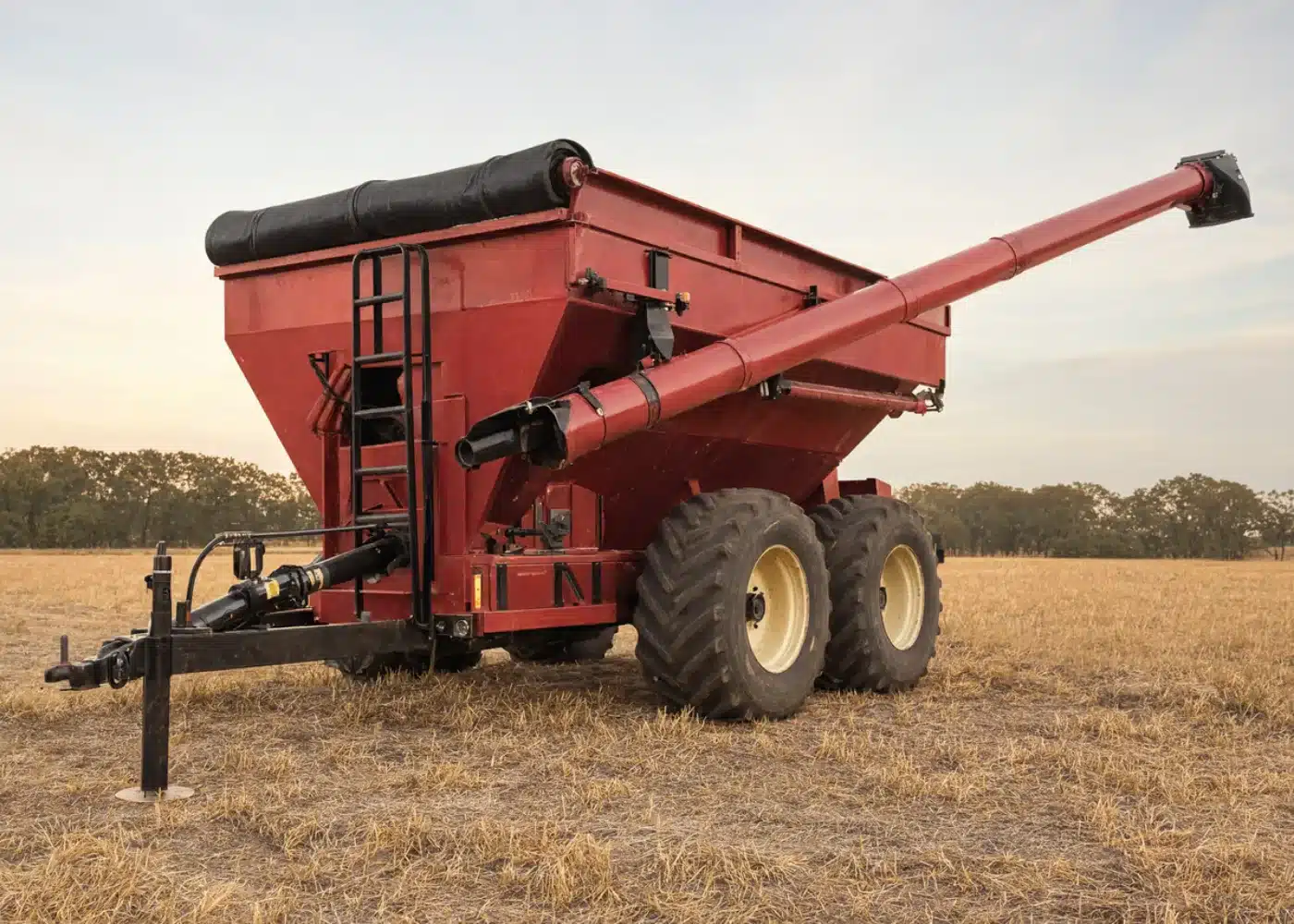
Where donated grain carts come from
Farms that stopped harvesting their own acres. When the combine goes the cart follows, and it is usually the second-to-last thing to leave.
Estates and farm dispersals, where a cart is a reliably saleable item among machines that are harder to place.
Operations that upgraded to a larger cart or a tracked one. The older cart is fully capable and simply too small for the current combine.
On a step-deck, folded
A grain cart goes on a step-deck or drop-deck with the auger folded. Large carts on flotation tires or tracks are heavier and wider and may need a permit. Giving Center arranges and covers it.
Tell us the bushel capacity, whether the auger folds, and whether it is on tires or tracks. Also tell us whether the PTO driveline and shield are present.
Access is the first question on any farm pickup. Tell us where it sits, what the ground is like and what is between it and a road a trailer can use. A cart parked at the edge of a field after a wet fall is a common access problem.
What decides what a cart brings
- Capacity. The defining spec. The 800 to 1,300 bushel range is the deepest market on modern carts.
- Auger condition. Flighting wear, the gearbox and whether it unfolds and turns cleanly. The auger is the main wear item.
- Corner auger or single auger. Corner-auger carts are generally worth more because they unload faster and reach better.
- Tires or tracks. Flotation tires in good condition are real money, and a tracked cart is a substantial premium.
- Hopper, tarp and scale. Hopper interior condition, whether the roll tarp works, and whether a working weigh scale is fitted. A scale adds noticeably.
Makes we accept
Carts are a strong brand market.
- Most common: Unverferth and Brent Avalanche and GC series, J&M 750 through 1500, Kinze 1050 and 1300, Parker, Demco, Killbros, Balzer.
- Also seen: Bourgault, Elmers Haulmaster, Richiger, Sunflower, Ficklin, EZ Trail, Bergman, and tracked carts from Elmers and Unverferth.
- Scales buyers ask about: Digi-Star, Scale-Tec, Avery Weigh-Tronix.
Manufacturer names appear here so you can find your own machine. No manufacturer sponsors, endorses or is affiliated with this program.
The paperwork, and what you can deduct
Farm equipment is not titled. Ownership is established with the purchase invoice, a bill of sale, a farm asset record, or a lien release if it was financed. Find the serial plate and photograph it. If the machine is part of an estate or a farm partnership, whoever signs needs authority to sign for it.
Giving Center sells the cart and your deduction is the gross sale proceeds on Form 1098-C. A sound modern grain cart clears $5,000 in most cases, which means a qualified appraisal and Form 8283 Section B at your expense. An older smaller cart usually lands between $500 and $5,000, where Section A applies.
Most farm equipment is a depreciated business asset, which makes a conversation with your accountant worth having before the pickup. Farm business property follows different rules than a personal donation.
Grain cart donation questions
The auger flighting is worn thin.
The main wear item and buyers expect it. Photograph the flighting at the intake and we will get it assessed accurately.
Does a scale add much?
Yes, noticeably, if it works. Tell us the brand and whether it reads accurately.
The tarp is shredded.
Routine replacement and priced in. Tell us so the listing is honest.
Mine is on tracks.
A substantial premium, and a heavier and wider load. Tell us so the transport is planned properly.
It is sitting at the end of a field on soft ground.
Tell us. Access is the usual issue on carts and we plan for it, but the driver needs to know in advance.
Giving Center does not provide tax, legal or financial advice. Donations are deductible to the extent allowed by law. See IRS Publication 526, Publication 561 and Publication 4303, and consult a tax professional.