
Crane donation
Donate a crane and let someone else handle the transport and the paperwork
A crane is the most valuable machine most people will ever consider donating, and the hardest to hand over. Certification, load charts, annual inspection, an operator to load it, and a permit to move it. All of that is work, and it is work we do.
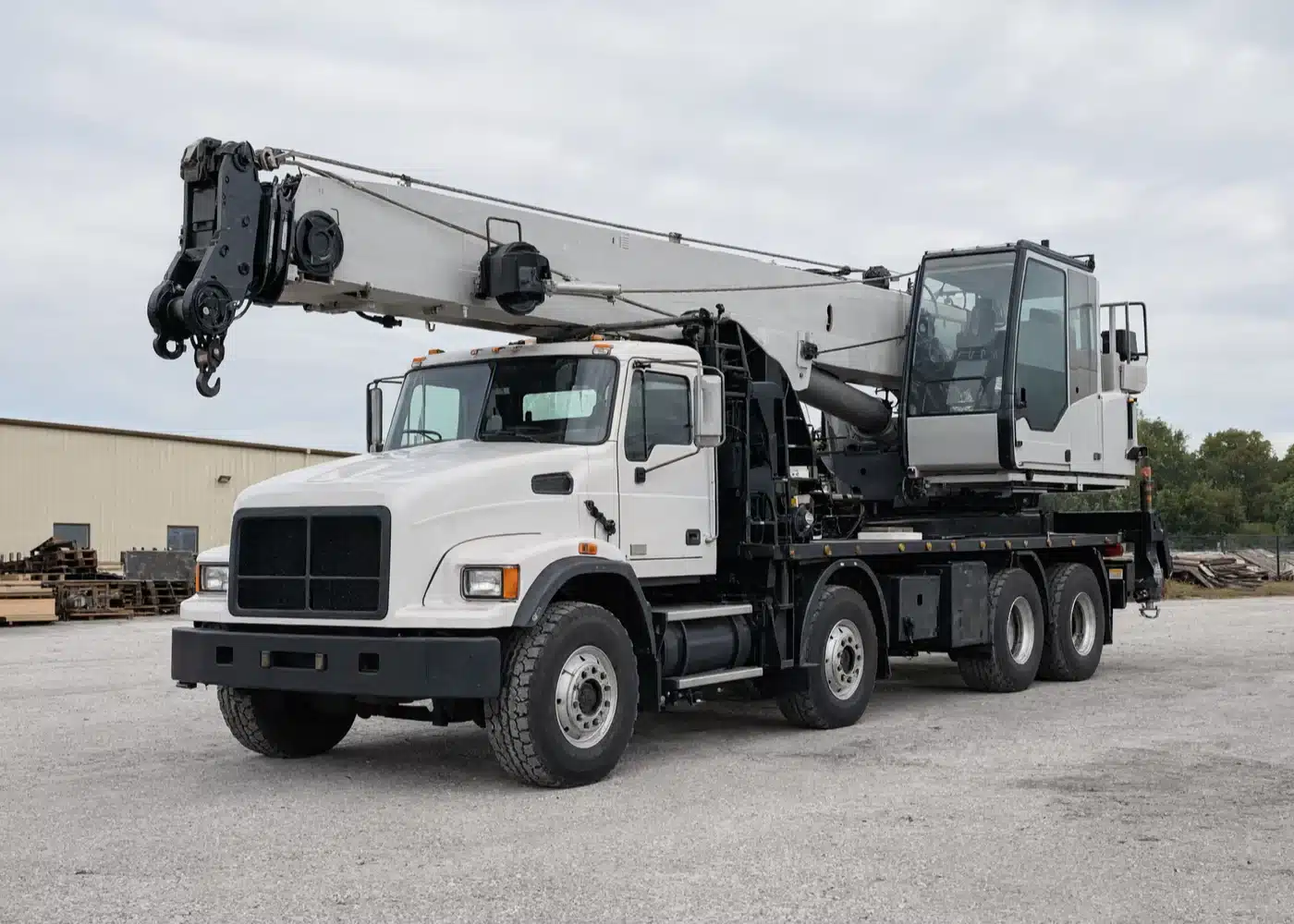
Where donated cranes come from
Steel erectors, sign companies, mechanical contractors and crane rental outfits. A boom truck is replaced with a bigger one. A carry deck crane that spent its life inside a plant comes out when the plant retools. A rough-terrain crane comes off a fleet after its certification cycle.
Estates and business closures are the other half. A crane is a six-figure asset in some cases and a liability in others, and an executor or a winding-down company needs it resolved on a date certain with a document attached.
We also accept smaller cranes: industrial carry decks, pick-and-carry machines, and truck-mounted knuckle booms. They are easier to move and they sell into a broad industrial market.
Permits, routes and an operator to load it
How a crane moves depends entirely on what it is. A boom truck is a licensed vehicle and can often be driven, which is the simplest case. A rough-terrain or all-terrain crane goes on a lowboy with over-dimension permits and a routed trip. A lattice boom crane may need to be broken down, and that is a job for a rigging crew, not a tow driver.
Giving Center arranges all of it, including the permits and, where it is needed, the certified operator to load the machine. We will not guess: we ask for the make, model, boom length and gross weight, and we plan from the real numbers.
Counterweights, outrigger pads, jibs and blocks travel with the crane. Tell us what is in the package. A crane missing its blocks and jib sells for meaningfully less than a complete one.
What decides what a crane brings
- Capacity and boom length. The two numbers that define the machine. Have them from the load chart, not from memory.
- Certification and inspection status. A current annual inspection and a clean load test change the buyer pool completely. Expired certification does not stop a sale but it lowers it.
- Hours on engine and hoist. Both, separately. Hoist hours tell a buyer how hard the machine actually worked.
- Wire rope, blocks and jib. Rope condition is inspected first. A complete package with blocks, jib and pads is worth clearly more.
- Records. Inspection history, repair records and load test documents are worth having. On a crane, paper is part of the asset.
Makes and models we accept
Cranes are bought on make, model and load chart. Include all three if you have them.
- Boom trucks and truck-mounted: National Crane, Manitex, Terex BT and Commander, Elliott, Altec, Palfinger and Fassi knuckle booms, IMT.
- Rough-terrain and all-terrain: Grove RT and GMK, Terex RT, Tadano and Tadano-Mantis, Liebherr LTM, Link-Belt RTC, Kato.
- Carry deck and industrial: Broderson IC series, Grove YB and Shuttlelift, Terex Franna, Manitowoc lattice crawlers, American, Lorain, Bucyrus-Erie.
Manufacturer names appear here so you can find your own machine. No manufacturer sponsors, endorses or is affiliated with this program.
The paperwork, and what you can deduct
A truck-mounted crane on a licensed chassis has a title and that title has to transfer. A rough-terrain or carry deck crane has no title, and ownership is proved with the invoice, a bill of sale, an asset record or a lien release. Serial numbers for both the carrier and the crane upper go on the paperwork.
Giving Center sells the crane and your deduction is the gross sale proceeds, reported on Form 1098-C. A crane will clear $5,000 in virtually every case, which means the IRS requires a qualified appraisal and Form 8283 Section B. On a machine of this value, an appraisal is worth doing properly. It is your expense and your decision, and the appraiser must be independent of us.
For a crane, we will discuss the sale channel with you before anything moves. A specialized crane auction reaches the right buyers; a general equipment sale often does not. The difference is large enough to matter to both you and the cause.
Crane donation questions
Will you take a crane with expired certification?
Yes. Expired annual inspection is common on a machine that has been parked. It affects the sale price, not whether we accept it.
Do I need to provide an operator to load it?
No. If loading requires a certified operator or a rigging crew, Giving Center arranges it. Tell us what the machine needs and we plan around it.
What about a crane that has been sitting for years?
Tell us how long and where. Cranes that have sat outdoors need the rope, cylinders and brakes assessed, and we will be honest about whether the sale justifies the move.
Is a boom truck handled differently?
Somewhat. It is a titled vehicle, so the title transfers like a truck. It can often be driven to the buyer rather than hauled, which keeps more of the sale with the cause.
Who pays for the permits?
Giving Center covers transport, permits and the IRS filing. The qualified appraisal, if you claim over $5,000, is the donor's expense because the IRS requires it to be independent.
Giving Center does not provide tax, legal or financial advice. Donations are deductible to the extent allowed by law. See IRS Publication 526, Publication 561 and Publication 4303, and consult a tax professional.