
Class A donation
Donate a Class A motorhome that has become a parking problem
A Class A is the hardest RV to sell privately and the most expensive to keep. Storage, insurance, registration and a battery that dies every spring. Most of the coaches we receive still run and have simply stopped being used, and that is a perfectly good coach for somebody else.
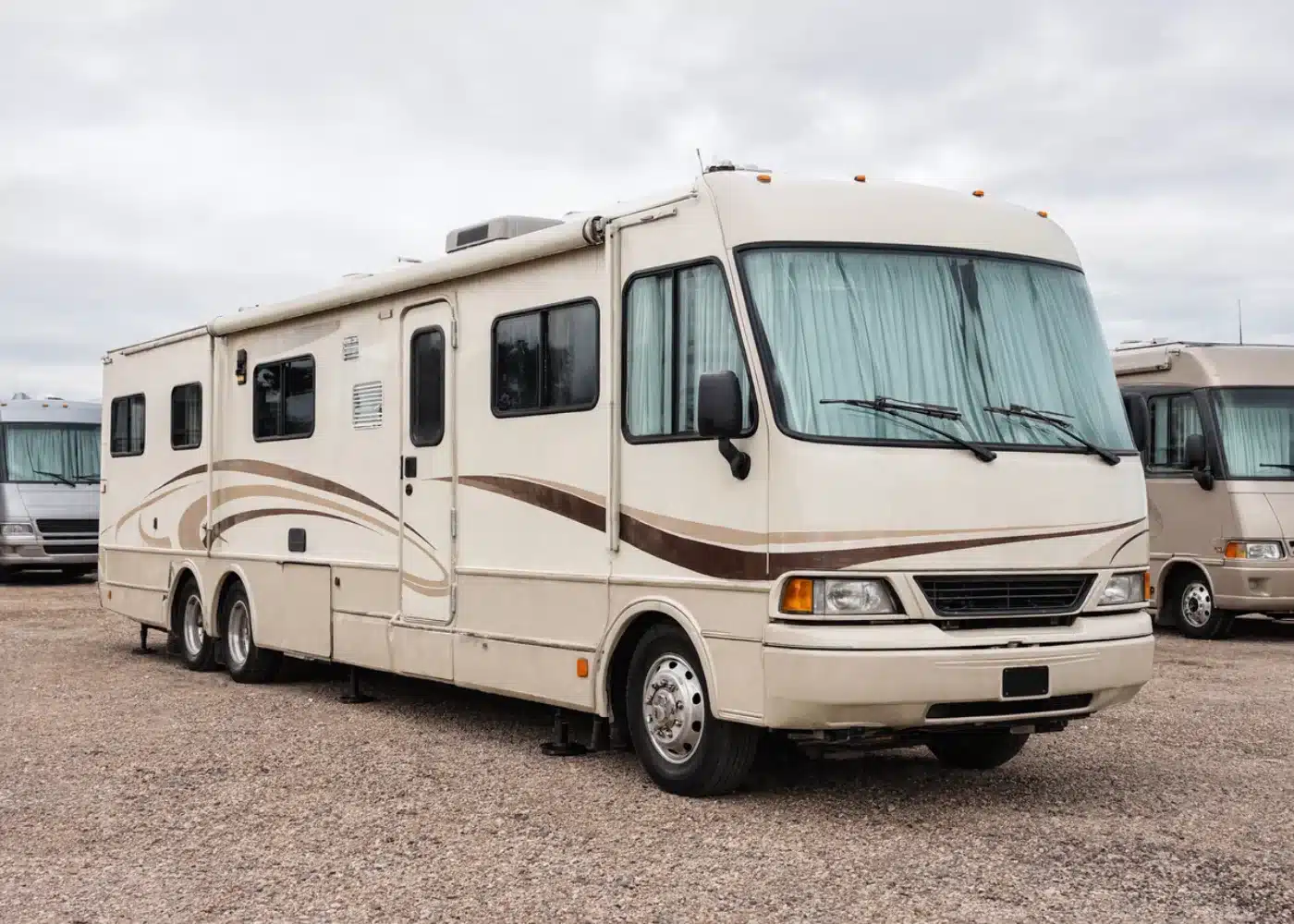
Where donated Class A coaches come from
People whose travel plans changed. Health, a spouse who no longer wants to travel, or simply the realization that the coach came out twice in four years while costing money every month.
Estates, very often. A Class A in an estate is a large, depreciating, hard-to-divide asset, and an executor usually needs it resolved on a known date more than they need to squeeze the last dollar out of it.
People who tried to sell and gave up. A Class A attracts tire kickers, lowball offers and buyers who want a mechanic to look at it in your driveway. Six weeks of that sends a lot of people looking for another option.
Driven if it runs, towed if it does not
A running, registered coach is driven by a driver we arrange and insure. That is much cheaper than hauling one, and the saving stays with the cause.
If it will not start, a Class A needs a heavy wrecker or a lowboy, and that is genuinely expensive. On an older coach with water damage, the tow can exceed what the coach brings. If that is where yours sits, we will tell you before anything is booked rather than after.
Before pickup: empty the holding tanks, take out your personal property, and tell us about the roof. Leave the appliances, the generator and the furniture. Tell us whether it has been winterized and whether the tires are original, because RV tires time out on age long before tread wear.
What decides what a Class A brings
- Gas or diesel pusher. A diesel pusher on a Freightliner or Spartan chassis is a different and generally better market than a gas coach on a Ford F-53.
- Roof and sidewall condition. Water is what ends RVs. Soft floors, delaminated sidewalls, a stained ceiling under a vent or an air conditioner. Photograph anything suspicious rather than describe it, and we will tell you honestly what it does to the number.
- Slide-outs. How many, and whether every one of them operates. A stuck slide is a significant deduction.
- Mileage, engine and generator hours. Low miles are normal here; a coach that has sat is often a bigger concern than one that has driven.
- Tires. Six or eight RV tires is a serious expense, and buyers check the date codes.
Makes we accept
Coach builder and chassis are two separate names, and buyers search both.
- Gas Class A: Winnebago Adventurer and Vista, Thor Windsport and Challenger, Fleetwood Flair and Bounder, Coachmen Mirada and Pursuit, Forest River FR3 and Georgetown, Jayco Alante and Precept, Tiffin Open Road.
- Diesel and high-end: Newmar Dutch Star and Ventana, Tiffin Allegro Bus and Phaeton, Entegra Aspire and Anthem, Monaco, Holiday Rambler, American Coach, Country Coach, Foretravel, Prevost conversions.
- Chassis: Ford F-53, Chevrolet and Workhorse, Freightliner XC, Spartan K2 and K3, Roadmaster.
Manufacturer names appear here so you can find your own coach. No manufacturer sponsors, endorses or is affiliated with this program.
The paperwork, and what you can deduct
A motorhome is a titled vehicle and the title has to transfer. If it is lost, most states have a duplicate process and the state title rules page walks through yours. If there is a loan against it we need the lien release; we cannot transfer a coach the lender still holds.
Giving Center sells the coach and your deduction is the gross sale proceeds, reported on Form 1098-C. It is not NADA, not the insured value and not what the neighbor is asking for his. A sound running Class A almost always clears $5,000, which means the IRS requires a qualified appraisal and Form 8283 Section B, at your expense and by your choice.
Be careful with expectations in this category specifically. Asking prices on Class A coaches run far above what units actually change hands for, and the gap is wider here than almost anywhere else. Your deduction follows the sale.
Class A motorhome donation questions
It has not started in three years. Will you take it?
Often, but this is where we are most likely to say the math does not work. A dead Class A needs a heavy tow, and if the coach also has roof leaks the sale may not cover the move. Tell us the location and condition and we will give you a straight answer first.
One of the slides will not come in.
Accepted. It lowers the sale and it affects transport, since the coach has to move with the slide secured. Tell us on the form.
Should I leave the furniture and appliances?
Yes. The generator, air conditioners, fridge and furniture are part of the coach. Take your personal property and empty the tanks.
The tires look fine but they are twelve years old.
Then they are not fine, and buyers will know from the date codes. It is a normal condition on a stored coach and it is priced in, not a reason to decline.
Is there a cost to me?
Giving Center covers transport, title work and the IRS filing. A qualified appraisal, needed if you claim over $5,000, is the donor's expense because the IRS requires it to be independent of us.
Giving Center does not provide tax, legal or financial advice. Donations are deductible to the extent allowed by law. See IRS Publication 526, Publication 561 and Publication 4303, and consult a tax professional.