
Irrigation donation
Donate a center pivot, once we have worked out the dismantling
A center pivot is a large structure standing in a field, and the whole question is what it costs to take down and move. Sometimes the galvanized spans and drive towers are worth well more than the labor. Sometimes they are not. We work that out before anything is scheduled.
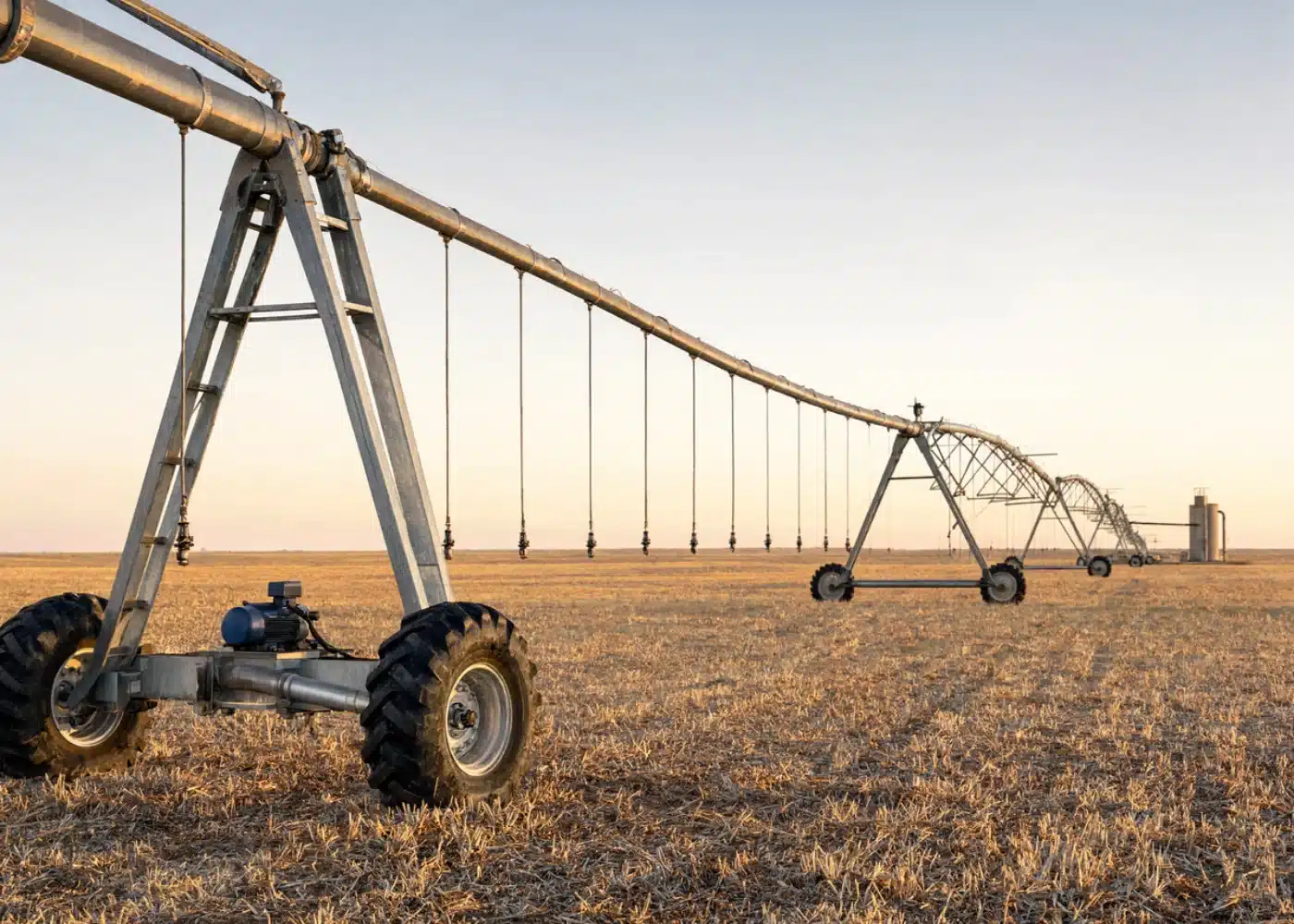
Where these come from
Farms where the ground came out of irrigation: a water right retired, a well that no longer produces, ground converted to dryland or sold for development.
Operations replacing an old pivot with a new one. The old system may have many usable spans even when the control panel is obsolete.
Estates, and farms consolidating several small pivots into fewer larger ones.
What we work out before anything moves
Dismantling a pivot means disconnecting the spans, supporting each one, unbolting the joints, lowering them, loading them on long trailers and hauling them. It takes a crew, a telehandler or a crane, and long trailers for spans that may be 160 feet each.
What decides whether it is worth doing: the number and length of spans, the condition of the galvanizing and the truss members, whether the drive motors and gearboxes are intact, whether the control panel is worth anything, and how far it is from a buyer. Several pivots on one place is much more viable than one, because a crew mobilization gets spread across them.
Tell us the make, the number of spans, the total length, roughly the age, whether it still operated last season and whether the pivot point and underground mainline are included. Send photos down the length and close-ups of a joint and a drive tower. We will give you a straight answer, and if the answer is that the labor exceeds the value we will say so rather than let you plan around it.
Where it does not pencil out, a local irrigation dealer will often buy a pivot for parts and remove it themselves, sometimes at no cost to you. If you would rather the value fund the cause, sell it that way and donate the proceeds. We receipt that identically.
What decides the number
- Span count and length. The primary spec. A seven-tower pivot has considerably more recoverable value than a three-tower.
- Galvanizing and truss condition. Surface oxidation is normal. Rust-through at the joints and bent truss members are what end a span.
- Drive motors and gearboxes. Intact and turning. These are individually valuable and commonly the most saleable part.
- Sprinkler package and drops. Age of the package, whether the regulators and nozzles are present, and hose condition.
- Panel and controls. An obsolete panel is worth little; a current one with GPS and remote monitoring is worth naming.
Makes we accept
Irrigation is a four-name market and buyers know each one's parts availability.
- Pivots: Valley and Valmont, Zimmatic and Lindsay, Reinke, T-L Irrigation, Pierce, Olson.
- Linear and traveler: Valley linears, Zimmatic lateral move, Cadman and Kifco travelers, Bauer.
- Panels, drops and components: Valley Select and Pro2, Lindsay FieldNET, Nelson and Senninger sprinklers and regulators, Komet, and drive motors from Valley and UMC.
Manufacturer names appear here so you can find your own machine. No manufacturer sponsors, endorses or is affiliated with this program.
The paperwork, and what you can deduct
Farm equipment is not titled. Ownership is established with the purchase invoice, a bill of sale, a farm asset record, or a lien release if it was financed. Find the serial plate and photograph it. If the machine is part of an estate or a farm partnership, whoever signs needs authority to sign for it. Irrigation adds a specific wrinkle: a pivot point and underground mainline permanently installed on the ground may be treated as a fixture or real property rather than equipment, and water rights are a separate matter entirely and are not part of a vehicle or equipment donation. If any of that is in play, tell us and talk to your own advisor.
Giving Center sells the equipment and your deduction is the gross sale proceeds on Form 1098-C. A larger pivot in sound condition can clear $5,000, where a qualified appraisal and Form 8283 Section B are required at your expense.
A short old pivot with rusted joints and an obsolete panel will most likely come in under $500 after dismantling and hauling, and may not be viable at all. That is the honest range and we will tell you where yours sits. Most farm equipment is a depreciated business asset, which makes a conversation with your accountant worth having before the pickup. Farm business property follows different rules than a personal donation.
Center pivot donation questions
Can you take a pivot that is still standing?
Sometimes. It depends on span count, condition and distance, because dismantling takes a crew and a lift. Send photos and the span count and we will give you a straight answer before anything is scheduled.
We have four pivots on the place.
Much better odds. A crew mobilization spread across four is far more viable than one, and more of the value reaches the cause.
Are the water rights part of this?
No. Water rights are a separate legal matter and are not part of an equipment donation. Talk to your own advisor about those.
The panel is from 1988 and does not work.
Worth little on its own. The spans, towers and drive motors are where the recoverable value is.
Nobody wants it. What are my options?
A local irrigation dealer will often buy a pivot for parts and remove it themselves, sometimes at no cost to you. Sell it that way and donate the proceeds if you prefer; we receipt it the same.
Giving Center does not provide tax, legal or financial advice. Donations are deductible to the extent allowed by law. See IRS Publication 526, Publication 561 and Publication 4303, and consult a tax professional.