
Bulldozer donation
Donate a bulldozer without brokering it yourself for six months
A dozer is the hardest machine on a lot to sell quietly. Buyers want to see it push, the tracks and undercarriage decide most of the price, and nobody moves one casually. Owners who are done with a dozer often spend a season trying to sell it before they look for another option.
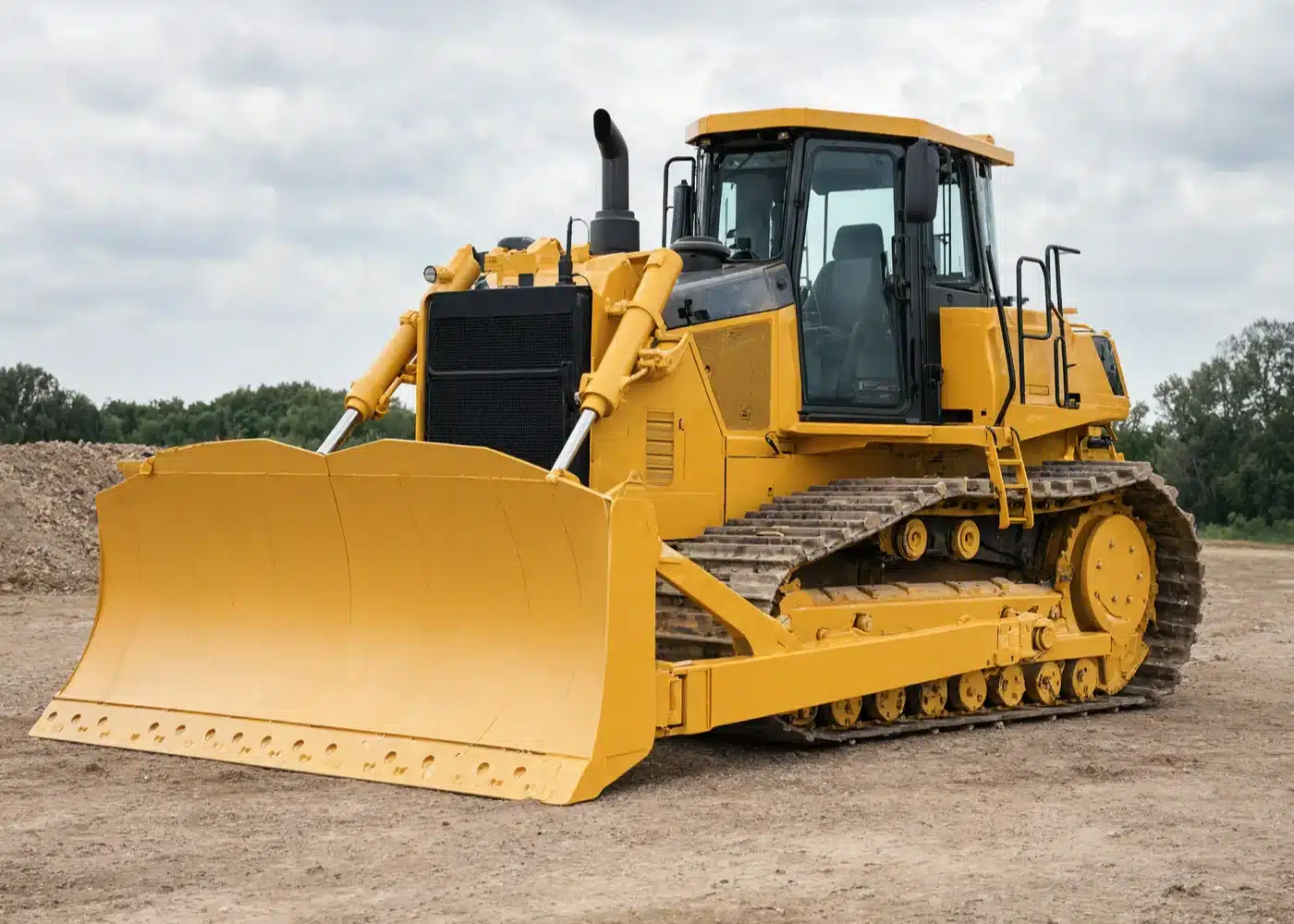
Where donated dozers come from
Excavation and site-work contractors who have downsized, land owners who cleared what they needed to clear, and estates. A dozer bought to build a pond, cut a driveway or clear thirty acres does its job and then has nothing to do for years.
Small municipalities and landfills send us the larger ones. A machine replaced on a capital schedule still runs, but a public entity often cannot sell it easily and a documented donation to a 501(c)(3) is cleaner than a surplus auction.
Small crawler dozers, the four to eight-ton class, come from farms and from homeowners with acreage. They are much easier to move and they sell quickly.
Tracks mean a lowboy, always
Nothing on tracks is driven on pavement and nothing on tracks fits a light trailer. A dozer goes on a lowboy, often with an over-width permit for the blade. Giving Center books it and pays for it.
We need the operating weight and the blade width from the data plate. Blade width is what usually triggers the permit, and a six-way blade can sometimes be angled to get under the limit. Steel tracks and a heavy machine also mean the loading spot matters: a lowboy needs firm ground and room to straighten out.
If the dozer does not start, we can still move it with a winch on most lowboys, but the driver has to arrive with the right equipment. A dozer that will not steer, or has a track off, is a harder problem and we will be honest about whether it is worth the trip.
What decides what a dozer brings
- Undercarriage. Track, roller, idler and sprocket wear is the number that moves the price most. A fresh undercarriage on an older machine can be worth more than low engine hours.
- Size class. The small to mid range, roughly CAT D3 through D6 equivalents, has the widest buyer pool. Very large dozers bring more but sell into a narrow market.
- Blade type. A six-way power-angle-tilt blade is worth noticeably more than a straight blade. A winch or ripper adds as well.
- Hours and leaks. Final drive leaks, a tired pump and blow-by are the faults inspectors look for. They do not disqualify a machine; they set the price.
- Cab or open station. An enclosed cab with working heat and air widens the buyer pool, especially in the north.
Makes and models we accept
Dozers are searched by make and series number, so include yours.
- Caterpillar: D3, D4, D5, D6, D8 and the older 9U through 955 crawlers and crawler loaders.
- Other majors: John Deere 450, 550, 650, 700 and 850 series, Komatsu D31 through D155, Case 650 and 1150 series, Dressta, Liebherr PR series, Volvo, Hyundai.
- Compact crawlers: Yanmar, Takeuchi TB, Bobcat and CAT small dozers, Struck mini dozers, older International and Allis-Chalmers crawlers.
Manufacturer names appear here so you can find your own machine. No manufacturer sponsors, endorses or is affiliated with this program.
The paperwork, and what you can deduct
Dozers carry no title. Ownership is established with the purchase invoice, a bill of sale, a company asset record, or a lien release if it was financed. Find the serial number on the frame or inside the cab and photograph the plate.
Giving Center sells the machine and your deduction is the gross sale proceeds, reported to you on Form 1098-C. A working dozer almost always clears $5,000, so plan on a qualified appraisal and Form 8283 Section B. The appraisal is your expense and your decision, not something we can do for you.
Where it sells matters. A dozer sent to a regional equipment auction with real contractor attendance does better than one sold into a thin market, and a shorter haul leaves more of the proceeds for the cause. We will tell you the plan before the trailer is booked.
Bulldozer donation questions
Will you take a dozer that will not start?
Often. A common model with a dead engine and a good undercarriage is worth real money to a rebuilder. A large machine with a track off, in a remote spot, may cost more to recover than it returns, and we will tell you that rather than send a truck.
How do I find the undercarriage percentage?
You do not have to. Take clear photos of the tracks, sprockets and idlers from the side and we will have it assessed. A guess in the form is worse than a photo.
Can you get a lowboy into a wooded property?
Sometimes. We need photos of the approach and the width of the access. If a lowboy cannot reach it, walking the dozer out to a staging area is often the answer, and that has to be arranged on your end.
Do you take antique crawlers?
Yes. Older crawler tractors have a collector market that is separate from the working-equipment market, and we will route it accordingly.
Is there a cost to me?
Giving Center covers transport, the paperwork and the IRS filing. If you choose to claim more than $5,000 you pay for the qualified appraisal, because the IRS requires it to be independent of us.
Giving Center does not provide tax, legal or financial advice. Donations are deductible to the extent allowed by law. See IRS Publication 526, Publication 561 and Publication 4303, and consult a tax professional.