
Van conversion donation
Donate a van conversion, factory built or built in your own driveway
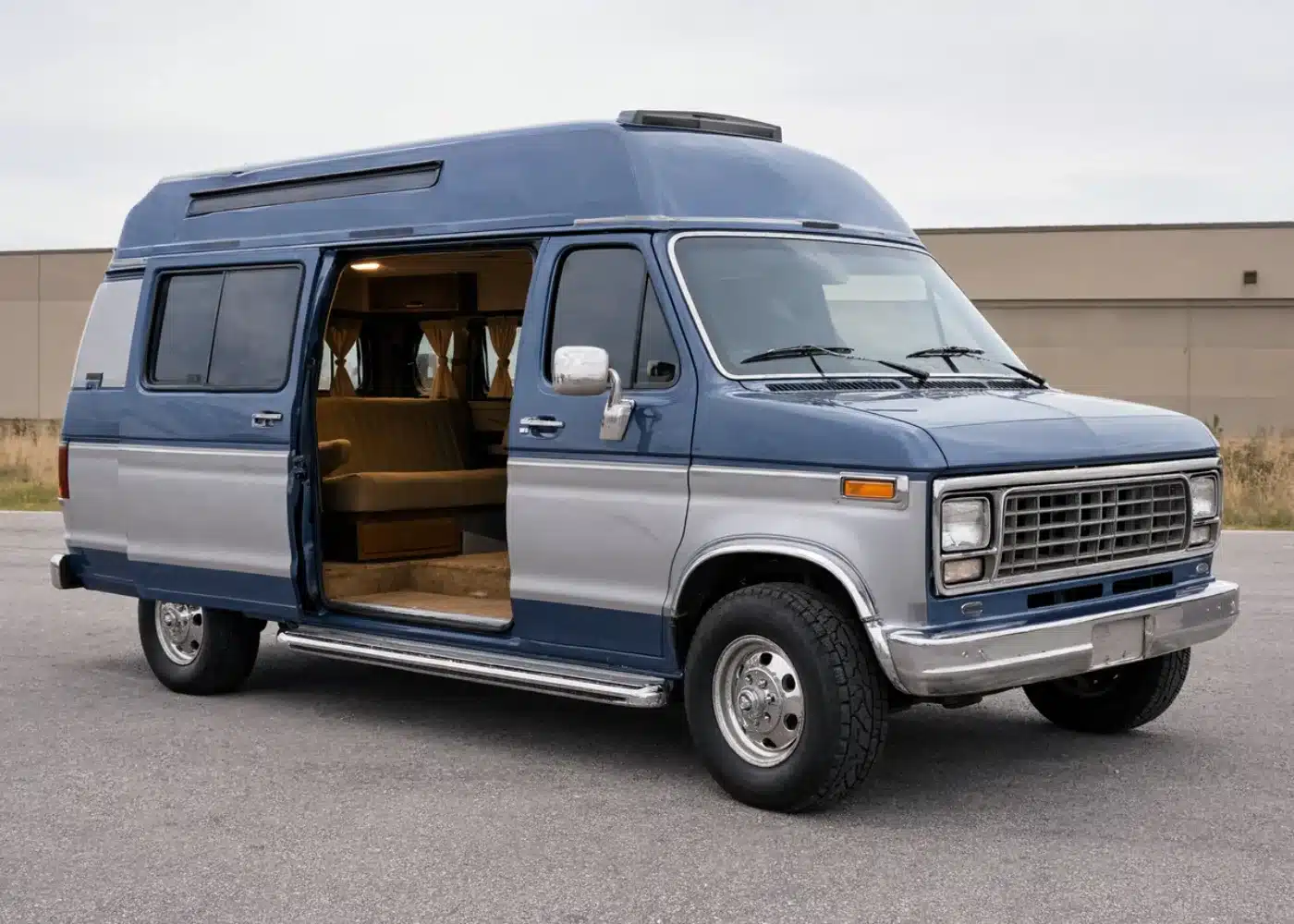
Van conversions cover two very different things: the 1990s high-top conversion van with captains chairs and a fold-down bench, and the self-built camper with a bed platform and a solar panel. Both sell, to different buyers, and the numbers are not close. Tell us which you have.
Where donated conversions come from
Estates and older owners, for the classic high-top conversion vans. Those were bought new for family travel in the eighties and nineties and many have low mileage and immaculate interiors.
People who built a camper van and then stopped van life. A self-build with a bed platform, a galley, solar and a house battery has a real market among buyers who want the work already done.
Owners of factory camper vans moving to something bigger or smaller. Those are the most valuable in this group and they sell quickly.
Driven, or towed cheaply
A running registered van gets driven, and it is one of the cheapest pickups in the RV category. A van that does not run gets towed as ordinary van work rather than heavy recovery, so the numbers hold up on a non-runner far more often than they do on a motorhome.
Tell us whether it starts, rolls, steers and stops. A conversion van that has sat for three years typically needs a battery and tires, which is normal.
Take your property. Leave the conversion: the seating, the bed platform, the cabinetry, the solar, the house battery, the fridge and any roof fan. Tell us whether the raised roof has ever leaked and whether there is any staining at the roof seam, because that is where these fail.
What decides what a conversion brings
- Factory camper, factory conversion or self-build. Three different markets. A factory camper van with a galley and a bath is worth the most; a 1990s high-top passenger conversion the least.
- Chassis, era and mileage. An older Ford E-series or Chevy van is serviceable anywhere, which is much of why they still sell.
- Raised roof condition. Fiberglass roof gel coat chalking is cosmetic; a leak at the roof-to-body seam is not. This is the fault that ends conversion vans.
- Camper systems, if fitted. House battery, solar, inverter, fridge, roof fan, water tank, heater. Each working system is a real add.
- Interior condition. Upholstery, headliner sag, and whether the carpet and wall panels are dry. Musty is a symptom worth checking for.
Makes we accept
Chassis and converter are both worth naming.
- Factory camper vans: Roadtrek, Pleasure-Way, Great West Vans, Chinook, Xplorer, Coach House, Sportsmobile, Leisure Travel.
- High-top conversion houses: Mark III, Starcraft, Glaval, Explorer, Regency, Tuscany, Majestic, Sherrod, Centurion, Gladiator.
- Chassis: Ford E-150 through E-350 and Transit, Chevrolet Express and the older G-series, GMC Savana, Dodge Ram Van and ProMaster, Mercedes Sprinter.
Manufacturer names appear here so you can find your own coach. No manufacturer sponsors, endorses or is affiliated with this program.
The paperwork, and what you can deduct
A van is a titled vehicle and the title has to transfer. If it is lost, most states have a duplicate process and the state title rules page walks through yours. If there is a loan we need the lien release. Note that a self-built camper van is usually still titled as a van rather than a motorhome, and that is fine; it just belongs on the form.
Giving Center sells the van and your deduction is the gross sale proceeds on Form 1098-C. A factory camper van in sound condition frequently clears $5,000, which brings the IRS qualified appraisal requirement and Form 8283 Section B, at your expense and by your choice. A well-executed self-build often lands between $500 and $5,000, where Section A applies.
A high-mileage 1990s high-top passenger conversion with a tired interior commonly sells under $500. In that band the deduction is the lesser of fair market value or $500 and we send a written acknowledgment instead of a 1098-C. That is the honest expectation for that specific kind of van, and we would rather say it now.
Van conversion donation questions
Mine is a 1996 high-top with 90,000 miles and a clean interior.
Those sell, at modest numbers. Low mileage and a dry, clean interior are the two things that matter most in that group. Expect a small deduction and an easy, cost-free pickup.
I built the camper interior myself.
Fine, and often desirable. Tell us what systems you installed and whether they work. A well-executed self-build sells well; a rough one sells for less, and we will be honest about which.
The fiberglass roof is chalky and yellowed.
Cosmetic and completely normal on these. What matters is whether the roof-to-body seam has leaked. Check the headliner at the front and rear of the raised section and tell us what you find.
Will you take one that does not run?
Usually. Towing a van is inexpensive, so unlike a motorhome the math holds up on a non-runner in most of the country.
Should I leave the solar panel and battery?
Yes, if you are not keeping them. Installed they are a genuine add; removed they are worth a fraction.
Giving Center does not provide tax, legal or financial advice. Donations are deductible to the extent allowed by law. See IRS Publication 526, Publication 561 and Publication 4303, and consult a tax professional.