
Race car donation
Donate a race car when the program comes to an end
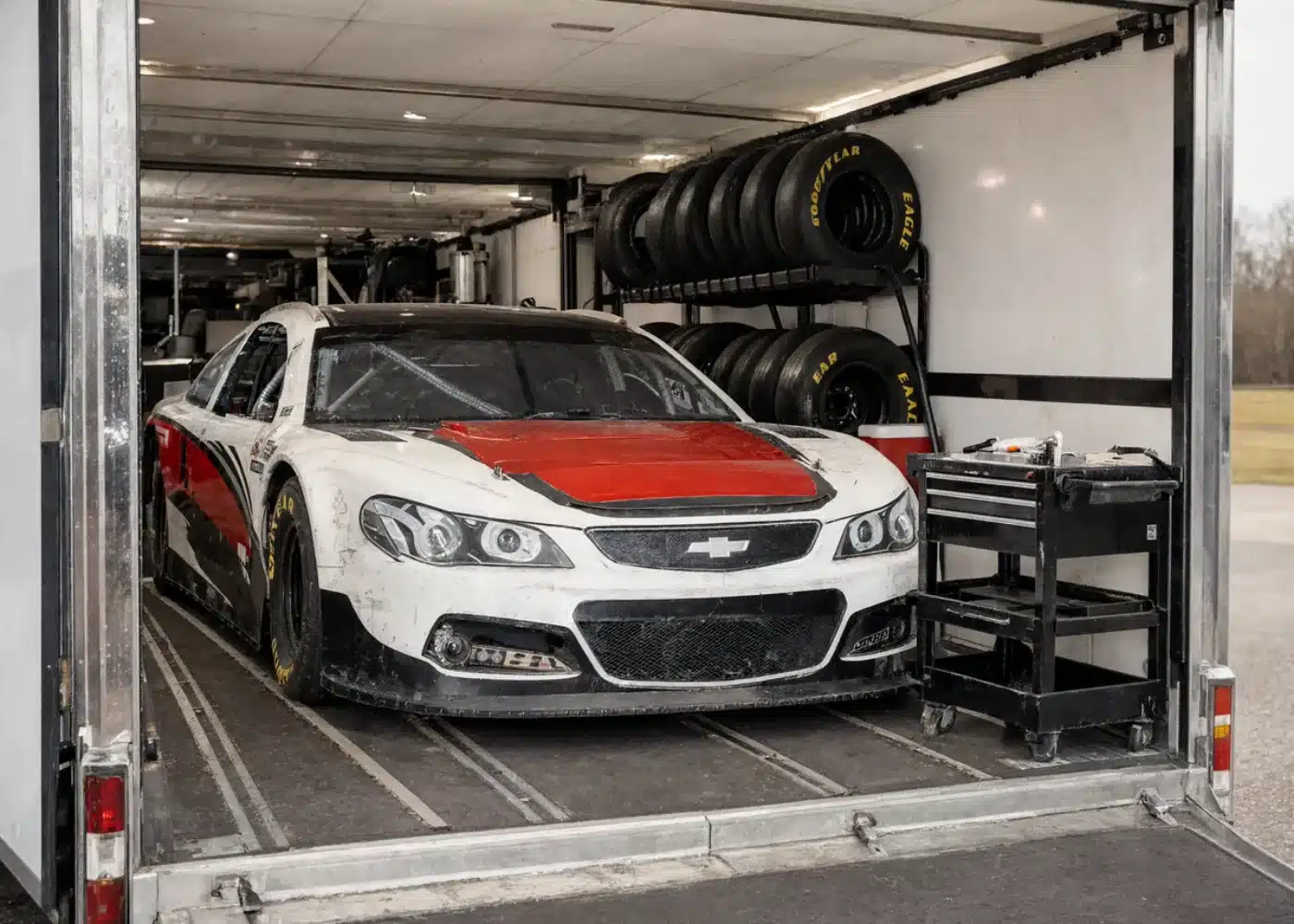
Racing programs end abruptly: a sponsor leaves, a driver retires, a business changes. What remains is a car with no title, an enclosed trailer, a set of spares, and a pile of tools, all of which are hard to sell separately and straightforward to donate together.
Who donates a race program
Teams winding down, families settling estates, and businesses that sponsored a car and inherited it when the program folded. The common thread is that the pieces are worth more together than apart, and that nobody in the family knows how to price a chassis, a spare motor and a set of hubs.
Racing equipment also has a narrow, knowledgeable buyer pool, which is exactly the case where a private seller does worst and a donation does well: the buyers are found through the paddock, not through a classified ad.
Car, trailer and spares in one visit
A race car is not street legal, so it moves on an open or enclosed trailer, or in its own trailer if that is going too. Spares, wheels, tire stacks, jacks and tool carts are picked up in the same visit. Giving Center arranges and pays for it.
Tell us whether the car rolls and steers, whether the engine is in it, what the trailer is and whether it is roadworthy, and how much equipment there is. A full program can take a larger truck or two trips, which we plan around.
What race equipment is worth
- Class and current rules, since a car that is legal for a live class is worth far more than one that has been ruled out.
- Chassis builder and age, the primary value driver in most circle track and road racing classes.
- Engine and drivetrain, including whether it is fresh or due, and whether a dyno sheet exists.
- Log book and records, which establish history and legality.
- Spares. Wheels, tires, gears, hubs, bodies and a spare motor often total more than the car.
- The trailer, frequently the single most sellable item in the whole program.
The paperwork, and what you can deduct
A purpose-built race car has no title and never did, which is normal. Ownership is shown by a bill of sale, the chassis builder's invoice, a sanctioning body log book, or a notarized affidavit of ownership with the chassis number. The trailer is titled or registered separately depending on your state; see state title rules. A car converted from a street vehicle may still have a title, in which case it comes with the car.
Your deduction is the gross sale proceeds once Giving Center sells it, on Form 1098-C. Above $500 you file Form 8283 Section A; above $5,000 the IRS requires a qualified appraisal you obtain and pay for. We tell you before pickup which case yours is likely to be, so an appraisal is never a surprise expense. Full detail on the tax benefits page.
Race car donation questions
My race car has no title. Is that a problem?
No. Purpose-built cars never had one. A bill of sale, a builder's invoice or a sanctioning log book is what buyers expect.
Can I donate the trailer, spares and tools too?
Yes, and it is the better way to do it. The pieces are worth more together, and the trailer is often the most sellable item.
Does the car need to be class legal?
No, but it affects value considerably. Tell us the class and the last year it ran so we can place it accurately.
What about a street car converted for track days?
Accepted. If it still has a title, that comes with it and widens the range of buyers.
Giving Center does not provide tax, legal or financial advice. Donations are deductible to the extent allowed by law. See IRS Publication 526, Publication 561 and Publication 4303, and consult a tax professional.