Mobile clinic donation
Donate a mobile clinic or bookmobile when the program ends
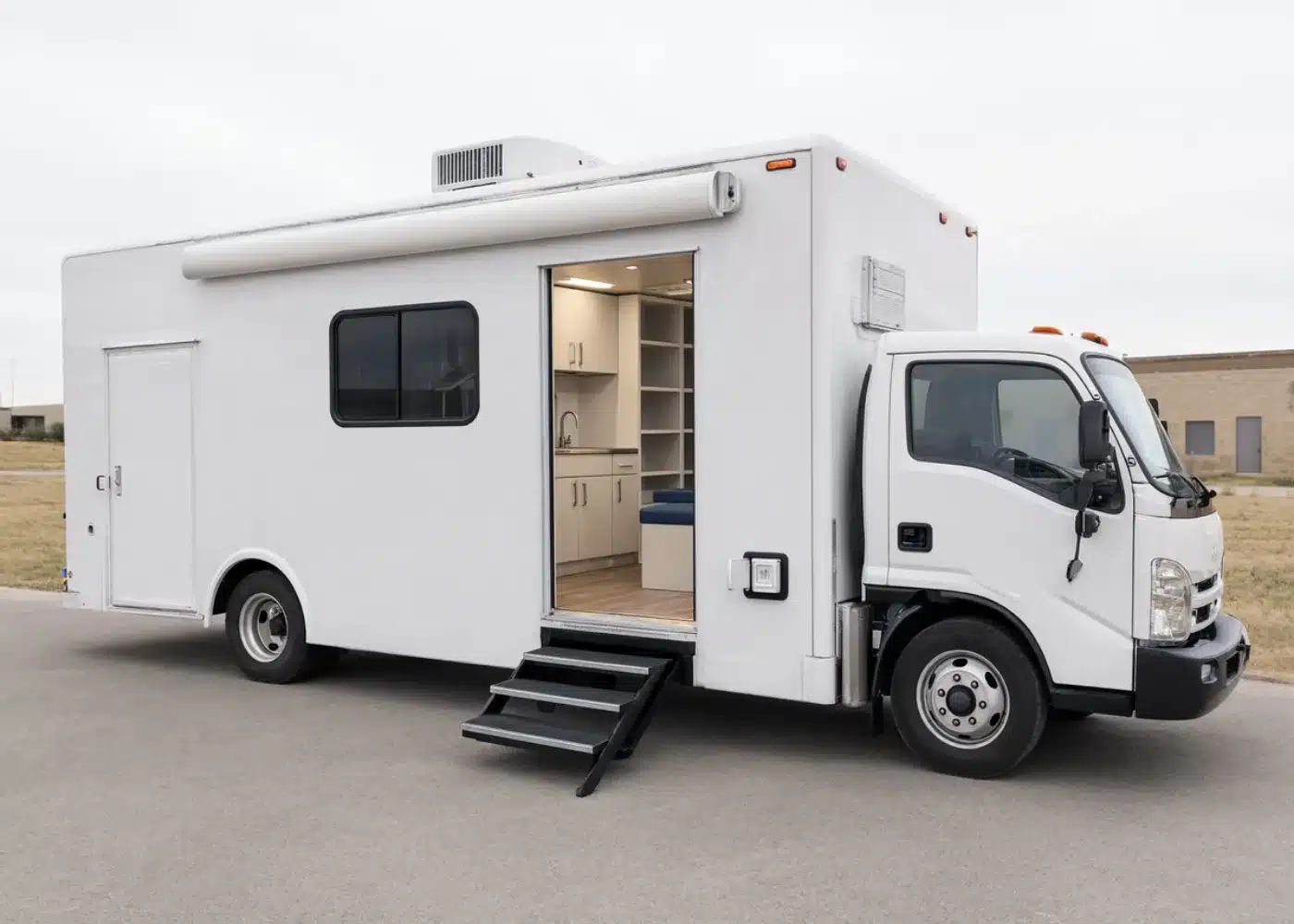
Purpose-built outreach vehicles are the one fleet category where the interior is worth more than the chassis and where the next owner is very often another nonprofit. A mobile clinic, a bookmobile or a dental van has a specific and grateful buyer market, which is a good outcome all round.
Where these come from
Nonprofits and health systems whose grant ended. That is the most common story by a wide margin: a program is funded for five years, the vehicle is built for it, and when the funding stops the vehicle becomes an asset nobody has a budget to operate.
Library systems retiring a bookmobile, and school districts retiring outreach vehicles. Those tend to be well kept and lightly driven.
Health departments, dental and vision outreach programs, and mobile food and shower services. Each has a specialized interior and each has a buyer pool that wants exactly that.
Driven when it runs, and the disconnect is yours
A running registered vehicle gets driven by a qualified driver, which is covered.
If the vehicle has been parked on shore power for years, disconnect it before the pickup. That is your side and it needs a qualified trade. Tell us whether there is a generator, whether it runs, and whether there are water tanks that need draining or winterizing.
Empty the interior of everything you are keeping and anything regulated. Specifically: remove all medical supplies, sharps containers, medications, patient records and any biological material. That is not a formality; a vehicle arriving with sharps or records in it is a real problem for everyone. Leave the cabinetry, the sink, the exam or reading furniture and the built-in equipment.
What decides what one brings
- The interior build. The main asset. Cabinetry, a sink and water system, an exam room or reading area, lighting, climate control and whether it is a professional conversion or a homemade one.
- Generator and shore power. A working generator and a functioning shore inlet are what make the vehicle usable on site, and they are worth naming.
- Accessibility. A working wheelchair lift or ramp substantially widens the buyer pool, because the likely buyers are serving the public.
- Chassis, mileage and roadworthiness. These vehicles often have very low mileage and very high idle hours. Say what it actually did.
- Roof and seal condition. Roof air units, vents and the body-to-chassis seam. Water damage in a purpose-built interior is expensive and it is where these fail.
Makes and bodies we accept
Chassis, body builder and any specialty conversion, all three.
- Conversion and body builders: Farber Specialty Vehicles, LDV, Matthews Specialty Vehicles, Frazer, Craftsmen Industries, AM Haire, Summit Bodyworks, OBS, Lifeline.
- Chassis: Ford E-450 and F-550 cutaway and Transit, Mercedes-Benz Sprinter, Chevrolet Express 4500, Freightliner M2 and S2C, International, and bus chassis for larger units.
- Onboard equipment buyers ask about: Onan and Cummins generators, Dometic and Coleman climate units, Braun and Ricon lifts.
Manufacturer names appear here so you can find your own vehicle. No manufacturer sponsors, endorses or is affiliated with this program.
The paperwork, and what you can deduct
It is a titled vehicle, so the title has to transfer. If it is lost, most states have a duplicate process and the state title rules page walks through yours. If it was financed we need the lien release. Fleet vehicles are usually owned by a company, a municipality or a nonprofit rather than a person. Whoever signs needs authority to sign for the entity, and if you are a public body your own surplus-property rules may require a resolution on file. This applies to nearly every donation in this category, since almost all of these vehicles are nonprofit or publicly owned. Your board may want a resolution on file, and if the vehicle was purchased with grant funds there may be conditions on its disposal. That is genuinely worth checking with your grant administrator before the pickup, because it is the one thing that can stop the donation after the fact.
Giving Center sells the vehicle and your deduction is the gross sale proceeds on Form 1098-C. A running, well-built mobile clinic with a working generator clears $5,000 in most cases, which means the IRS requires a qualified appraisal and Form 8283 Section B at your expense.
One note that applies specifically to nonprofit donors: if your organization is itself tax-exempt, a charitable deduction may be of no use to you at all, and the real benefit is a clean documented disposal and proceeds going to a cause rather than a surplus auction. We would rather say that plainly than have you expect a tax outcome that does not apply.
Mobile clinic donation questions
Our grant ended and we cannot operate it. Can you take it?
Yes, and that is the most common reason we receive these. Check with your grant administrator first, because grant-funded equipment sometimes carries disposal conditions.
What do we do with the medical supplies and records?
Remove all of it before the pickup: supplies, sharps, medications, patient records and any biological material. That is on your side and it genuinely matters.
We are a nonprofit. Do we get a deduction?
Possibly not a useful one, since you are likely tax-exempt already. The real benefit is a clean documented disposal and the proceeds funding a cause instead of going to a surplus auction. We would rather be straight about that.
Do you take bookmobiles?
Yes. Library systems are a regular source and the built interiors have their own buyer market.
Who disconnects the shore power?
You do, through a qualified trade. The move, the paperwork and the sale are ours.
Giving Center does not provide tax, legal or financial advice. Donations are deductible to the extent allowed by law. See IRS Publication 526, Publication 561 and Publication 4303, and consult a tax professional.