Forage harvester donation
Donate a forage harvester after the dairy herd went
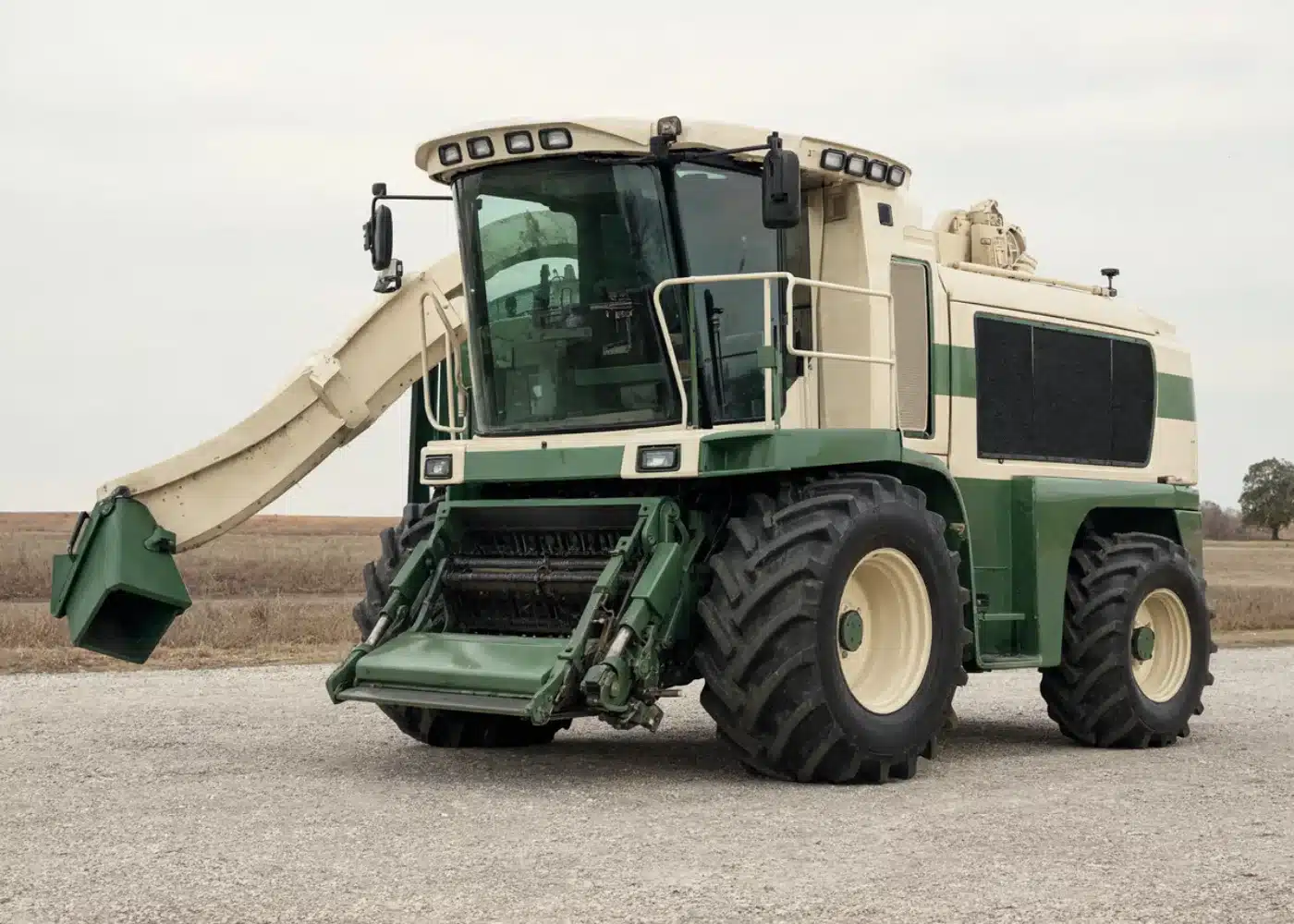
Forage harvesters come to us almost entirely for one reason: the herd is gone. Chopping corn silage is dairy and beef work, and when the animals leave the chopper has nothing to do even though it may have a thousand good hours left in it.
Where donated choppers come from
Dairies that sold the herd. That is the dominant story in this category and it has been for twenty years. The chopper is usually the last machine to go because it is the hardest to sell.
Custom harvesters winding down or upgrading. Those machines have very high hours and excellent maintenance records, which is a good combination for a buyer who knows what they are looking at.
Estates and beef operations that moved to buying feed rather than growing it.
Heavy, tall and permitted
A self-propelled forage harvester is one of the largest machines on any farm. It goes on a lowboy with an over-dimension permit and a planned route, and Giving Center arranges and covers all of it.
Tell us whether the header is on or off. Shipping the machine with the header removed is usually cheaper and simpler, and heads travel separately or on the same trailer depending on size.
We need the operating weight and overall height off the plate. Also tell us whether the machine runs and drives, because recovering a dead chopper is genuinely expensive and on an older unit the move can exceed what it returns. We will run that honestly before booking anything. Access is the first question on any farm pickup. Tell us where the machine sits, what the ground is like and what is between it and a road a trailer can use. If it has to be driven or dragged to a staging area, that generally happens on your end.
What decides what one brings
- Engine and cutterhead hours. Both, separately. Cutterhead hours tell a buyer how much crop actually went through it.
- Knives, shearbar and the cutterhead itself. The core wear assembly and the first thing inspected.
- Processor rolls. Whether a kernel processor is fitted and the condition of the rolls. A good processor is a real premium.
- Heads included. A corn head and a hay pickup head each add substantially, and a chopper with both is a complete outfit.
- Spout, blower and drivetrain. Spout wear, liner condition and whether the drive system engages cleanly.
Makes we accept
Choppers are a four-brand market at the top and buyers name models exactly.
- Self-propelled: Claas Jaguar 800, 900 and 960 series, John Deere 6000, 7000 and 8000 series, New Holland FX and FR Forage Cruiser, Krone BiG X, Fendt Katana, Case IH and Hesston.
- Pull-type: John Deere 3940, 3950 and 3975, New Holland 890 and 900, Gehl 1075 and 1085, Case IH 600 and 700, Claas Jaguar pull-type, Kemper heads.
- Heads: Kemper, Claas Orbis, Deere rotary and 600C, Krone EasyCollect, plus hay pickup heads from all majors.
Manufacturer names appear here so you can find your own machine. No manufacturer sponsors, endorses or is affiliated with this program.
The paperwork, and what you can deduct
Farm equipment is not titled. Ownership is established with the purchase invoice, a bill of sale, a farm asset record, or a lien release if it was financed. Find the serial plate and photograph it. If the machine is part of an estate or a farm partnership, whoever signs needs authority to sign for it.
Giving Center sells the machine and your deduction is the gross sale proceeds on Form 1098-C. A running self-propelled forage harvester clears $5,000 comfortably, which means a qualified appraisal and Form 8283 Section B at your expense. A pull-type chopper usually lands between $500 and $5,000, where Section A applies.
The honest caution for this class: an older self-propelled chopper that does not run, sitting a long way from a market, can genuinely cost more to move than it returns. We will tell you plainly and suggest a local sale if that is the better outcome. Most farm equipment is a depreciated business asset, which makes a conversation with your accountant worth having before the pickup. Farm business property follows different rules than a personal donation.
Forage harvester donation questions
Should I ship it with the header on?
Usually off, because it lowers the transport cost and simplifies the permit. Tell us which heads you have and whether they are going too.
It has not run in three seasons.
This is where we are most likely to say the math does not work, because recovering a dead self-propelled chopper is expensive. Tell us the location and condition and you will get a straight answer before anything is scheduled.
The knives and shearbar are worn out.
Expected consumables and priced in. Cutterhead and processor roll condition matter more.
Do you take pull-type choppers?
Yes, and they are much simpler and cheaper to move. Same page and same form.
We sold the herd and have the chopper, a mixer and a spreader.
Put all of it on the form. Grouping a dairy dispersal into one mobilization is far better for the cause than separate pickups.
Giving Center does not provide tax, legal or financial advice. Donations are deductible to the extent allowed by law. See IRS Publication 526, Publication 561 and Publication 4303, and consult a tax professional.