
Fire apparatus donation
Donate retired fire apparatus and let the truck keep working somewhere
Retired apparatus has a real second life. Smaller departments, volunteer companies, industrial fire brigades and overseas services buy used engines and tankers, and a truck that came off a capital schedule with a working pump is genuinely useful to somebody who cannot buy new.
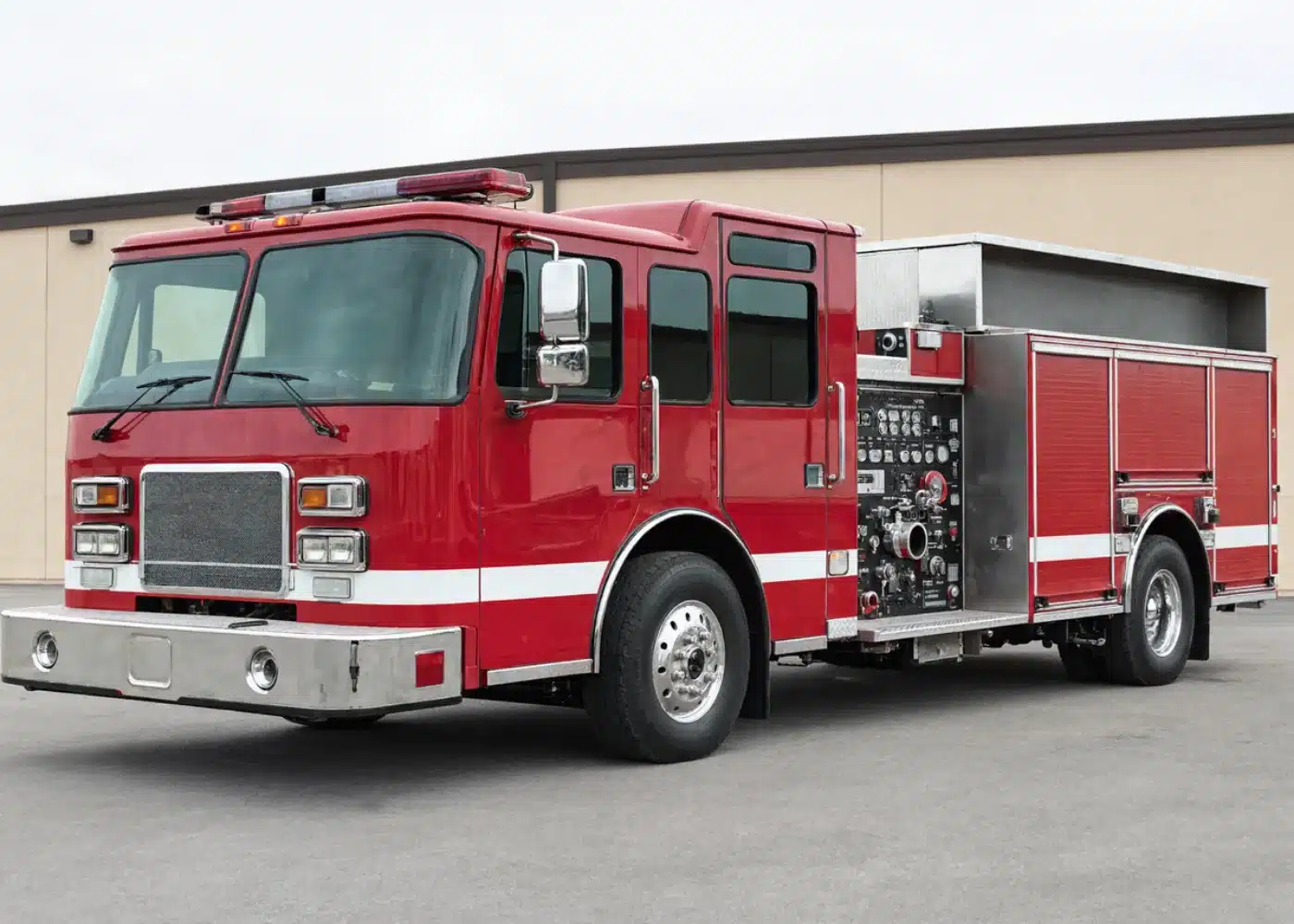
Where donated apparatus comes from
Municipal and volunteer fire departments replacing on a capital cycle. A twenty-five year old engine comes out of front-line service, spends a few years as a reserve, and then has to go somewhere.
Districts consolidating. When two departments merge there is surplus apparatus, and a documented donation to a 501(c)(3) is often a cleaner path than a surplus auction.
Industrial and airport brigades, and private companies retiring a brush truck, a tanker or a light rescue.
Driven when it is roadworthy
A running apparatus with current registration gets driven by a driver qualified for it, and that is covered. It is far cheaper than hauling a truck this heavy.
If it will not run, or the air brakes will not build, it needs a heavy wrecker or a lowboy. Tell us whether the air system holds overnight, whether it rolls and steers, and whether the pump turns.
Before pickup: drain the tank and the pump, remove all loose equipment you are keeping, and remove or tell us about any remaining insignia, department name and unit numbers. Leave the pump, the light bar and anything mounted. Loose hose, nozzles and ladders can come with it if you are not keeping them; they add to the sale.
What decides what apparatus brings
- Pump capacity and whether it passes. The single biggest factor. A pump that draws and holds pressure, ideally with a recent pump test on file, changes the buyer pool entirely.
- Type. Pumper, tanker, brush truck, aerial or rescue. Tankers and brush trucks have the broadest buyer pool because rural departments need them most.
- Aerial certification, if it has one. An aerial ladder or platform with a current or recent certification is worth substantially more than an uncertified one.
- Chassis, mileage and hours. Both engine hours and miles, because apparatus idles far more than it drives.
- Records. Pump test history, aerial certification and maintenance logs. On apparatus, paper is genuinely part of the asset.
Makes and bodies we accept
Buyers name the apparatus builder first, then the chassis.
- Apparatus builders: Pierce, E-One, Seagrave, Rosenbauer, KME, Ferrara, Spartan ER, Sutphen, HME, Smeal, Darley, Toyne, 4 Guys, Alexis, Marion.
- Ambulance and rescue bodies: Horton, Braun, Lifeline, Wheeled Coach, AEV, Road Rescue, Osage, McCoy Miller.
- Chassis: Spartan Gladiator and Metro Star, Freightliner M2 and 108SD, International, Kenworth, Ford F-450 through F-550 and F-650 for light rescue and brush.
Manufacturer names appear here so you can find your own vehicle. No manufacturer sponsors, endorses or is affiliated with this program.
The paperwork, and what you can deduct
It is a titled vehicle, so the title has to transfer. If it is lost, most states have a duplicate process and the state title rules page walks through yours. If it was financed we need the lien release. Fleet vehicles are usually owned by a company, a municipality or a nonprofit rather than a person. Whoever signs needs authority to sign for the entity, and if you are a public body your own surplus-property rules may require a resolution on file. That is between you and your records, but it is worth checking before the pickup rather than after. This matters more on apparatus than on anything else we accept, because most of it is publicly owned and the surplus process has to be followed properly.
Giving Center sells the apparatus and your deduction is the gross sale proceeds on Form 1098-C. A running engine or tanker with a working pump generally clears $5,000, which means the IRS requires a qualified appraisal and Form 8283 Section B. That appraisal is the donor's expense and the appraiser has to be independent of us.
One honest caution specific to this category: older apparatus with a failed pump, bad air brakes and a long haul can cost more to move than it returns. Aerials in particular are expensive to transport. We will run the numbers and tell you plainly before anything is scheduled, and if selling it locally to a neighboring department makes more sense we will say so.
Fire apparatus donation questions
The pump will not pass a test any more.
Tell us. It lowers the sale considerably because it removes the departments from the buyer pool, and it does not stop the donation. A truck with a failed pump still sells as a chassis or a tanker.
Do we have to remove our department name and insignia?
Either you do it or we do it as part of preparing it for sale. Tell us which you prefer. It does have to come off before resale.
Can we include the hose, nozzles and ladders?
Yes, if you are not keeping them. Loose equipment adds to the sale and travels with the truck.
We are a volunteer company. Who signs?
Whoever has authority to sign for the company under your bylaws. If your rules require a vote or a resolution, get that on file before the pickup.
Do you take ambulances?
Yes, and they are handled here. See also donate an ambulance.
Giving Center does not provide tax, legal or financial advice. Donations are deductible to the extent allowed by law. See IRS Publication 526, Publication 561 and Publication 4303, and consult a tax professional.