
Dune buggy donation
Donate a dune buggy or sand rail that has not seen sand in years
Sand rails and buggies are built rather than bought, which means every one is different and the value follows the quality of the build rather than a model year. Ours is to look at what is actually there and tell you honestly what it is likely to bring.
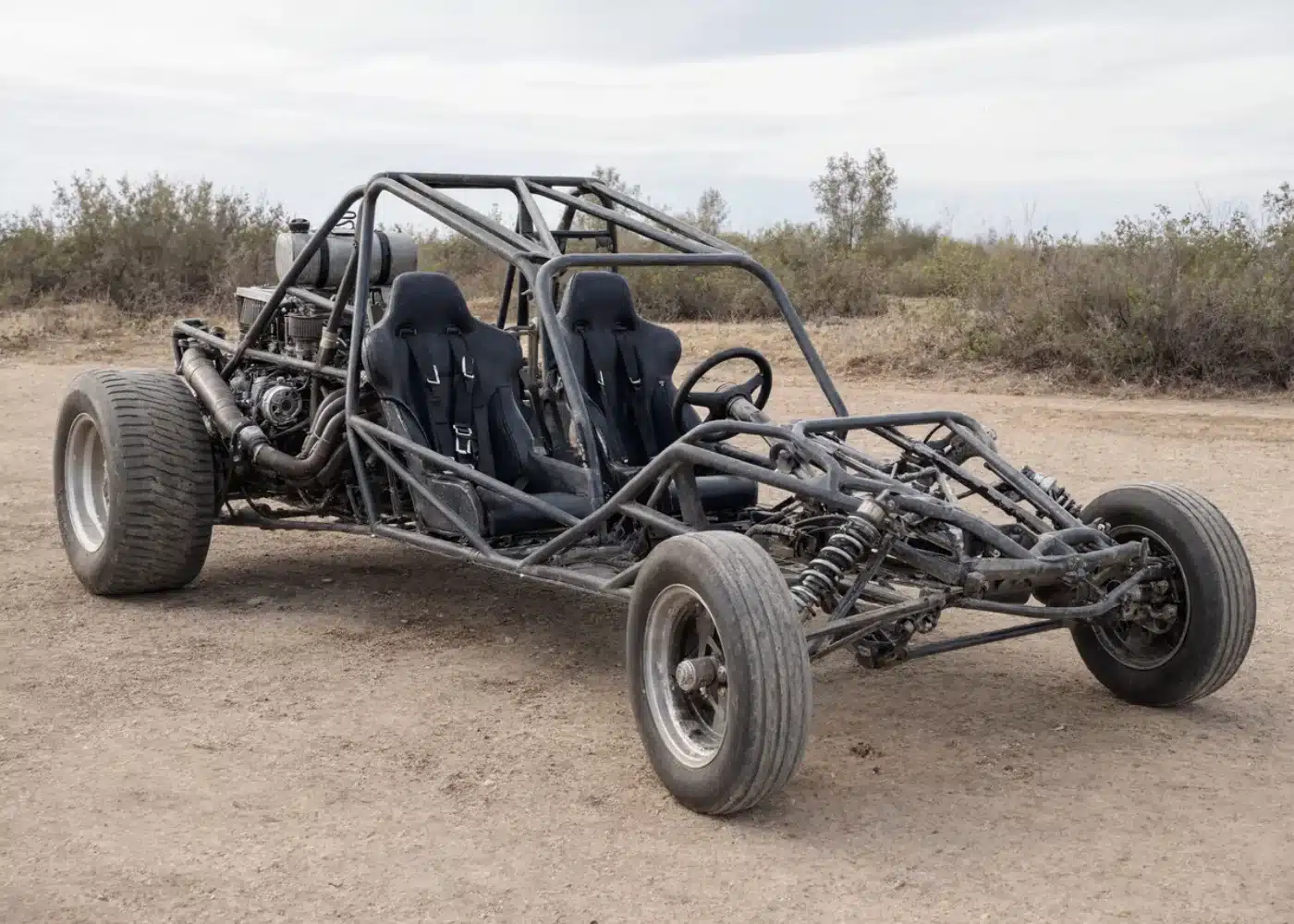
Where donated buggies come from
Builders who stopped going to the dunes. A rail gets built over three winters, run for four seasons, and then the group stops going or the truck that towed it gets sold.
Estates. A sand rail in an estate is genuinely hard for a family to value or move, and often nobody in it knows whether the thing is worth two hundred dollars or ten thousand.
We also see fiberglass-bodied buggies on shortened Volkswagen pans, which are an older tradition and have their own following, separate from modern long-travel rails.
It rides on a trailer
A buggy is not street legal in most cases and does not drive to a sale. It goes on an open trailer, which is an inexpensive haul.
Tell us whether it rolls and steers. A rail with a seized engine still rolls onto a trailer easily; one with a broken spindle or a missing wheel needs a winch and planning.
If you have the trailer it sits on, mention it. We can often take both and sell them as a package, which is what most buyers want. Take your helmets and personal gear; leave the seats, harnesses, cage and drivetrain.
What decides what a buggy brings
- Build quality. The main thing. Clean welds, consistent tube bends, proper gussets and tidy wiring read immediately to a buyer. A rough home build does not.
- Engine and transaxle. A known combination in running condition, and whether it turns over. A fresh build is worth naming.
- Suspension travel and type. Long-travel front and rear with quality shocks is a meaningful premium over a basic pan-based setup.
- Cage and safety gear. A properly triangulated cage, current-ish harnesses and a fuel cell rather than a bare tank all matter.
- Completeness. Missing wheels, no seats, no wiring or no drivetrain moves this from a vehicle to a rolling chassis, and the number drops accordingly.
Makes we accept
Buggies are built from named parts even when the whole machine has no badge.
- Chassis and kit builders: Funco, Sandwinder, Chenowth, Tatum, Bunderson, Two Loose Screws, Racer Engineering, Hendrix.
- Fiberglass bodies: Meyers Manx and Manx clones, Bugpack, Empi, Berrien Buggy, Acme, Sidewinder.
- Drivetrain and components buyers ask about: air-cooled and Type 1 VW engines, Subaru EJ and EZ conversions, LS conversions, Mendeola and Fortin transaxles, Fox, King and Bilstein shocks, Sway-A-Way axles.
Not seeing yours? The list above is a search aid, not a restriction. We accept any make or model in this category, named here or not, including orphan brands and builders long out of business. What decides a donation is the condition and the paperwork, never the badge, so put yours on the form even if it is not listed.
Manufacturer names appear here so you can find your own machine. No manufacturer sponsors, endorses or is affiliated with this program.
The paperwork, and what you can deduct
Off-road machines are the category most likely to have no title, and that is normal rather than a problem. Some states title them, some issue an off-highway registration, and some issue nothing at all. What we need is the VIN or serial number off the frame and a bill of sale or the original purchase paperwork. We will tell you which applies where you are, and the state title rules page covers the process. Home-built buggies are the wrinkle worth flagging: whether your state will register a shop-built vehicle for a new owner varies a great deal, and if it cannot be registered or titled it is much harder to sell. Tell us it is a home build up front and we will check your state before anything is scheduled.
Giving Center sells the buggy and your deduction is the gross sale proceeds on Form 1098-C. A well-built running long-travel rail can clear $5,000, where the IRS requires a qualified appraisal and Form 8283 Section B at your expense. A solid mid-range buggy commonly lands between $500 and $5,000, where Section A applies and no appraisal is needed.
A stripped or incomplete rolling chassis with no drivetrain may sell under $500, where the deduction is the lesser of fair market value or $500 with a written acknowledgment. Do not rely on what the build cost you; the deduction follows the sale.
Dune buggy donation questions
I built it myself. Will you take it?
Usually, and we check the registration question for your state first, because a shop-built vehicle that cannot be titled is much harder to sell. Tell us on the form that it is a home build.
The engine is seized.
Fine. It still rolls onto a trailer and a running combination is not required. It lowers the sale and we will be honest about the number.
I put twenty thousand into it.
Understood, and that is genuinely not the same as resale. Your deduction is what it sells for. We would rather set that expectation now.
Can I donate the trailer with it?
Yes, and it usually helps both. The trailer is itemized separately because it is often titled. See utility trailers.
It has no wheels and no seats.
That makes it a rolling chassis rather than a vehicle, and the number will be small. If it is also a long haul we will tell you a local buyer is the better outcome.
Giving Center does not provide tax, legal or financial advice. Donations are deductible to the extent allowed by law. See IRS Publication 526, Publication 561 and Publication 4303, and consult a tax professional.