
Dairy and barn equipment donation
Donate dairy and barn equipment when the parlor goes quiet
Dairy dispersals are the hardest farm donation to do well, because the value is spread across many items and much of it is bolted to a building. Done as one assessment across the whole place it works. Done piece by piece it usually does not, and we would rather set that up properly from the start.
Where this comes from
Dairies that sold the herd. The parlor equipment, the bulk tank, the barn cleaner, the fans and the stalls are all still there and the milk check has stopped.
Estates, and families who inherited a farm with a parlor they have no intention of operating.
Operations that modernized. A parlor upgrade leaves a complete working older system in place, and complete working systems are the version of this donation that actually has value.
One assessment across the whole place
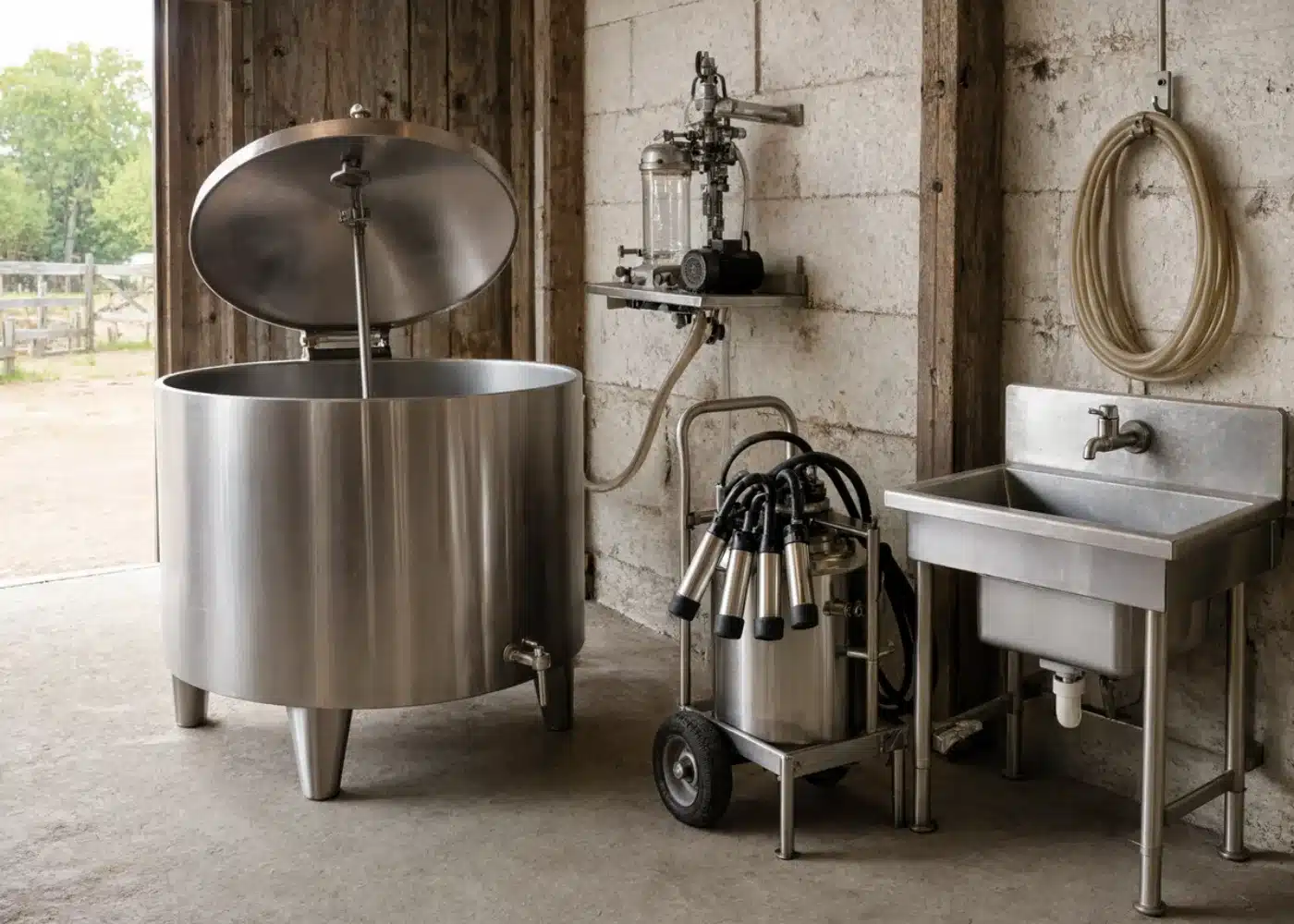
Send us a list of everything, and a few photographs of the parlor and the barn as they stand. Bulk tank size and make, the vacuum pump and receiver, how many milking units, the pipeline, the plate cooler, the compressor, the barn cleaner, the stalls and headlocks, the fans, the waterers, the feed system and anything else bolted down.
We assess it as a whole, then tell you which items are worth moving, which are worth more sold in place to a dairy that needs them, and which honestly are not worth either. A complete working parlor removed carefully has real value to a starting dairy. The same parlor cut out piecemeal is stainless scrap.
Disconnection is your side and it needs the right trades: electrical, plumbing and refrigerant. A bulk tank has a refrigeration system and the refrigerant has to be recovered properly by someone certified to do it, not vented. Tell us what is connected and we will coordinate around your trades.
Where the numbers do not work, a used dairy equipment dealer will often buy a parlor outright and remove it themselves. If you would rather the value fund the cause, sell it that way and donate the proceeds. We receipt that identically and it is frequently the better outcome on an older parlor.
What decides the number
- Complete and working versus piecemeal. The dominant factor by a wide margin. A functioning system sells to a dairy; loose parts sell as scrap.
- Bulk tank size, make and age. Along with whether the compressor and cooling work and whether it holds temperature.
- Parlor type and unit count. Parallel, herringbone, tie-stall pipeline or robotic. Unit count and pipeline size matter.
- Condition of the stainless. Pitting, dents and weld integrity. Stainless that cleans up is worth considerably more than pitted stainless.
- What is portable. Portable units, a plate cooler, fans, waterers and a compressor are easy to move and therefore easier to place than anything welded in.
Makes we accept
Dairy equipment is a specialist market with well-known names.
- Parlor and milking systems: DeLaval, GEA and Westfalia, BouMatic, Germania, Surge, Boumatic Gascoigne Melotte, Lely and DeLaval robotic units.
- Bulk tanks and cooling: Mueller, DeLaval, Sunset, Zero, Girton, Japy, plus plate coolers and compressors from Copeland and Mueller.
- Barn equipment: Patz barn cleaners and feed systems, Jamesway, Berg, Houle, Norbco and Sturdy Built stalls and headlocks, Ritchie and Miraco waterers, Schaefer and J&D fans.
Manufacturer names appear here so you can find your own machine. No manufacturer sponsors, endorses or is affiliated with this program.
The paperwork, and what you can deduct
Farm equipment is not titled. Ownership is established with the purchase invoice, a bill of sale, a farm asset record, or a lien release if it was financed. Find the serial plate and photograph it. If it is part of an estate or a farm partnership, whoever signs needs authority to sign for it. Equipment bolted into a building may be treated as a fixture or real property rather than equipment depending on your state, which changes the paperwork. If the parlor is being sold with the farm rather than removed, that is a real property transaction and not an equipment donation. Tell us which situation you are in.
Giving Center sells the equipment and your deduction is the gross sale proceeds on Form 1098-C, itemized. A complete working parlor and bulk tank can clear $5,000, where a qualified appraisal and Form 8283 Section B are required at your expense, and a dairy equipment specialist should do it rather than a generalist.
Individual older items commonly fall under $500 each. Items in this class commonly sell between $500 and $5,000, where Form 8283 Section A applies and no appraisal is required. Older or heavily worn examples fall under $500, where the deduction is the lesser of fair market value or $500 and we send a written acknowledgment rather than a Form 1098-C. If you donate several items together each is itemized, and similar items are grouped for the IRS reporting thresholds. Most farm equipment is a depreciated business asset, which makes a conversation with your accountant worth having before the pickup. Farm business property follows different rules than a personal donation.
Dairy and barn equipment questions
Is our old parlor worth anything?
It depends almost entirely on whether it is complete and working. A functioning system has real value to a starting dairy. The same equipment cut out piecemeal is stainless scrap. Send a list and photos and we will tell you honestly.
Who handles the refrigerant in the bulk tank?
A certified technician on your side. Refrigerant has to be recovered properly rather than vented, and that is both a legal and an environmental requirement.
Can we sell it in place instead?
Often yes, and on an older parlor that is frequently the better outcome. A used dairy equipment dealer will buy a parlor and remove it themselves. Sell it that way and donate the proceeds if you prefer; we receipt it the same.
The parlor is staying with the farm we are selling.
Then it is part of a real property transaction and not an equipment donation. Talk to your own advisor about that.
We have the parlor, a mixer, a spreader and two tractors.
That is the ideal version. One assessment and one mobilization across the whole dispersal is dramatically better for the cause than separate pickups.
Giving Center does not provide tax, legal or financial advice. Donations are deductible to the extent allowed by law. See IRS Publication 526, Publication 561 and Publication 4303, and consult a tax professional.