
Sport bike donation
Donate a sport bike that has been on a battery tender for three years
Sport bikes come to us for one of two reasons: the rider stopped riding, or somebody in the family asked them to. Either way the bike is usually low mileage, mechanically sound, and sitting on a tender in a garage costing insurance money.
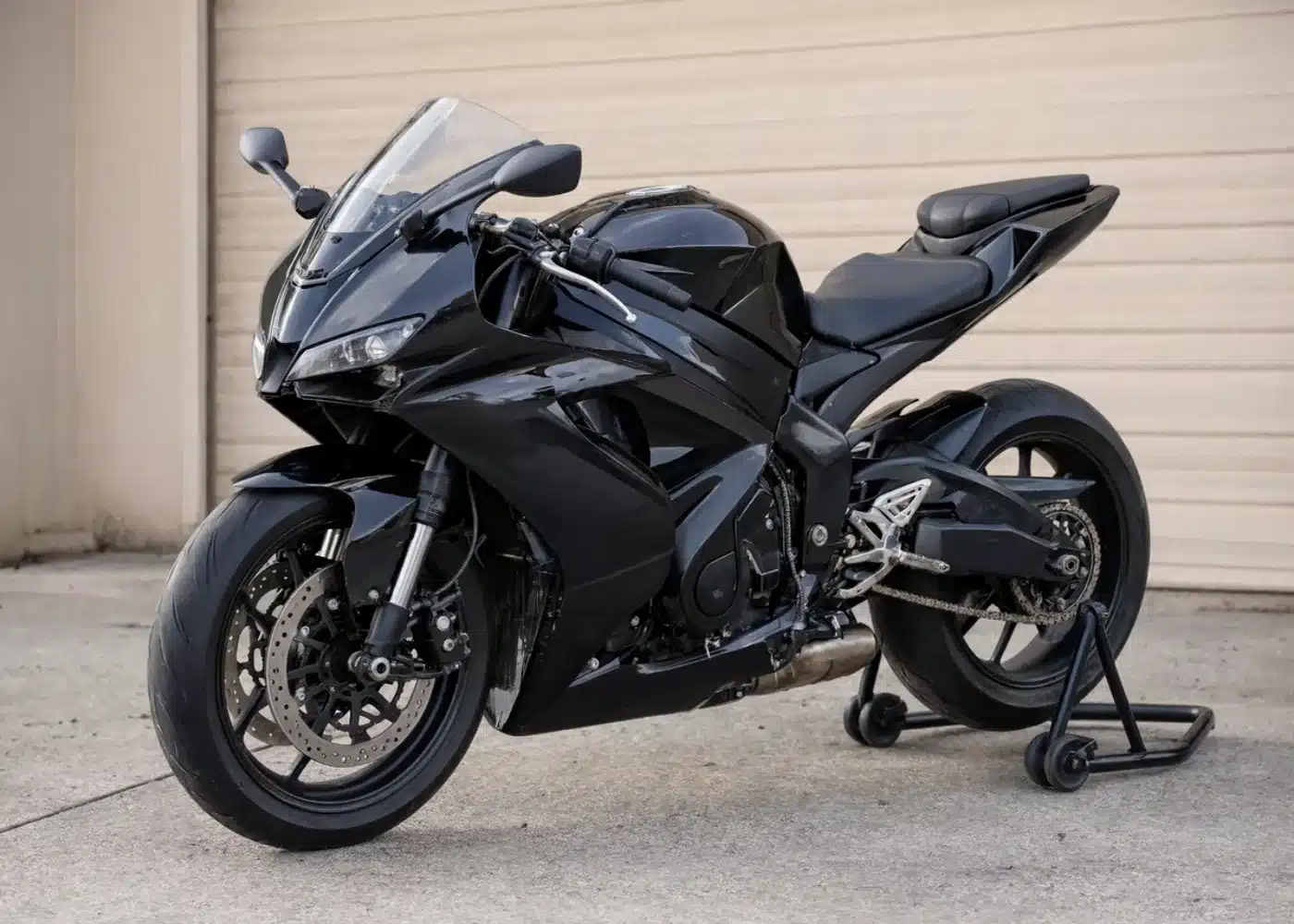
Where donated sport bikes come from
Riders who moved on. A 600 or a 1000 gets bought in someone's twenties, ridden hard for a few seasons and then parked when kids arrive or a knee gives out. Those bikes typically have very low mileage for their age.
Families after an accident or a loss. We handle those conversations carefully and without pressure, and the bike does not need to be cleaned up or made presentable first.
Owners with a bike they cannot easily sell privately because it has a salvage title, a modification history or a buyer pool full of people who want to test ride it in their driveway.
Picked up on a trailer
A motorcycle rides on a trailer or in a truck bed with a chock and straps. It does not need to run, it does not need to be registered and it does not need a battery. Motorcycle pickups are inexpensive, which means a large share of the sale reaches the cause.
Tell us whether the engine turns over, whether the wheels roll and whether the front brake works enough to hold it. A bike with a seized engine still loads easily; one with a locked rear brake or a flat-spotted tire needs a little more planning.
Take your helmet, gear and any personal items from the tail bag. Leave anything mounted to the bike: a tail bag rack, a tank bag base, frame sliders, an aftermarket exhaust or a tuner. Aftermarket parts fitted to the bike usually add to the sale.
What decides what a sport bike brings
- Displacement class. The 600 and 1000 classes have the deepest market. Smaller 300 and 400 class bikes sell fast to new riders and often at surprisingly strong numbers.
- Mileage and whether it runs. A running bike with a clean title is the top of the market. Low mileage is the norm here and buyers expect it.
- Fairing and tank condition. Scraped fairings and a scratched tank point to a drop, and a buyer will assume worse underneath. Photograph both sides honestly.
- Frame sliders and drop damage. Bent clip-ons, a scuffed bar end, a cracked mirror stalk or a bent shift lever. Say what happened; we would much rather disclose it.
- Title status. Clean, salvage or rebuilt, and whether it is in hand. This is the single biggest variable in the whole motorcycle category.
Makes we accept
Sport bikes are searched by make, model and displacement.
- Japanese: Yamaha YZF-R1, R6, R7 and R3, Honda CBR600RR, CBR1000RR, CBR500R and CBR300R, Suzuki GSX-R600, GSX-R750, GSX-R1000 and SV650, Kawasaki Ninja 300, 400, 650, ZX-6R and ZX-10R.
- European: Ducati Panigale, SuperSport and 848, Aprilia RSV4 and RS 660, BMW S1000RR, Triumph Daytona, MV Agusta F3 and F4, KTM RC 390.
- Also seen: older Honda CBR F-series, Kawasaki ZX-7R and ZX-9R, Suzuki Katana, Yamaha FZ and FJ models.
Not seeing yours? The list above is a search aid, not a restriction. We accept any make or model in this category, named here or not, including orphan brands and builders long out of business. What decides a donation is the condition and the paperwork, never the badge, so put yours on the form even if it is not listed.
Manufacturer names appear here so you can find your own bike. No manufacturer sponsors, endorses or is affiliated with this program.
The paperwork, and what you can deduct
A street motorcycle is a titled vehicle and the title has to transfer. If it is lost, most states have a duplicate process and the state title rules page walks through yours. If there is a loan against it we need the lien release. The VIN is on the steering neck and usually on the engine case as well.
Giving Center sells the bike and your deduction is the gross sale proceeds on Form 1098-C. It is not a guide book number and it is not what similar bikes are listed for, which in this category run well above what bikes actually change hands for. A clean-title running sport bike frequently lands between $500 and $5,000, where Form 8283 Section A applies and no appraisal is required. A newer or higher-displacement bike can clear $5,000, where the IRS requires a qualified appraisal at your expense.
A salvage-title or non-running bike often sells under $500, where the deduction is the lesser of fair market value or $500 and we send a written acknowledgment rather than a 1098-C. See salvage and rebuilt title bikes for that case.
Sport bike donation questions
It has not started in three years.
Very common here. Old fuel and a dead battery are expected. It still sells; tell us whether the engine turns over.
It was dropped once. Should I mention it?
Yes, always. We would much rather disclose a drop than have a buyer discover it. Photograph both sides including the bar ends and the fairing lowers.
I have an aftermarket exhaust and the stock one in a box.
Send both if you are not keeping them. A bike with its stock parts available sells better to some buyers and the exhaust adds on its own.
Do you need it registered?
No. Expired registration is fine. The title is what matters.
We are donating a bike after a death in the family.
We handle that without any pressure and at whatever pace suits you. The bike does not need to be cleaned up, started or made presentable. Call rather than use the form if that is easier.
Giving Center does not provide tax, legal or financial advice. Donations are deductible to the extent allowed by law. See IRS Publication 526, Publication 561 and Publication 4303, and consult a tax professional.