
Salvage and rebuilt title donation
Donate a salvage or rebuilt title motorcycle without explaining it twice
A salvage title is the single hardest thing to sell a motorcycle with, because every private buyer asks the same questions and half of them walk away. We do not. We disclose what it is, sell it to a buyer who knows exactly what a salvage title means, and document the whole thing for you.
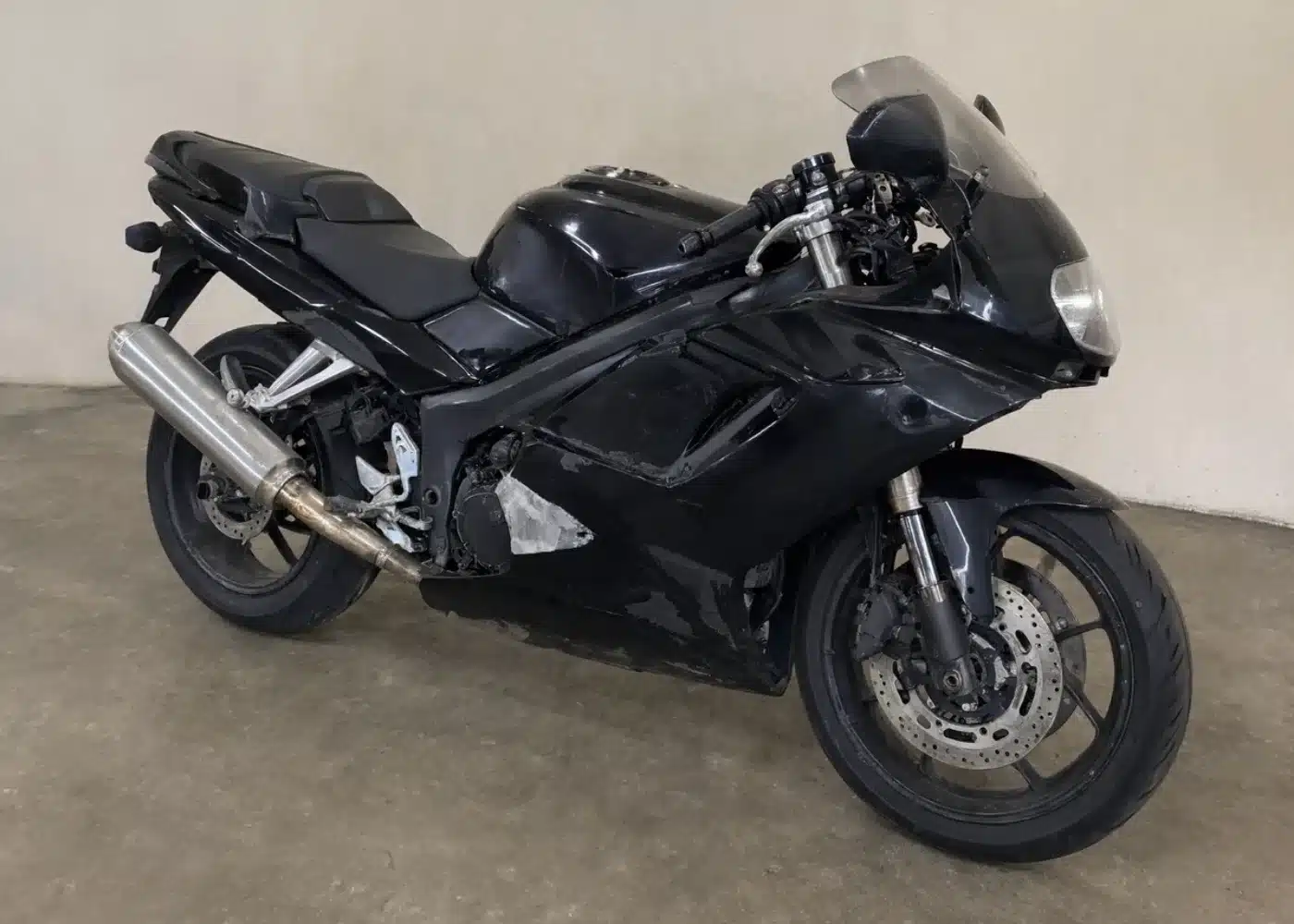
Where these come from
Riders who repaired a bike after a drop or a crash and never re-registered it. The bike runs fine, the title says salvage, and the private market punishes that far more than the actual condition warrants.
People who bought a salvage bike as a project and did not finish it. Those come with boxes of parts and a half-done repair.
Insurance write-offs kept by the owner. A bike totaled for cosmetic damage is a common and genuinely useful donation, because the mechanical side is often untouched.
Disclosure is the whole point of this page
Tell us what happened. Was it a drop, a collision, theft recovery, flood, fire or hail? Those are five very different things to a buyer and they price them differently. A theft recovery with no damage is a completely different item than a flood bike.
Tell us what was repaired and by whom, and whether the frame was straightened, replaced or left alone. Frame damage is the line most buyers will not cross, and the honest answer matters more than a good answer.
Tell us the title status exactly as it reads: salvage, rebuilt, reconstructed, or a non-repairable or certificate-of-destruction brand. That last category is important, because in most states a non-repairable brand means the bike can never be titled for road use again, which means it sells for parts only. We will tell you plainly if that is what you have.
What decides what one brings
- Which brand is on the title. Rebuilt with a passed inspection is worth meaningfully more than open salvage. A non-repairable brand is parts value only.
- Cause of the loss. A dropped or theft-recovery bike is worth far more than a flood or fire bike. Flood in particular destroys electrics that look fine.
- Frame condition. Straight, straightened or replaced. This is the first thing a knowledgeable buyer checks and the biggest single factor after the title brand.
- Whether it runs and rides. A salvage bike that starts, rides and stops is worth multiples of one that has not run since the incident.
- Completeness. Missing bodywork, a missing exhaust or a missing subframe all come off. Send every part you have, including the damaged pieces.
Makes we accept
All makes, and the popular models retain the most even with a brand on the title.
- Highest retained value on a brand: Harley-Davidson touring and Softail, Honda Gold Wing, BMW GS series, Yamaha and Honda middleweight standards, Kawasaki Ninja 400 and 650.
- Common salvage bikes we see: Yamaha R6 and R1, Suzuki GSX-R, Honda CBR, Kawasaki ZX-6R, Ducati Monster and Panigale, KTM Duke.
- Parts-only buyers look for: late-model sport bikes of any make, BMW and Ducati for the electronics and components, and anything with a fresh engine.
Not seeing yours? The list above is a search aid, not a restriction. We accept any make or model in this category, named here or not, including orphan brands and builders long out of business. What decides a donation is the condition and the paperwork, never the badge, so put yours on the form even if it is not listed.
Manufacturer names appear here so you can find your own bike. No manufacturer sponsors, endorses or is affiliated with this program.
The paperwork, and what you can deduct
A street motorcycle is a titled vehicle and the title has to transfer. If it is lost, most states have a duplicate process and the state title rules page walks through yours. If there is a loan against it we need the lien release. The VIN is on the steering neck and usually on the engine case as well. On a branded title, the brand carries to the new owner and that is normal and legal. What we need is the actual title in hand, because a salvage bike without paperwork is very difficult to move.
Giving Center sells the bike and your deduction is the gross sale proceeds on Form 1098-C. Salvage and rebuilt bikes land across a wide band. A rebuilt-title bike that runs and rides can land between $500 and $5,000, where Form 8283 Section A applies. A rebuilt late-model bike in good condition can clear $5,000, where a qualified appraisal is required at your expense.
A non-running salvage bike, or one with a non-repairable brand, commonly sells under $500 as parts. In that band the deduction is the lesser of fair market value or $500 and we send a written acknowledgment rather than a 1098-C. We will tell you which band yours is in before anything is scheduled, because guessing high here is the most common way donors end up disappointed.
Salvage and rebuilt title questions
Will you take a bike with an open salvage title?
Yes. It sells for less than a rebuilt-title bike and that is reflected in the deduction, not in whether we accept it.
My title says non-repairable.
Then in most states it can never be road-titled again and it sells for parts only. That means a small deduction. We will tell you plainly rather than let you expect otherwise.
It was a flood bike but it runs fine now.
Tell us it was flood. Flood damage destroys electrics on a delay and buyers price it accordingly, so disclosure protects everyone. It does not stop the donation.
Do I have to explain the crash?
Only in plain terms: what happened, what was repaired, and whether the frame was touched. You do not owe anyone a story. We just need the facts a buyer would need.
Should I send the damaged parts?
Yes. Even bent or cracked pieces have parts value and a complete package sells better.
Giving Center does not provide tax, legal or financial advice. Donations are deductible to the extent allowed by law. See IRS Publication 526, Publication 561 and Publication 4303, and consult a tax professional.