
Livestock trailer donation
Donate a stock or horse trailer that stopped hauling animals
When the cattle are sold or the last horse is gone, a stock trailer becomes the largest object on the place with no purpose. Plenty still have good floors and sell readily to small operations, and the ones with living quarters can be worth well into five figures.
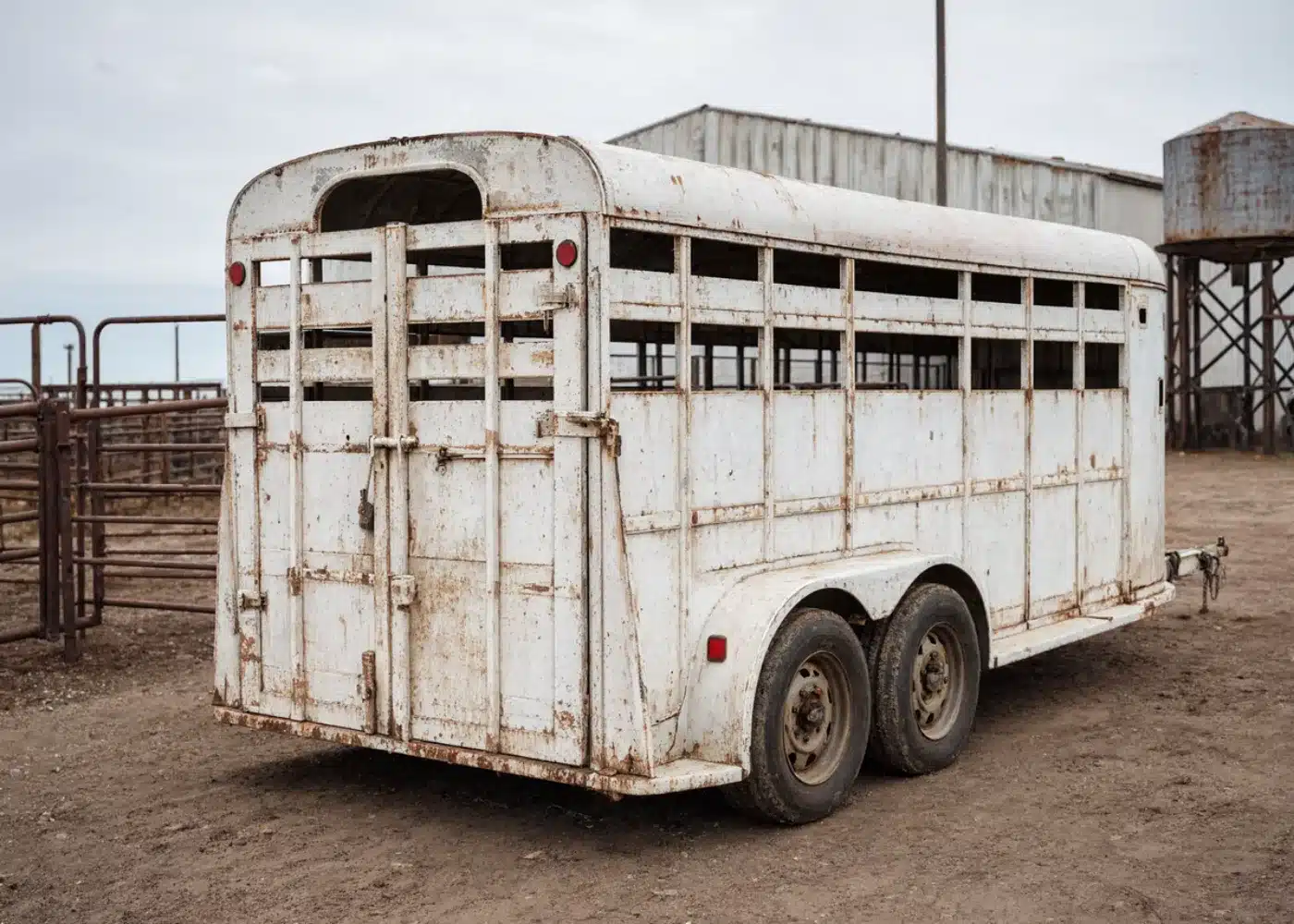
Why stock trailers get donated
A change in the operation. Cattle are sold, the horses are gone, a riding program ends, or an aging owner stops hauling. These trailers last for decades, so the one left behind is often twenty or thirty years old and still serviceable, which is exactly what a small operation wants and a dealer will not pay for.
The living-quarters trailers follow a different pattern: a show or rodeo career ends, and a trailer with a kitchen and a bed sits under a carport. Those have real value and a specific set of buyers.
Towed with the right truck and hitch
Bumper-pull trailers are hitched and towed. Gooseneck trailers need a truck with the right hitch, which we send. Where the floor or frame is unsound, or the tires and bearings have given out, the trailer goes on a hauler instead. Giving Center arranges and pays for it.
Tell us the length, the hitch type, whether the floor is sound enough to move safely, and how a truck reaches it. Clean out the mats and bedding if you can, and mention any tack or equipment you want included.
What decides what a stock trailer brings
- Floor condition, particularly under the mats, which is where every buyer looks first.
- Aluminum versus steel, with aluminum trailers holding value considerably longer.
- Length and height, since taller trailers suit cattle and horses differently.
- Gooseneck versus bumper pull, which decides what truck can pull it.
- Dividers, gates and escape doors in working order.
- Living quarters, which move a trailer into an entirely different price bracket, with water damage the main risk.
The paperwork, and what you can deduct
Whether your state titles a trailer depends on its weight, and many never issue a title at all. Where there is no title, a bill of sale, an old registration card, or a notarized affidavit of ownership with the VIN or serial number is normally sufficient, and homemade trailers can usually be donated with an affidavit and a state-assigned VIN. See state title rules for your state.
Your deduction is the gross sale proceeds once Giving Center sells it, on Form 1098-C. Items in this class often sell below $500, in which case you may deduct the lesser of fair market value or $500. Above $500 you file Form 8283 Section A; above $5,000 the IRS requires a qualified appraisal you obtain and pay for. We tell you which to expect before pickup. Full detail on the tax benefits page.
Livestock trailer donation questions
The floor is questionable. Will you take it?
Yes, and it matters for safety rather than acceptance. If the floor cannot be trusted for a road move, the trailer goes on a hauler instead of being towed.
Do you take living-quarters trailers?
Yes, and they are among the more valuable trailers we receive. Tell us about the kitchen, the water system and any water damage.
Can I include tack, panels or feeders?
Yes. Tell us what is included and it goes with the sale.
What about a grain or hopper trailer?
Accepted. Those are covered on the trailer donations page along with flatbeds and lowboys.
Giving Center does not provide tax, legal or financial advice. Donations are deductible to the extent allowed by law. See IRS Publication 526, Publication 561 and Publication 4303, and consult a tax professional.