
Flood, fire and storm damage
Donate a flood or fire damaged car and get an honest number
After a storm or a fire, the insurance settlement is done and the car is still in the driveway. What is left has value as parts, sometimes more than people expect on a newer vehicle, and sometimes almost none. Which of those applies to yours depends on the car and where it sits, and we will tell you before anything is scheduled.
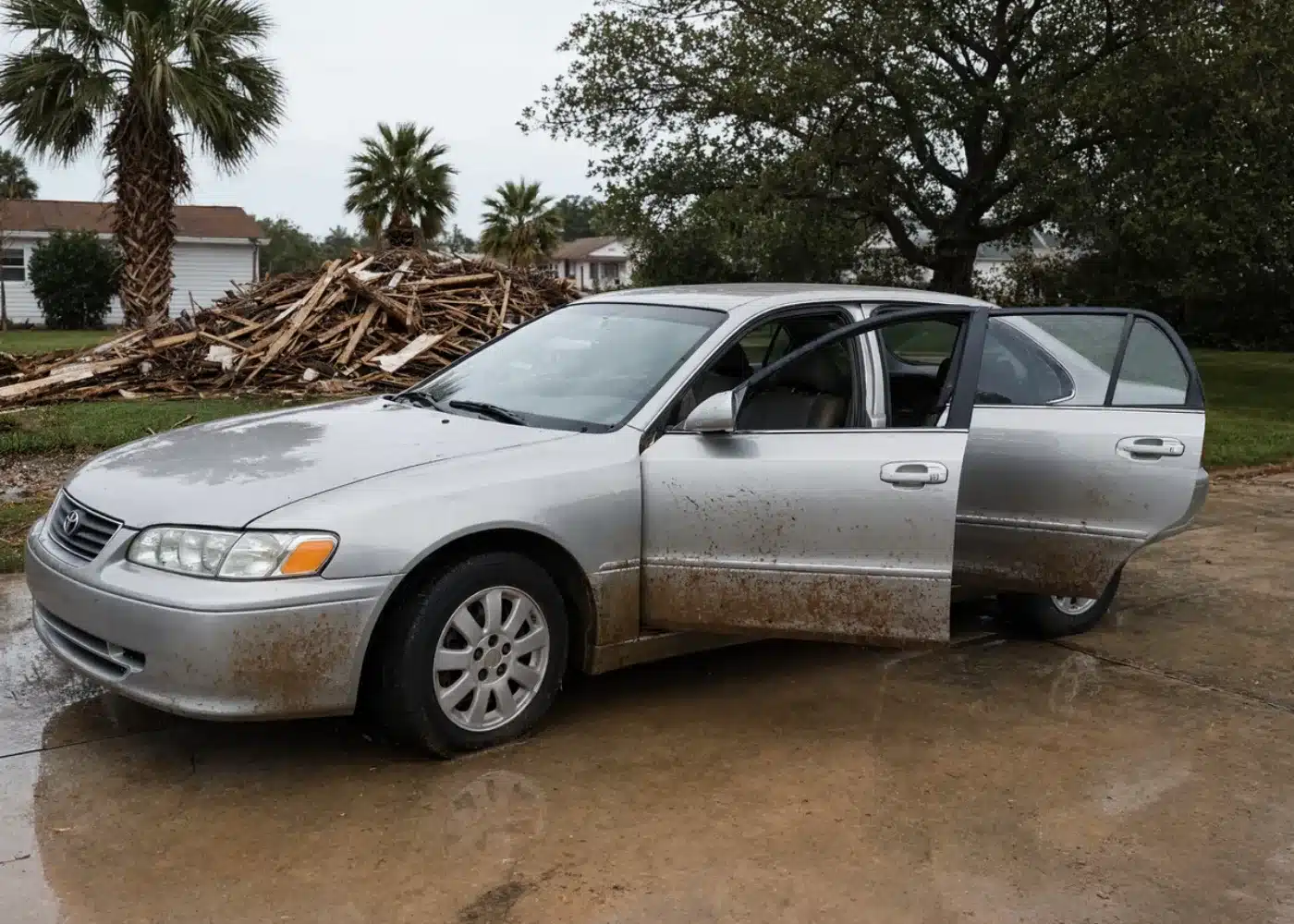
Where damaged-car donations come from
Mostly from people who kept the car after a settlement, or who never filed a claim because the deductible made it pointless. A foot of water in a garage during a hurricane. An engine fire that stayed under the hood. Hail that totaled the sheet metal on a mechanically perfect car. A tree in a driveway during an ice storm.
These cars are awkward to sell privately because buyers assume the worst and negotiate accordingly, and because a branded title frightens off retail buyers entirely. The buyers who do want them are rebuilders and dismantlers, which is a trade rather than a classifieds market.
Towed as-is, with the plan set before we arrive
Towing is arranged and paid for by Giving Center. A flood car with a locked steering column or seized brakes goes on a flatbed with a winch. A burned car is handled by a driver who knows to expect no functioning brakes or steering.
Tell us plainly what happened: how deep the water came, whether it was fresh or salt, whether the interior is still wet, whether the fire reached the cabin. Salt water and cabin fires change both the value and the safe handling of the car, and a driver who knows in advance brings the right truck.
What decides what a damaged car brings
Almost all of the remaining value is in undamaged parts, so the question is what survived.
- How new it is. A three-year-old car has parts a dismantler can sell; a fifteen-year-old one mostly does not.
- Water depth and type. Below the seats is very different from over the dash. Salt water is far worse than fresh.
- What burned. An engine-bay fire that stayed out of the cabin leaves an interior, glass, wheels and body panels worth reclaiming.
- Hail and body damage leave the drivetrain and interior entirely intact, which is often the highest-value case in this group.
- Electronics. Modules, screens and airbag systems are valuable and water-sensitive.
- Title brand. Salvage and flood brands lower the figure but are accepted without issue.
Titles after a loss
If the insurer paid a total loss and took the title, the car is not yours to donate; the insurer owns it. If you retained the car in the settlement, you should have a salvage or owner-retained title, which is what you sign over.
A branded title is accepted. So is a clean title on a car that was never claimed. If the title was lost in the same event that damaged the car, which happens more often than you would think, a duplicate is the route, and our state title rules page covers your state.
What you can deduct after a loss
Your deduction is the gross sale proceeds once Giving Center sells the car, on Form 1098-C. Damaged cars frequently sell for under $500, in which case you may deduct the lesser of fair market value or $500.
One thing worth raising with your tax preparer: if you already claimed a casualty loss deduction for the same damage, that interacts with a charitable deduction on the same property. It is not our place to advise on it, but it is worth a question before you file. The tax benefits page covers the charitable side.
Flood or fire damaged car donation questions
Do you accept salvage and flood-branded titles?
Yes. The brand lowers what the car sells for but does not stop the donation.
The insurance company totaled it. Can I still donate?
Only if you retained the car and hold the title. If the insurer took the title, the car belongs to them.
Is a flooded car worth anything at all?
On a newer car, often yes, in undamaged parts. On an older one, frequently not much more than scrap. We will tell you which yours is before the tow is booked.
What about hail damage only?
That is usually the best case in this category. The drivetrain and interior are untouched and the car often still drives, so it sells well despite the cosmetic damage.
Should I clean it out or dry it first?
Remove personal belongings. Do not spend money drying or repairing it; that rarely pays back and the buyers in this market expect it as-is.
Giving Center does not provide tax, legal or financial advice. Donations are deductible to the extent allowed by law. See IRS Publication 526, Publication 561 and Publication 4303, and consult a tax professional.