
Flatbed truck donation
Donate a flatbed truck that has outlasted the work it was bought for
A flatbed is a body on a chassis, and both halves decide what happens next. A steel deck on a one-ton dually and an aluminum deck on a medium-duty cabover sell to entirely different buyers. Tell us both and we will tell you the plan.
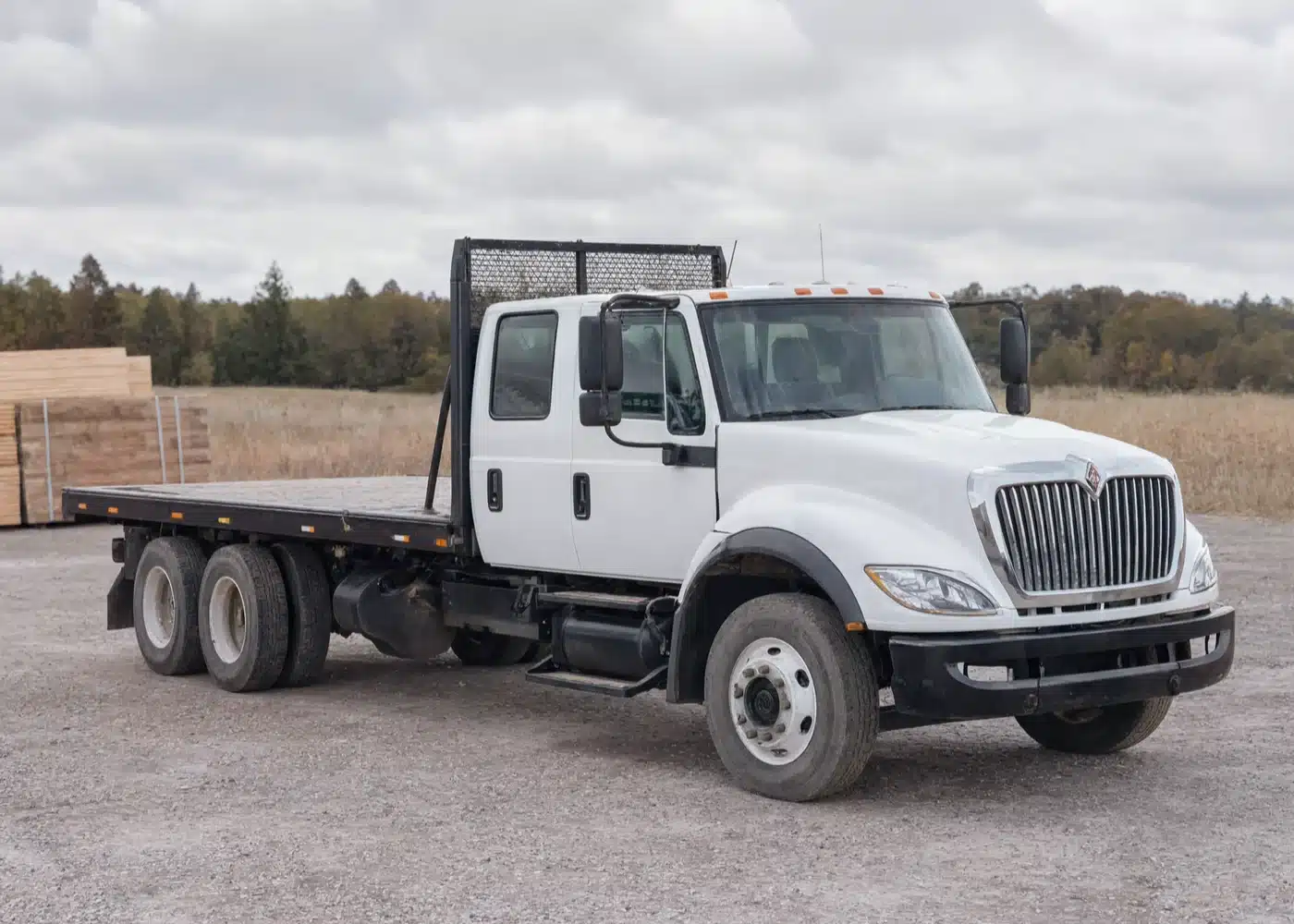
Where donated flatbeds come from
Contractors, landscapers, lumber yards and nurseries. A flatbed is bought to haul one specific thing, and when that work stops the truck is too specialized for a casual buyer and too useful to scrap.
Farms send a lot of them. A flatbed one-ton that hauled hay and fence posts for twenty years still runs, and the family has no use for it after the operation changes hands.
Fleets and municipalities send the medium-duty units, replaced on a capital schedule with plenty of life left in them.
If it drives, we drive it
A road-legal flatbed with current registration and working brakes gets driven rather than hauled. That is by far the cheapest way to move it, and what is saved stays with the cause. We arrange the driver and the insurance.
If it does not run, it goes on a rollback or a lowboy depending on weight. Tell us whether it starts, whether it rolls and steers, and whether the brakes hold. A truck that will not roll needs a winch and the driver has to know before he arrives.
Where it sits matters. A truck against a fence line with two flat tires and three other vehicles in front of it is a different job than one on a paved lot.
What decides what a flatbed brings
- Chassis class and drivetrain. A one-ton dually with four-wheel drive has a much deeper buyer pool than a two-wheel-drive medium duty.
- Deck condition and material. A straight steel deck with a good headache rack and stake pockets is worth real money. A rotted wood deck comes off the price.
- Engine and mileage. Diesel trucks with a known good engine sell best. Emissions tier on medium duty affects where the truck can legally work.
- Rust. Frame and cab corner rust is the fastest way to lose value on a work truck, and it is visible in photos.
- Extras. A liftgate, a crane, a gooseneck ball, toolboxes or a dump feature all add and all belong on the form.
Makes and bodies we accept
On a work truck, chassis and body are two separate names and buyers search both.
- Light and one-ton chassis: Ford F-350, F-450 and F-550 Super Duty, Chevrolet Silverado 3500 and 4500HD, GMC Sierra 3500, Ram 3500, 4500 and 5500.
- Medium duty: Isuzu NPR and NRR, Hino 155 through 338, Mitsubishi Fuso FE and FG, Ford F-650 and F-750, Freightliner M2 and Business Class, International CV and MV, Kenworth T270, Peterbilt 337.
- Bodies and decks: Knapheide, Rugby, Godwin, Reading, Monroe, Hillsboro, Bradford Built, CM Truck Beds, Aluma, PJ, and Palfinger, IMT and Auto Crane units.
Manufacturer names appear here so you can find your own vehicle. No manufacturer sponsors, endorses or is affiliated with this program.
The paperwork, and what you can deduct
A truck is a titled vehicle, so the title has to transfer. If it is lost, most states have a duplicate process and the state title rules page walks through yours. If the truck was financed, we need the lien release. Company-owned trucks also need whoever signs to have authority to sign for the entity.
Giving Center sells the truck and your deduction is the gross sale proceeds, reported to you on Form 1098-C. It is not book value and it is not what a dealer offered on trade. A running flatbed in a common configuration often clears $5,000, and above that line the IRS also requires a qualified appraisal plus Form 8283 Section B. The appraisal is your expense and your decision. Between $500 and $5,000 you file Section A with no appraisal.
If the truck is a depreciated business asset, talk to your accountant before pickup. Business property donations follow different rules than personal ones.
Flatbed truck donation questions
Will you take one that does not run?
Often. A common chassis with a dead engine still has value in parts and in the body. If it is a long haul on a rollback for a rusty truck, the sale may not cover the move, and we will say so instead of scheduling it.
Can I keep the deck and donate just the chassis?
Yes, but it usually lowers the total. A complete truck sells better than a cab and chassis plus a deck sitting in your yard.
What if the registration is expired?
Not a problem. Expired registration means we haul it or get a temporary permit. The title is what matters, not the tags.
Do you take stake beds and dump beds too?
Yes. Both are handled here, and a dump feature adds to the sale.
Is there a cost to me?
Giving Center covers transport, the title work and the IRS filing. If you choose to claim over $5,000 you pay for the qualified appraisal, because the IRS requires it to be independent of us.
Giving Center does not provide tax, legal or financial advice. Donations are deductible to the extent allowed by law. See IRS Publication 526, Publication 561 and Publication 4303, and consult a tax professional.