ATV donation
Donate an ATV that has not been ridden since the kids left
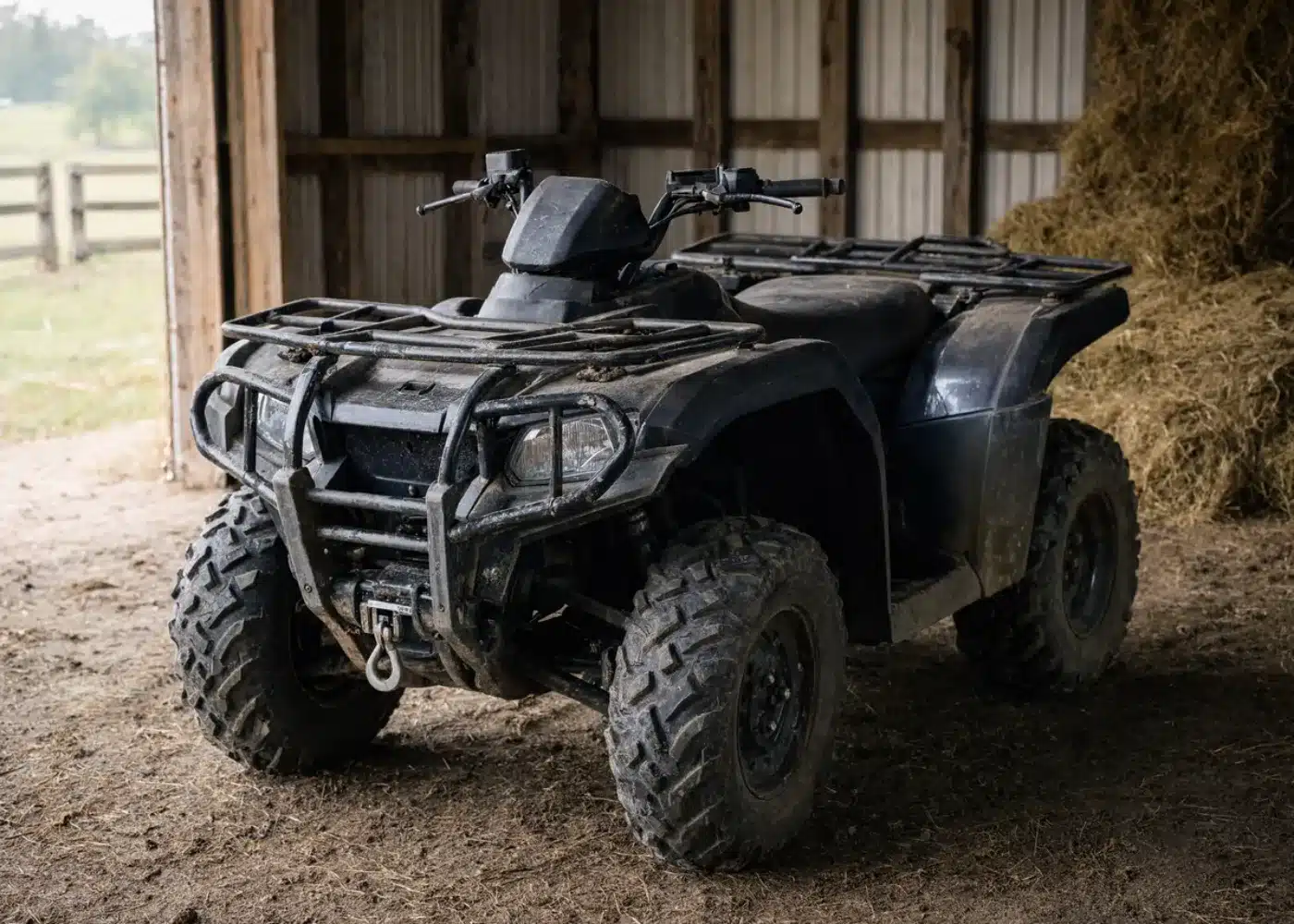
Four-wheelers are bought for a place and a stage of life. The property sells, the children grow up, or knees and shoulders make the decision. What is left is a machine with a dead battery and old fuel sitting in a barn, worth more than most people assume.
Why ATVs sit rather than sell
Because selling one means strangers wanting to ride it on your property before they commit, and a cash deal on a machine with no title makes both sides uneasy. A ten-year-old quad that will not start reads to a buyer as a gamble, so offers come in low and people decide to keep it instead.
Meanwhile the machine deteriorates in exactly the way that costs the most value: fuel goes bad in the carburetor, the battery dies, the tires flat-spot, and mice get into the airbox. Donating it while it is merely dormant rather than derelict is the better decision.
Loaded onto a trailer wherever it sits
Everything in this class travels on a trailer or in a truck bed. A machine that runs is loaded under its own power; one that does not is winched or pushed on. Barns, pole buildings, back pastures, storage units and garages are all normal pickups, and Giving Center pays for the transport.
Tell us whether the tires hold air, whether the battery is dead, and how a truck and trailer reach the building. If the trailer it sits on should go too, say so on the form; trailers add to the sale.
What decides what an ATV brings
- Whether it runs, the single biggest factor and easy to test before we arrive.
- Four-wheel drive, strongly preferred for utility and work use.
- Engine size, with mid and large displacement utility quads in widest demand.
- Model year and brand, since parts support on major brands keeps older machines viable.
- Frame and plastics. Cracked plastics are cosmetic; a bent frame is not.
- Accessories. A winch, a plow blade, racks or a gun mount all add value.
The paperwork, and what you can deduct
Most states never title machines in this class, or title only those registered for road use, so a bill of sale, the original purchase paperwork, an off-highway registration or decal, or a notarized affidavit of ownership with the VIN or frame number is generally enough. Our state title rules page names the exceptions.
Your deduction is the gross sale proceeds once Giving Center sells it, on Form 1098-C. Items in this class often sell below $500, in which case you may deduct the lesser of fair market value or $500. Above $500 you file Form 8283 Section A; above $5,000 the IRS requires a qualified appraisal you obtain and pay for. We tell you which to expect before pickup. Full detail on the tax benefits page.
ATV donation questions
I never had a title for it. Can I donate?
In most states, yes. A bill of sale, the original purchase paperwork, an OHV registration or a notarized affidavit with the VIN is normally enough.
It will not start. Is it still worth taking?
Usually. Many need only a battery, fresh fuel and a carburetor clean, and buyers know it. Tell us how long it has sat and where it was stored.
Can I donate more than one?
Yes. Multiple machines are picked up in one visit, each documented separately.
Do you take youth quads?
Yes, though small machines often sell below $500, which caps the deduction. We will say so up front.
Giving Center does not provide tax, legal or financial advice. Donations are deductible to the extent allowed by law. See IRS Publication 526, Publication 561 and Publication 4303, and consult a tax professional.