
Golf cart donation
Donate a golf cart when the batteries came due and the use did not
Golf carts usually get donated at the moment a full set of batteries costs more than the owner wants to spend on something they use four times a year. The cart itself is fine. There is a steady buyer market, and the haul is cheap.
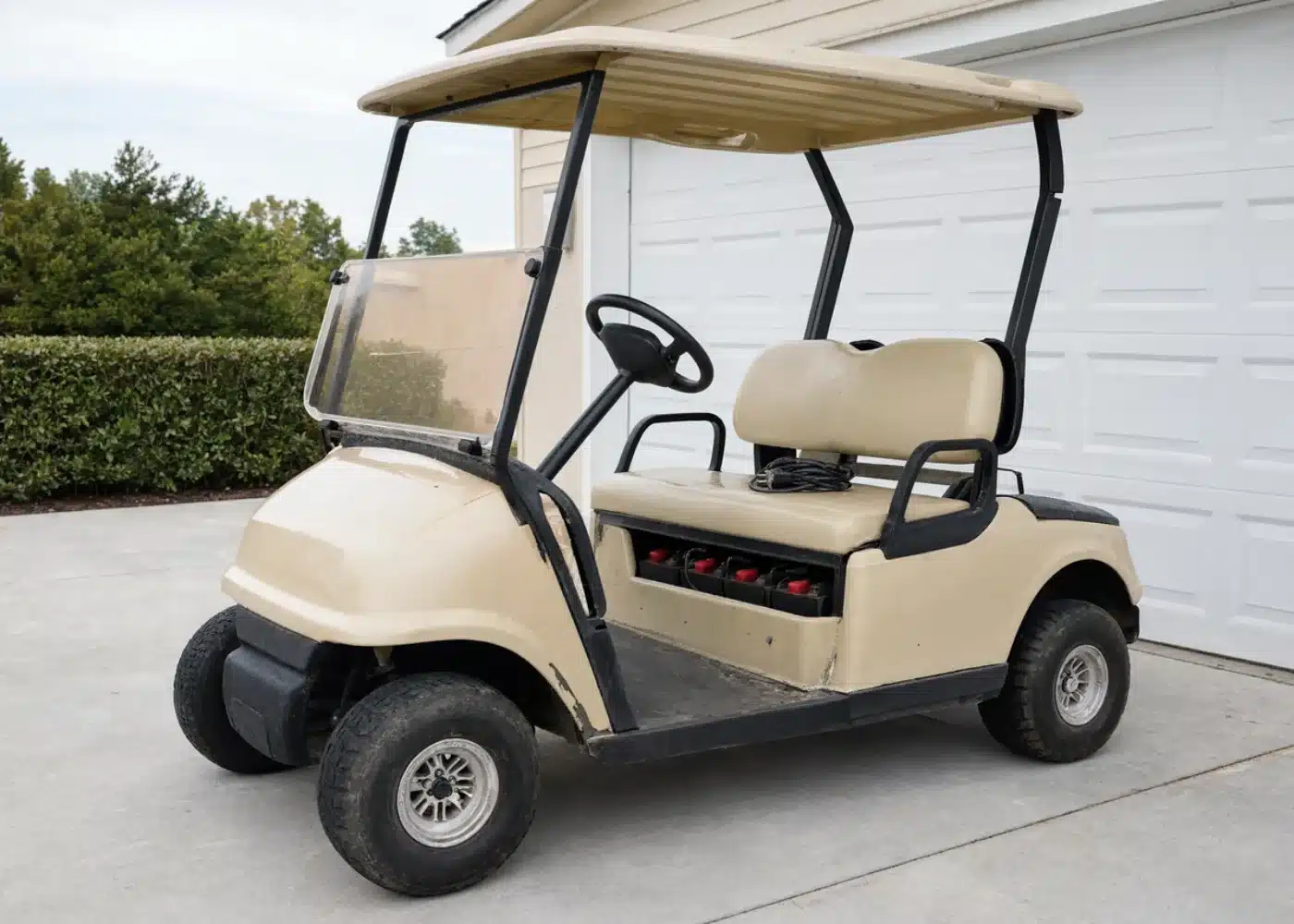
Where donated golf carts come from
Retirement and resort communities, first. A cart is bought for getting around a neighborhood, then the owner moves, downsizes or stops driving, and the cart sits under a carport with a dead pack.
Courses and clubs retiring fleet carts. Those come in groups, and if you have several, say so on the form: one trailer can take three or four and the transport saving stays with the cause.
Homeowners with acreage who bought one for hauling around a property and moved to a UTV instead. Estates account for a growing share.
Cheap and simple
A golf cart rides on a small trailer or in a truck bed. It does not need to run and it does not need to charge. This is one of the least expensive pickups in the program, which is exactly why a low-value item is still worth doing.
Tell us whether it rolls and steers freely and whether the parking brake releases. A cart with seized brakes needs a winch rather than a push, and the driver should know.
Send the charger with it. A cart with its matching charger sells noticeably better, and the charger is worth almost nothing on its own. Take any personal property out of the basket and the glove box.
What decides what a golf cart brings
- Batteries. The dominant factor on an electric cart. A pack that holds a charge is the difference between a working vehicle and a rolling chassis, and a full replacement set is a real expense a buyer is pricing in.
- Electric or gas. Gas carts have a smaller but steady market and sidestep the battery question entirely.
- Charger. Present and working, and matched to the pack.
- Body, seats and canopy. Cracked body panels, torn seat vinyl and a missing canopy all come off the price. Faded color does not much.
- Upgrades. A lift kit, lights, a rear flip seat, a windshield and street-legal equipment all widen the buyer pool.
Makes we accept
Carts are shopped by brand and by whether they are gas or electric.
- Most common: Club Car DS and Precedent, E-Z-GO TXT and RXV, Yamaha Drive and G-series.
- Also seen: ICON, Bintelli, Star EV, Tomberlin, Cushman, Columbia ParCar, Melex, Western, Fairplay, Evolution, Advanced EV.
- Battery and charger brands buyers ask about: Trojan, US Battery, Crown, Duracell, Lester and Delta-Q chargers, and lithium conversions from Allied and Eco.
Not seeing yours? The list above is a search aid, not a restriction. We accept any make or model in this category, named here or not, including orphan brands and builders long out of business. What decides a donation is the condition and the paperwork, never the badge, so put yours on the form even if it is not listed.
Manufacturer names appear here so you can find your own machine. No manufacturer sponsors, endorses or is affiliated with this program.
The paperwork, and what you can deduct
Off-road machines are the category most likely to have no title, and that is normal rather than a problem. Some states title them, some issue an off-highway registration, and some issue nothing at all. What we need is the VIN or serial number off the frame and a bill of sale or the original purchase paperwork. We will tell you which applies where you are, and the state title rules page covers the process. Street-legal and low-speed vehicle carts are the exception: those often do carry a title, and if yours has one we need it.
Giving Center sells the cart and your deduction is the gross sale proceeds on Form 1098-C. A newer cart with a healthy pack, or a lifted street-legal cart, can land between $500 and $5,000, where Form 8283 Section A applies and no appraisal is required. Machines in this class commonly sell for under $500. In that band your deduction is the lesser of fair market value or $500, and we send a written acknowledgment rather than a Form 1098-C. We would rather tell you that now than have you expect a 1098-C in January. The pickup still costs you nothing, and the cause still receives something.
If you are donating several carts off a course or a community fleet, each is itemized and similar items are grouped for the IRS reporting thresholds. Your accountant will want the itemized list, which we produce.
Golf cart donation questions
The batteries are completely dead. Still worth it?
Yes, usually. Plenty of buyers want a sound cart and expect to buy batteries. Tell us the pack is dead so the listing is honest.
Should I send the charger?
Yes. A matched charger adds to the sale and is nearly worthless separately.
I have six carts from our course.
Tell us the count on the form. One trip for several carts is far cheaper than several trips and the saving stays with the cause.
Is mine titled?
Depends on the state and whether it is registered as a low-speed vehicle. Most plain golf carts are not titled at all. Send the serial number off the frame and we will sort it.
What about a lithium conversion?
That is a genuine plus. Note the brand and the age of the conversion on the form.
Giving Center does not provide tax, legal or financial advice. Donations are deductible to the extent allowed by law. See IRS Publication 526, Publication 561 and Publication 4303, and consult a tax professional.